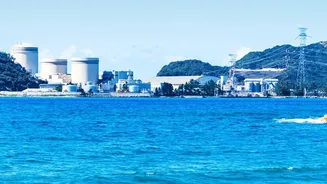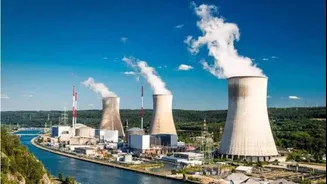







The world's top nuclear watchdog says global nuclear power capacity could more than triple by 2060. This forecast from the International Atomic Energy Agency (IAEA) reflects a major shift in thinking, driven by climate goals and energy security concerns.
Decoding the Projection
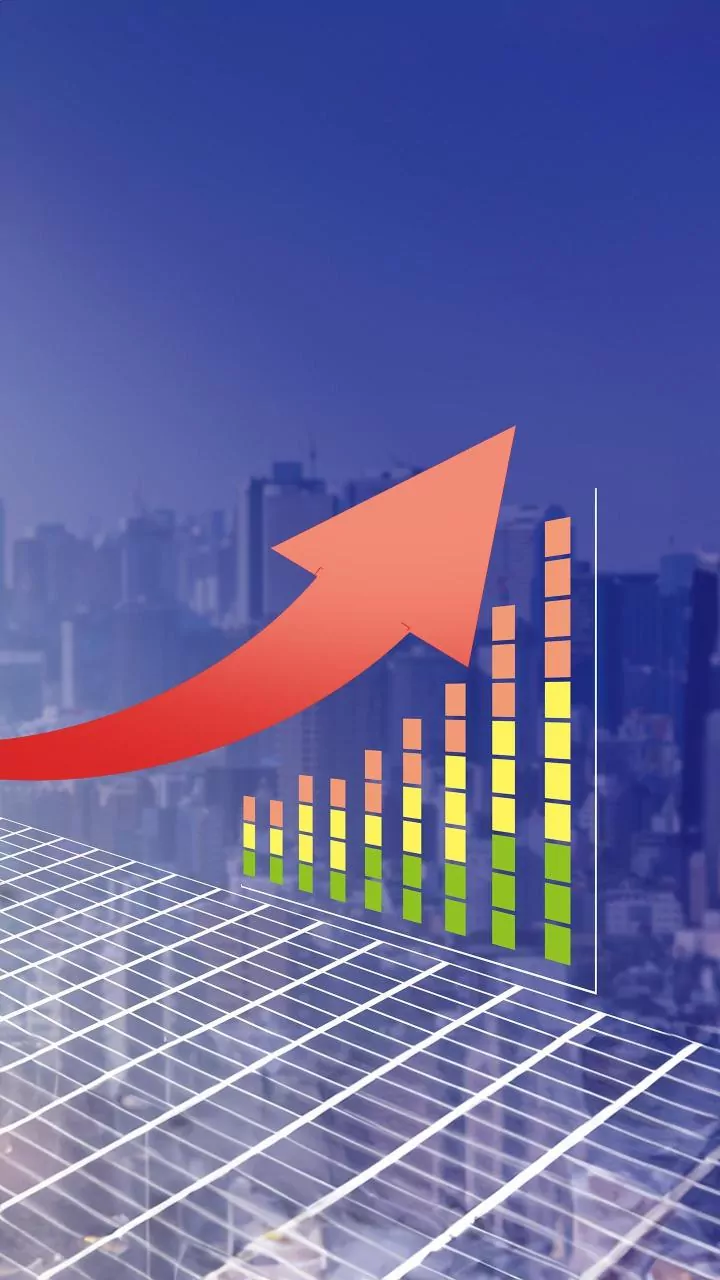
The IAEA's latest annual report outlines two potential futures for nuclear energy. The headline-grabbing figure comes from its 'high case' scenario, which projects that global nuclear capacity could grow from 377 gigawatts (GWe) in 2025 to 1,284 GWe by 2060. This optimistic outlook assumes significant investment and favourable policies. There is also a more conservative 'low case' scenario, which still sees capacity nearly doubling to 696 GWe. This marks the sixth consecutive year the agency has revised its long-term outlook upward, signalling growing confidence in nuclear's role. The report highlights that most of this new growth is expected in Central and Eastern Asia.
The Climate and Security Catalysts
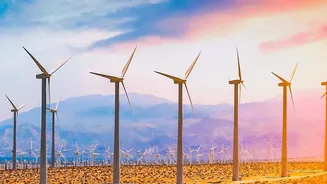
Two major global pressures are pushing countries back toward nuclear power: climate change and energy security. As nations strive to meet ambitious net-zero emissions targets, nuclear energy offers a powerful tool. It is a low-carbon power source capable of providing a stable, 24/7 supply of electricity, which is something intermittent renewables like solar and wind cannot do alone. At the same time, geopolitical instability and disruptions to global oil and gas markets have made many governments wary of relying on fossil fuel imports. Nuclear power, produced domestically, is increasingly seen as a way to bolster national energy independence.
New Demands and New Technology
Beyond climate goals, a new, power-hungry customer is emerging: the digital economy. The rapid expansion of artificial intelligence and the massive data centres required to run it are creating a surge in electricity demand. Tech companies are increasingly interested in nuclear power to provide the reliable, carbon-free energy their operations require. This has accelerated interest in new technologies, particularly Small Modular Reactors (SMRs). These smaller, factory-built reactors are seen as a more flexible and potentially more affordable way to expand nuclear capacity. The IAEA projects that SMRs could account for nearly 30% of new nuclear additions by 2060 in its high case scenario.
Old Obstacles and Lingering Questions
Despite the renewed optimism, significant hurdles remain. Nuclear power plants are notoriously expensive and slow to build. Securing financing, navigating complex regulations, and managing construction timelines are major challenges that can derail projects. Public perception, shaped by past accidents like Chernobyl and Fukushima, remains a factor, although support has been growing in some regions. Furthermore, the issue of what to do with highly radioactive nuclear waste has yet to be solved on a permanent, global scale. While the industry has a strong safety record, these concerns must be addressed for any large-scale expansion to succeed.
India's Nuclear Ambition
This global trend aligns with India's own ambitious energy strategy. The government has set a goal to significantly increase its nuclear power capacity to 100 GW by 2047 as part of its 'Viksit Bharat' development plan. This is a core part of India's effort to meet soaring energy demand while reducing its heavy reliance on coal and achieving its net-zero emissions target by 2070. Recent policy changes, like the SHANTI Act of 2025, aim to encourage private sector participation and accelerate the development of new technologies, including homegrown SMRs. For India, a robust nuclear program is seen as essential for ensuring energy security, powering economic growth, and contributing to its climate commitments.