


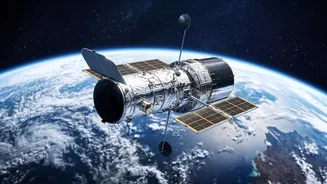
Floating 400 kilometres above Earth, astronauts perform one of the most dangerous and delicate jobs in existence: spacewalking. On November 5, two astronauts completed a nearly seven-hour mission to give the International Space Station a major boost.
A Crucial Power Boost for the ISS
On Thursday, November 5, NASA astronaut Anil Menon and Canadian Space Agency (CSA) astronaut Joshua Kutryk ventured outside the International Space Station (ISS) for a spacewalk lasting six hours and 59 minutes. Their primary mission was to install the eighth and final International Space Station Roll-Out Solar Array (IROSA). This installation marked the successful completion of a major, multi-year project to upgrade the station's power grid. The spacewalk, officially designated U.S. EVA 101, began at 8:36 a.m. EST and concluded at 3:35 p.m. EST as the astronauts returned to the Quest airlock. The task was not without its challenges; the duo had to work with Mission Control to troubleshoot an issue with electrical connectors, but successfully resolved it to complete their objectives.
Finishing a Five-Year Project
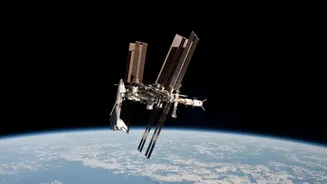
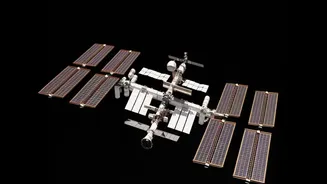
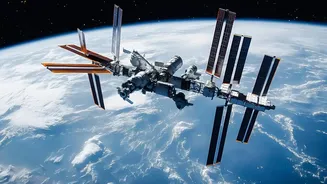
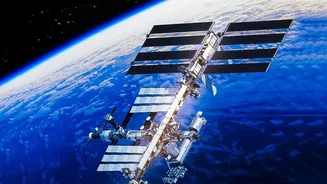
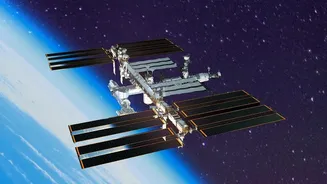
The installation of this final IROSA represents the culmination of a power augmentation program that began in June 2021. The eight new, more efficient solar arrays supplement the station's original, aging arrays. Together, they increase the station’s available power by as much as 30%, raising its total electricity generation capacity from 160 kilowatts to approximately 215 kilowatts. This significant power increase is vital for supporting ongoing scientific experiments, operating the station's complex systems, and ensuring it can continue its mission through its planned retirement in 2030. The extra power will support not only research but also the station’s eventual safe and controlled deorbit.
The Astronauts Outside
The spacewalk was led by Joshua Kutryk, a Colonel in the Canadian Armed Forces, who wore a spacesuit with red stripes to identify him as the lead spacewalker, or EV1. This was his second spacewalk, bringing his total extravehicular time to just over 14 hours. For NASA's Anil Menon, a physician and former SpaceX flight surgeon, this was his fifth spacewalk. The mission brought his total spacewalking time to an impressive 33 hours and 30 minutes. For Menon, the mission was a full-circle moment, as he had previously helped install the modification kit on the same part of the station that enabled this final array to be mounted. Assisting from inside the station were NASA astronauts Jessica Watkins and Luke Delaney, who operated the Canadarm2 robotic arm to maneuver the large solar array into position.
A Legacy of International Collaboration
This spacewalk was the 286th performed in support of the International Space Station's assembly and maintenance since 1998. It highlights the ongoing international cooperation that defines the ISS program. An American astronaut and a Canadian astronaut worked in tandem, supported by a control team in Houston and a Canadian capcom (capsule communicator), CSA astronaut Jenni Gibbons, who served as their main point of contact on the ground. Upon completing the mission, Menon reflected on its significance, stating that the project provides the power that will allow the station to continue being a 'staircase to the moon and eventually Mars'. The completion of the power upgrade ensures the orbiting laboratory remains a robust platform for discovery as NASA and its partners look toward future deep-space missions, including the Artemis program.