

A Mysterious Glow in the Void
Scientists have identified a mysterious source of high-energy gamma rays, designated HESS J1507-622, whose origins have long been an enigma. Detected by telescopes in Namibia, this object has been a puzzle since its discovery because it emits powerful
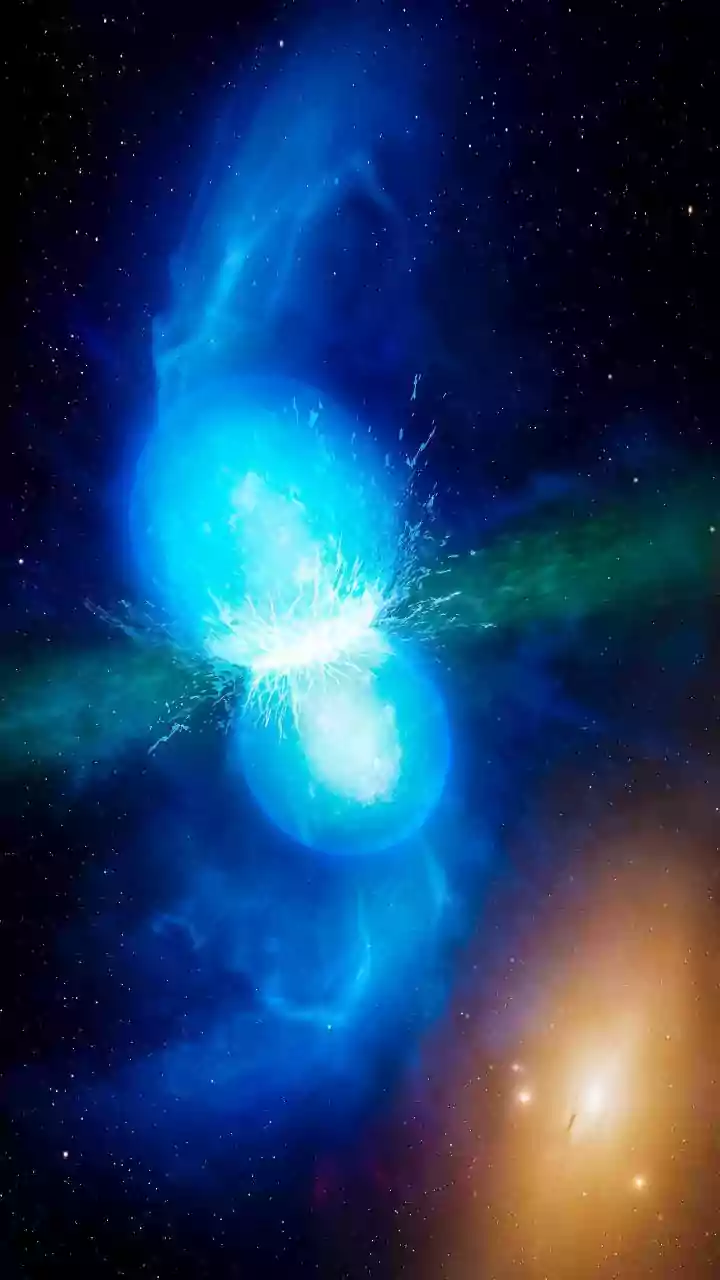
gamma rays without any corresponding light in other wavelengths, like radio or X-rays. Even more curiously, it sits just below the main plane of our galaxy, a region where most stars and known energy sources are concentrated. Recently, a team of researchers from China and the United States proposed a tantalizing new explanation: this strange glow could be the young remnant of a kilonova—the explosion resulting from the merger of two neutron stars.
The Science of Cosmic Collisions
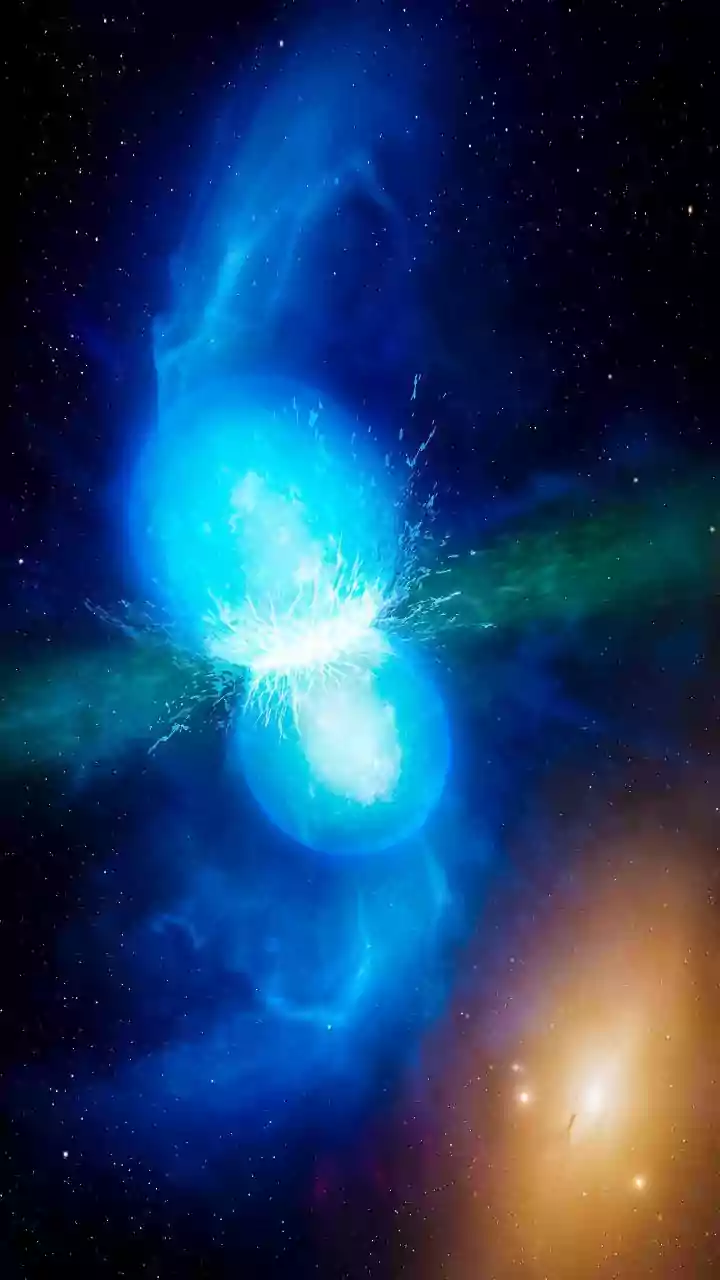
A star merger is one of the most violent events in the cosmos. When two neutron stars—the incredibly dense collapsed cores of massive stars—spiral into each other, they unleash a cataclysm. A teaspoon of neutron star material would weigh a billion tonnes on Earth. Their collision creates a 'kilonova', an event that for a few days can shine as brightly as a planet in our sky and which releases a tremendous amount of energy and matter. These cosmic forges are believed to be the primary source of the universe's heaviest elements, including gold, platinum, and uranium. What's left behind can either be a more massive neutron star or, if the combined mass is great enough, a black hole.
The Case for a Kilonova Remnant
The research team, led by Prantik Sarmah of the Chinese Academy of Sciences, developed models to test their hypothesis. They found that the observed properties of HESS J1507-622 are consistent with the aftermath of a neutron star merger that occurred less than 1,000 years ago. This young age would explain why the glowing cloud of debris is still relatively small and bright. Previous theories suggested the source could be a different kind of stellar explosion, like a supernova, but the lack of a characteristic shell or a central pulsar made those explanations less likely. The kilonova model, however, fits the unusual gamma-ray signature and its off-plane location, as binary neutron stars can get a 'kick' during their formation that sends them careening out of the galaxy's main disk.
An Unseen Historical Event?
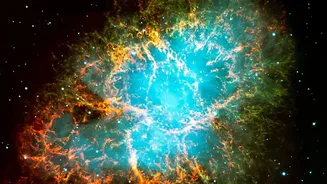
If a cosmic event this bright happened so recently, why didn't anyone see it? An explosion less than 1,000 years ago would have occurred during a time when astronomers, particularly in China, kept meticulous records of the night sky, famously noting the 'guest star' of 1054 that created the Crab Nebula. The researchers suggest that while the initial flash from the merger may have been as bright as Jupiter, it would have been very brief, fading within days. Furthermore, its position in the southern sky would have made it difficult, if not impossible, to see from China, Japan, and Europe, where the most detailed astronomical records of that era were kept. So, it's plausible that one of the most spectacular light shows in recent galactic history simply had no one in the right place to watch it.
The Path to Confirmation
It is crucial to remember that this compelling hypothesis is still awaiting peer review and further confirmation. The team's paper was posted to the preprint server arXiv, a common practice in astrophysics for sharing early results. To prove their theory, astronomers will need more evidence. Future observations will search for faint gamma rays produced by the radioactive decay of the heavy elements forged in the merger. Scientists could also hunt for 'light echoes'—faint reflections of the initial flash—using powerful telescopes in the Southern Hemisphere. If confirmed, HESS J1507-622 would be the first kilonova remnant ever identified in our own Milky Way, offering an unparalleled opportunity to study the aftermath of these gold-producing cosmic collisions up close.