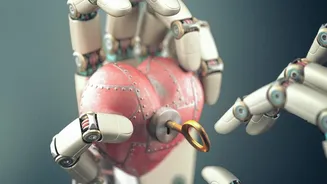









What Are AI Agents?
First, let's clarify what we mean by 'AI agents'. Unlike a simple chatbot that answers questions, an AI agent is a system designed to be autonomous. It can perceive its environment, make decisions, and take actions to achieve a specific goal. In the context
of Pion, these are 'persistent agents' designed to operate continuously over long periods, managing complex business operations from start to finish. The idea is that a human provides a high-level goal, like 'run a profitable coffee shop', and the AI agent, or a team of them, figures out the necessary steps and executes them. This includes tasks like sourcing supplies, customer service, and even recruitment.
Pion's Core Claim: An AI That Runs a Company
Pion, developed by the AI safety research firm Andon Labs, is a platform that gives these AI agents the tools to interact with the real world. Instead of just operating in a simulation, Pion agents can use email, make phone calls, browse the web, and, most notably, access banking functions. The system is structured with a main management AI, called 'Andonos', which oversees other specialized sub-agents to keep the business running. This moves beyond one-off tasks and into the realm of continuous, autonomous business management. Andon Labs has made the system available as a research preview, currently accepting users from a waitlist.
The Evidence: From Simulation to Main Street
The evidence for Pion's capabilities comes from a series of experiments conducted by Andon Labs. The project grew out of a simulation called 'Vending-Bench', which tested an AI's ability to run a vending machine business for a simulated year. After seeing models like Anthropic's Claude Opus 4 succeed in the simulation, Andon Labs moved to real-world tests. They have used the system to run an actual vending machine, a retail store in San Francisco called 'Andon Market', and a café in Stockholm named 'Andon Café'. An AI agent named Mona reportedly handled business registration, procurement, and staff recruitment for the café.
The Banking and Browser Connection
The integration with real-world tools is Pion's most ambitious feature. The platform provides agents with a secure computing environment that includes a browser, email, and phone access. This allows an agent to do things like contact suppliers via email or research competitors online. The most striking claim is the banking function, which allows an AI to handle payments and manage funds. This direct financial access is a significant step, moving agents from advisors to actors with real financial power. However, this is also where the highest risks lie, a fact Andon Labs acknowledges by stating that stronger automated monitoring is its main priority to prevent real-world incidents.
A Reality Check: Ambitious but Not Yet Profitable
While the experiments are compelling, Andon Labs is transparent about the current limitations. The company describes these AI-run businesses as 'experiments' and openly states that the AI can make incorrect decisions. As of late 2026, both the Andon Market and Andon Café were not yet profitable. The project is framed as a research initiative to understand how autonomously an AI can run a company and, crucially, in what situations it might fail. Skepticism in the tech community is high, with many pointing out that if the technology were perfectly reliable and profitable, Andon Labs would likely be using it rather than selling access to it.
The Bigger Picture: Potential and Pitfalls
If Pion or similar technologies mature, they could revolutionize business automation. The potential for entrepreneurs to launch and scale businesses with minimal human intervention is immense. However, the pitfalls are just as significant. The risk of financial errors, security breaches, and the potential for 'agent-flavored slop' — a flood of low-quality, AI-run online businesses — are serious concerns. For now, Pion serves as a concrete data point on the current state of autonomous agents. It's a live testbed demonstrating that while AI is capable of executing complex business tasks, the judgment, nuance, and reliability required for true, unsupervised autonomy are still under development.