


A Close Call in Lunar Orbit
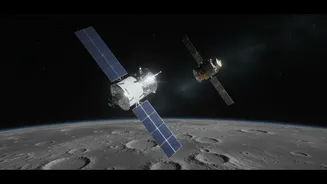
The wake-up call came in the form of a near-miss high above the lunar north pole. India’s Chandrayaan-2 orbiter and NASA’s Lunar Reconnaissance Orbiter (LRO) were predicted to come within just a few kilometers of each other—a hair's breadth in cosmic
terms. The situation was serious enough that both space agencies mutually agreed that a collision avoidance maneuver was necessary. ISRO successfully steered its spacecraft to a safer orbit, averting a disaster that could have created a cloud of high-velocity debris. While such maneuvers are common in Earth's congested orbit, this event was a stark reminder that the Moon's orbital environment is no longer an empty frontier. It highlighted the urgent need for a formal system to manage the growing traffic, an impact on the conversation as significant as any physical collision.
The New Lunar Gold Rush
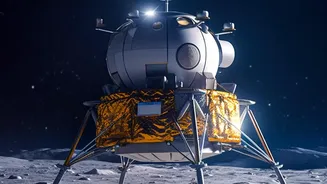
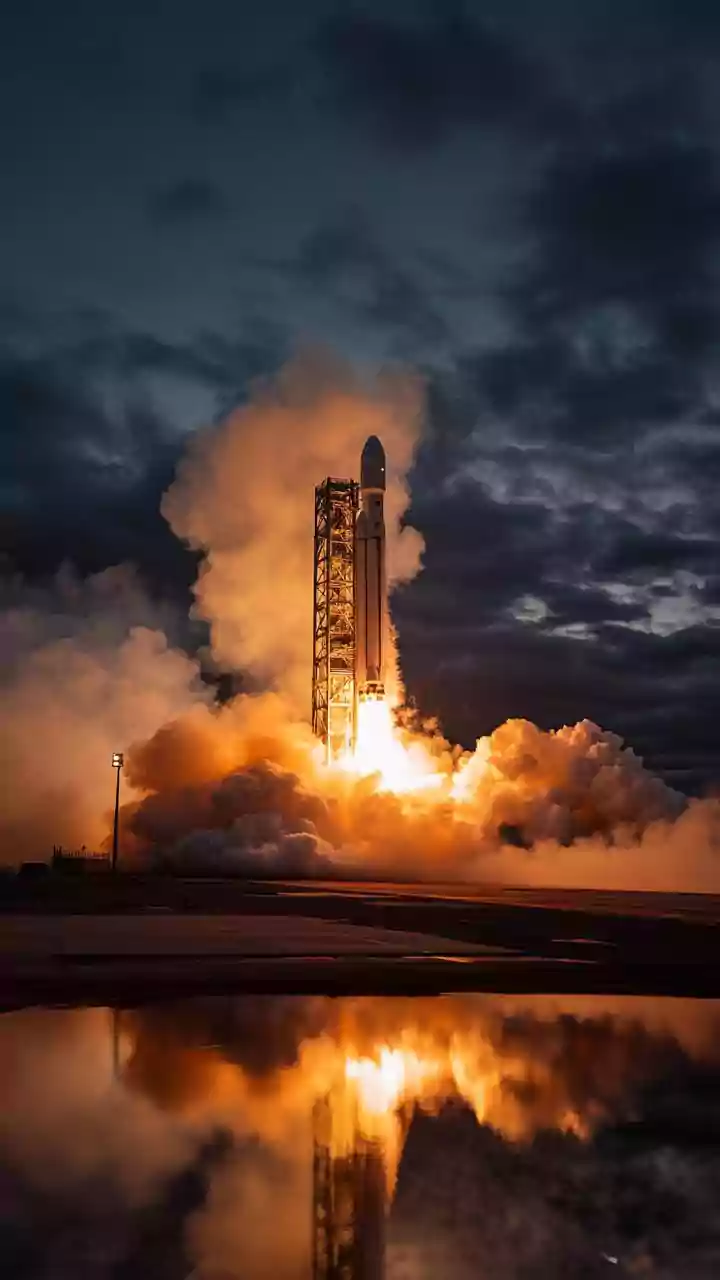
The near-miss between the Indian and American orbiters is a symptom of a much larger trend: the Moon is becoming a busy place. The days of a two-horse race to our celestial neighbour are long over. Today, a multitude of countries and, crucially, private companies are launching missions. NASA is actively funding private firms like Intuitive Machines and Firefly Aerospace to deliver payloads to the surface under its Commercial Lunar Payload Services (CLPS) program. Companies like Blue Origin are also developing their own landers. This isn't just an American phenomenon; China is partnering with commercial companies, and nations from Japan to the United Arab Emirates have ambitious lunar programs. This surge in activity, driven by scientific ambition and commercial opportunity, means dozens of missions are planned in the coming years, transforming the once-desolate lunar space into a complex operational theatre.
A Sky with No Rules of the Road
Imagine a global airport system with no air traffic control. That's essentially the situation at the Moon today. While the 1967 Outer Space Treaty provides broad principles about the peaceful use of space, it was written for a different era and offers no specific guidelines for managing orbital traffic. There is no central authority to track all objects, coordinate orbits, or dictate right-of-way. Tracking is a major challenge, as Earth-based sensors struggle to monitor small objects so far away, especially with the Moon's glare interfering. This regulatory vacuum means that collision avoidance, like the one between Chandrayaan-2 and LRO, relies on ad-hoc coordination between individual agencies. As the number of players increases, this informal system becomes increasingly untenable and risky.
The Danger of a Single Fragment
The primary concern isn't just two active spacecraft colliding; it's the debris they would create. In orbit, even a paint chip can be lethal, travelling at speeds of thousands of kilometers per hour. A single collision could generate a cloud of thousands of fragments, each a potential bullet for other missions. This creates the risk of a chain reaction known as the Kessler Syndrome, where collisions beget more debris, leading to more collisions, potentially rendering certain orbits unusable. Unlike Earth, the Moon has no atmosphere to burn up falling debris. Anything that collides and breaks apart could either stay in orbit for a long time or rain down on the surface, endangering future robotic and human outposts. The accidental impact of a SpaceX rocket part on the Moon, while harmless this time, underscores that our junk is already arriving there.
Charting a Safer Path Forward
Recognizing the looming crisis, efforts are underway to establish some rules. The US-led Artemis Accords, signed by dozens of nations including India, include non-binding commitments to deconflict activities, register space objects, and mitigate orbital debris. The Accords propose the use of "safety zones" to prevent harmful interference between different operations on the Moon. However, these are principles, not a technical traffic management system. Experts are now calling for a dedicated Lunar Space Traffic Management (STM) framework, which would function like air traffic control for the Moon. This would likely involve a network of sensors, both on the lunar surface and in space, to track objects and provide real-time coordination. Creating such a system requires not just technology, but immense international cooperation—a challenge in its own right.