






The Science of a Split-Second Response
Before comparing jump ropes and yoga, it helps to understand what reaction time actually is. It’s the brief period between when you perceive a stimulus (like a ball flying toward you) and when you initiate a response. This process is governed by your
nervous system. A signal travels from your eyes or ears to your brain, which processes the information and sends a command to your muscles. Improving reaction time isn't just about making your muscles faster; it's about making this entire neural pathway more efficient. Factors like focus, coordination, and the ability of your muscles to generate force quickly all play a critical role.
Jump Rope: Training for Explosive Speed
Jumping rope is a form of plyometric exercise, which involves explosive movements designed to increase muscular power. Think of exercises like box jumps and burpees; they train your muscles to produce maximum force in a minimal amount of time. This is achieved through the stretch-shortening cycle, where a muscle is quickly stretched and then rapidly contracted. Jumping rope does this with every single hop. This type of high-intensity interval training (HIIT) directly conditions your neuromuscular system to fire more quickly. Consistent practice improves coordination, agility, and the recruitment of fast-twitch muscle fibers, which are essential for quick, powerful movements. In essence, jump rope intervals are a direct drill for your body's reactive capabilities, training the connection between your brain, wrists, and lower leg muscles to be as fast and efficient as possible.
Yoga: Honing Mindful Awareness and Control
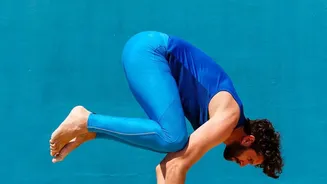
Yoga's approach to improving reaction time is less about explosive speed and more about enhancing the underlying cognitive functions. Research shows that yoga practices can significantly improve cognitive skills like attention, memory, and information processing. One study found that even a single 20-minute session of Hatha yoga improved participants' speed and accuracy on cognitive tasks more than a session of aerobic exercise. This is because yoga combines physical postures with regulated breathing and a strong component of mindfulness. This practice strengthens parts of the brain responsible for attention, awareness, and thought, effectively reducing mental noise and improving your ability to focus mental resources. By improving body awareness (proprioception) and the ability to maintain focus, yoga helps ensure your brain is primed to send clear, deliberate signals.
Head-to-Head: Speed vs. Precision
When placed side-by-side, the two disciplines offer different pathways to a quicker response. Fast jump rope intervals are a direct physical stimulus for speed. They train the 'go' signal, shortening the time it takes for your muscles to execute a command from your brain. The primary benefit is a faster physical execution of a decision. Yoga, on the other hand, works more on the processing part of the equation. It helps the brain make better, faster decisions by improving focus and filtering out distractions. It enhances the quality of the signal being sent. Research shows various yoga practices, including breathing techniques (Pranayama) and meditation, can lead to significant reductions in both visual and auditory reaction times. So, while jumping rope fine-tunes the body's hardware for speed, yoga refines the brain's software for precision and attention.
The Verdict: Which is Better for Your Goals?
For the specific, narrow goal of building faster, more explosive physical reaction speed, jump rope intervals have the clear edge. The plyometric nature of the exercise is tailor-made for improving the rate of force production and training the nervous system for quickness. Athletes in sports like boxing and basketball rely on this type of training for a reason. However, this doesn’t make yoga irrelevant. Yoga provides crucial complementary benefits that support faster reactions, such as improved balance, mental focus, flexibility, and core strength. A flexible, stable body with a focused mind can react more effectively and is less prone to injury. Therefore, the ultimate routine doesn't necessarily choose one over the other but might strategically combine them. Using jump rope for high-intensity training and yoga for recovery, flexibility, and mental conditioning could create a more well-rounded and resilient athlete.