





The New Timeline
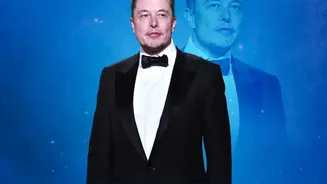
In a recent interview, the billionaire entrepreneur stated that Artificial General Intelligence (AGI) may be achieved as early as the end of 2026. More dramatically, he suggested that AI's total intelligence could surpass the sum of all human intelligence within
the next five years. This represents a significant acceleration of his own previous timelines. For years, Musk has warned about the potential risks of superintelligent AI, but his latest comments place the arrival of this technological milestone squarely in the near future, moving it from a distant sci-fi concept to an imminent reality.
What Is Artificial General Intelligence?
To understand Musk's prediction, it's crucial to distinguish between the AI we use today and AGI. Most current AI is considered 'narrow AI,' designed for specific tasks like translating languages or recognizing images. AGI, on the other hand, is a theoretical form of AI that possesses the ability to understand, learn, and apply its intelligence to solve any problem, much like a human being. It wouldn't need to be specially trained for a new task; it could learn and adapt on its own. Beyond AGI lies the concept of Artificial Superintelligence (ASI), an intellect that would dramatically surpass the best human minds in virtually every field. It is this rapid leap from narrow AI to AGI, and then potentially to ASI, that underpins Musk's accelerated forecast.
Why the Sudden Urgency?
Musk’s revised timeline is driven by the exponential growth in AI capabilities and the hardware that powers them. He points to the massive computational power being assembled by tech companies, including his own, xAI. The development of next-generation models, like the upcoming Grok-3, requires vast numbers of advanced processors, such as Nvidia's H100 GPUs. Musk argues that this sheer scaling of computing power, combined with increasingly sophisticated software, is unlocking new abilities in AI models at an unprecedented rate. He also notes that constraints that once seemed like major roadblocks, such as energy supply and chip availability, are being addressed more quickly than anticipated, clearing the path for faster progress.
The Broader Expert View
Musk is not alone in his bullish predictions, but his timeline remains one of the most aggressive. While many AI researchers agree that AGI is a plausible goal, there is no consensus on when it will be achieved. Some experts argue that Musk's forecast is overly optimistic, underestimating the immense complexity of human cognition and the remaining hurdles in AI development. Critics also point to Musk's history of ambitious but often-delayed timelines for other projects, like Tesla's full self-driving capabilities and SpaceX's missions to Mars, as reason for skepticism. However, other prominent figures in the AI world share a sense of rapid acceleration, even if their specific timelines differ, suggesting the conversation has shifted from 'if' to 'when'.
A Future of Abundance or Risk?
For Musk, the arrival of superintelligence presents a dual-edged sword. He has famously described it as an existential risk, once comparing the gap between humans and ASI to that between humans and chimpanzees, noting that the chimps are not the ones in charge. He was a signatory to a letter calling for a pause in AI development to establish safety protocols. Yet, he has also become more vocal about the potential upsides, describing a future of "universal high income" and incredible abundance, where AI and robots can produce almost all goods and services. Despite his concerns, he believes the momentum of AI development is now impossible to stop and has adopted a philosophy of, "Let's enjoy the ride."