







A Landmark Partnership for Tourism
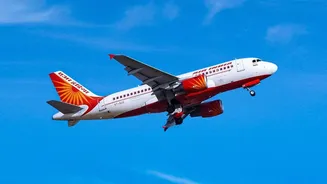
Air India and India's Ministry of Tourism recently signed a Memorandum of Understanding (MoU) to jointly promote India as a premier global tourist destination. This marks the first time a global airline has formally partnered with the ministry. The agreement
establishes a framework for the two to collaborate on a wide range of initiatives, including co-branded marketing campaigns, destination storytelling, and engagement with the international travel trade. The core idea is to combine the government's 'Incredible India' campaign with Air India's expanding global reach to boost inbound tourism and enhance India's visibility on the world stage. The partnership will leverage digital platforms, social media, and even Air India's in-flight entertainment to showcase the country's attractions.
The Strategy Behind the Pact
For Air India, this move is more than just a patriotic gesture; it's a sharp business strategy. As the airline undergoes a massive transformation under the Tata Group, it is rapidly expanding its fleet and international network. This pact is a strategic way to fill those new planes. The MoU explicitly targets the development of transit and stopover tourism. The goal is to encourage international passengers connecting through hubs like Delhi and Mumbai to extend their layovers and explore India, a model successfully used by Gulf carriers for years. By showcasing India's diverse offerings, Air India can create new demand and position itself not just as a carrier to India, but as a gateway to discovering the subcontinent. Nipun Aggarwal, Air India's Chief Commercial Officer, noted that as the national carrier, the airline has a unique responsibility to act as an ambassador for a 'new India.'
Beyond the Golden Triangle
While the MoU doesn't list specific destinations, its focus is on promoting the full breadth of India's offerings, implying a push beyond the well-trodden tourist circuit of Delhi, Agra, and Jaipur. The collaboration will involve working with State Tourism Boards to highlight destinations across the entire country. This could translate into a spotlight on regions that are rich in culture and natural beauty but currently receive fewer international visitors. Think of the serene backwaters of Kerala, the ancient temples of Tamil Nadu, the pristine landscapes of the Northeast, or the historical forts scattered across the Deccan plateau. Even before this pact, Air India had been adding routes to heritage and spiritual destinations like Khajuraho, Jaisalmer, and Gaya, signaling its interest in strengthening domestic connectivity to tourist spots. This new agreement can amplify that strategy, using Air India's global network to funnel travellers towards these emerging locations.
The Ripple Effect on Local Economies
The potential impact of this initiative extends far beyond the airline's balance sheet. By driving international tourism to lesser-known areas, the partnership could become a significant catalyst for local economic growth. An influx of tourists creates demand for hotels, guides, and transportation, but the benefits run deeper. Local artisans, restaurants, and small businesses all stand to gain. This can create a virtuous cycle, where increased tourism revenue leads to better infrastructure, which in turn makes the destination more attractive. For inbound tour operators and travel agents, the initiative is expected to strengthen destination visibility and support the creation of new, multi-destination itineraries. It represents a move to distribute the economic benefits of tourism more evenly across the country, rather than concentrating them in a few major hubs. This aligns with a broader push to develop tourism as a sustainable engine for regional development.
Challenges and Opportunities Ahead
While the vision is ambitious, success is not guaranteed. The agreement itself is non-commercial and non-binding, meaning its effectiveness will depend on the commitment and execution of both parties. For lesser-known destinations to truly flourish, they need more than just promotion. Adequate infrastructure, including quality accommodation, reliable transport, and last-mile connectivity, is crucial. The initiative also presents a massive opportunity for Air India to redefine its brand. In the past, the airline struggled to compete with budget carriers on domestic routes. By becoming a pivotal player in the international visitor's journey from arrival to exploring the nation's hidden corners, Air India can cement its status as a premium, full-service carrier that offers a uniquely Indian experience. The pact is set for an initial two years, which will be a critical period to see if this powerful combination of government branding and airline muscle can truly reshape India's tourism map.