



The Twin Arteries of Global Energy
The global energy trade is remarkably dependent on two maritime chokepoints. The first is the Strait of Hormuz, a 39-kilometre-wide channel separating Iran and Oman, which connects the Persian Gulf to the open ocean. Before recent conflicts, it was the world's
most important oil chokepoint, with about 21 million barrels of petroleum liquids passing through daily—equivalent to roughly 20% of global consumption. The second is the Bab el-Mandeb Strait, located between Yemen on the Arabian Peninsula, and Djibouti and Eritrea in the Horn of Africa. This strait connects the Red Sea to the Gulf of Aden and is a vital conduit for trade between Asia and Europe via the Suez Canal. Together, a simultaneous disruption of both waterways could threaten up to 25-30% of the world's oil and gas supply, demonstrating their immense strategic importance.
Geopolitical Flashpoints and Rising Threats
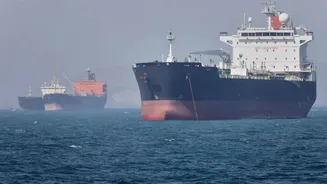
Both straits are located in regions of intense geopolitical instability. The Strait of Hormuz is dominated by Iran, which has repeatedly used its proximity to exert control, viewing the waterway as a strategic lever against its adversaries. The recent conflict has seen Iran effectively disrupt passage, leading to what the International Energy Agency (IEA) called the largest supply disruption in history. Meanwhile, the Bab el-Mandeb has become a theatre for attacks by Yemen's Houthi rebels. These Iran-aligned militants have targeted commercial vessels with missiles and drones, escalating regional risk. Recent fatal attacks in August 2026 underscore the lethal reality of these threats. The Houthi actions, sometimes in coordination with Iranian strategy, create a double-threat scenario where pressure on Hormuz is compounded by instability at Bab el-Mandeb.
The Shockwaves of a Blockade
When these chokepoints are disrupted, the economic consequences are immediate and far-reaching. The most visible impact is on energy prices, with crude oil prices surging during periods of high tension. Shipping companies are forced to reroute vessels around the Cape of Good Hope in Africa, a journey that adds thousands of miles, around 10 extra days of travel, and significant fuel costs. This diversion doesn't just affect oil tankers; it impacts global trade, from food and fertilisers to manufactured goods. Insurance premiums for vessels transiting these regions have soared, and these costs are ultimately passed down to consumers worldwide, contributing to inflation and hitting household budgets hard in import-dependent nations.
The Global Scramble for Resilience
In response to these vulnerabilities, nations and energy firms are pursuing strategies to build resilience. One key approach is diversifying supply chains and routes. This includes developing overland pipelines that bypass the chokepoints, like Saudi Arabia's East-West Pipeline which can move oil to its western coast, though this still exposes tankers to risks in the Red Sea. Another critical measure is maintaining Strategic Petroleum Reserves (SPRs), which can be released to cushion the market from sudden supply shocks. However, prolonged disruptions, like the recent closure of Hormuz, can rapidly deplete these buffers. In the long term, the ultimate form of resilience is a transition away from fossil fuels. Investing in a diverse portfolio of renewable energy sources, such as solar and wind, reduces dependency on oil and gas shipped from volatile regions. Strengthening energy grids and promoting efficiency are also key components of a more secure energy future.