






A New Vehicle for a Critical Job
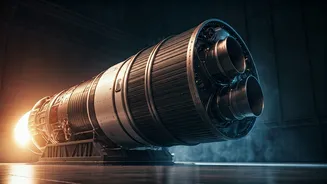
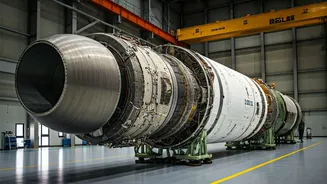
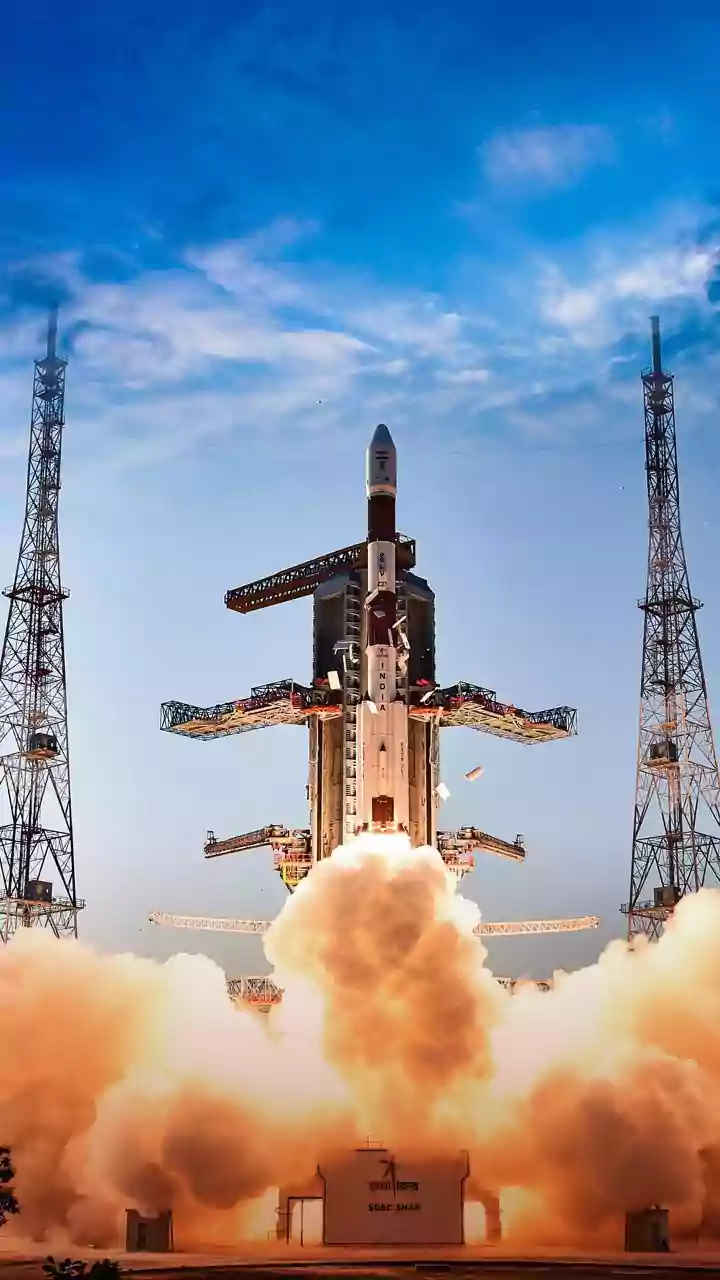
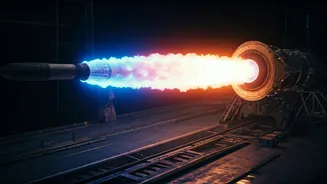
The Indian Space Research Organisation (ISRO) recently announced the successful ground test of a new solid motor on July 3, 2026, at the Satish Dhawan Space Centre in Sriharikota. This motor is the heart of a newly developed rocket, the Sub-Orbital Launch
Vehicle for Experiments, or SOLVE. Unlike the mighty rockets that push satellites into orbit, SOLVE has a very specific, and arguably more delicate, purpose: to serve as a flying test bed for the parachute system of the Gaganyaan crew module. This system is absolutely critical for ensuring the safe return of Indian astronauts from space. The SOLVE vehicle is designed to carry a prototype of the crew module to an altitude between 10 and 17 kilometres before releasing it, initiating a complex parachute deployment sequence designed to end in a gentle splashdown at sea.
The Secret Ingredient: Slow-Burning Fuel
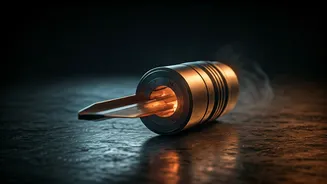
The headline feature of this new motor is its 'engineered propellant'. In this case, it refers to a specially developed slow-burning solid fuel formulation. Solid rocket motors are known for their power and reliability, but they typically burn intensely and quickly, much like a firework. This is great for getting off the ground fast, but not ideal for the nuanced tests required for the Gaganyaan program. By creating a propellant that burns more slowly and controllably, ISRO engineers can achieve a 'desired flight profile'. This means they can precisely manage the rocket's ascent and speed to simulate various specific conditions that the crew module might encounter during its actual re-entry. This customisation is a major leap, offering the flexibility to test the parachute system under a wide range of scenarios.
Building on a Proven Legacy
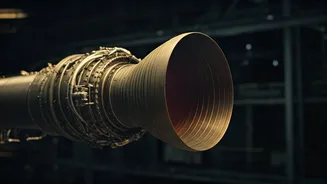
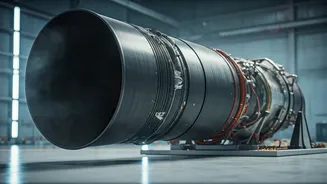
To create the SOLVE motor, ISRO didn't start from scratch. Instead, its engineers cleverly modified the existing solid-fuel strap-on motors from the Polar Satellite Launch Vehicle (PSLV), India's trusted workhorse rocket. This approach is both smart and efficient, building upon decades of proven technology while adapting it for a new role. Key modifications included introducing the slow-burning propellant and incorporating a new straight nozzle with a secondary injection thrust vector control system. This control system allows for fine steering adjustments during flight, further ensuring that the vehicle can precisely hit its target altitude and velocity before releasing the crew module for its parachute test. The successful ground test confirmed that the motor's performance matched predictions perfectly, giving ISRO confidence to move forward.
Why This Test Matters for Gaganyaan
The Gaganyaan mission, which aims to send Indian astronauts into orbit, is one of the most complex and high-stakes projects ISRO has ever undertaken. Astronaut safety is the absolute highest priority, and the parachute deceleration system is one of the most critical safety components. This system involves a sequence of 10 different parachutes that must deploy flawlessly to slow the crew module from high velocity to a safe landing speed. Before putting humans on board, ISRO must test this system rigorously. The SOLVE vehicle, powered by its new custom-engineered motor, provides the perfect platform for these crucial validation trials. By simulating various flight conditions, ISRO can gather invaluable data and ensure the parachute system is robust and reliable enough for human spaceflight. This test represents a quiet but crucial milestone on the path to making India a spacefaring nation with human launch capability.