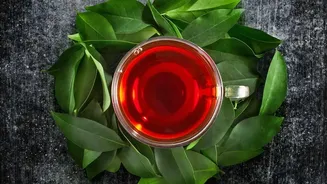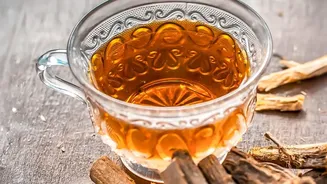






First, What Is Rooibos?
Rooibos, meaning 'red bush' in Afrikaans, isn't technically a tea. It's an herbal infusion made from the needle-like leaves of the Aspalathus linearis shrub, which grows exclusively in South Africa's Cederberg mountain region. Traditionally, the leaves are
harvested, bruised, and fermented, which gives them their signature reddish-brown colour and sweet, earthy flavour. There is also a green, unfermented version that is dried right after harvesting. A key feature of rooibos is that it's naturally caffeine-free and low in tannins, the compounds that can cause bitterness and interfere with iron absorption in other teas. This makes it a soothing choice for any time of day.
Claim: It's an Antioxidant Powerhouse
This claim is well-supported by science. Rooibos is rich in antioxidants, but it stands out because it contains aspalathin, a unique and potent antioxidant not found in other common foods or drinks. Both fermented and unfermented rooibos have been shown to increase the body's antioxidant capacity after drinking it. Antioxidants are important because they help protect the body's cells from damage caused by free radicals, which are linked to ageing and chronic diseases. While many plant-based foods contain antioxidants, the specific profile in rooibos makes it a subject of significant scientific interest for its protective properties.
Claim: It's Good for Your Heart
Here, the evidence is quite promising. Several human studies suggest that rooibos can positively impact cardiovascular health. One of the most cited clinical trials found that adults at risk for heart disease who drank six cups of fermented rooibos daily for six weeks saw significant improvements. Specifically, their LDL ('bad') cholesterol and triglyceride levels dropped, while their HDL ('good') cholesterol increased. Other research suggests rooibos may help lower blood pressure by inhibiting an enzyme that constricts blood vessels. While these are strong indicators, more large-scale human trials are needed to make definitive conclusions.
Claim: It Helps Control Blood Sugar
The potential for rooibos to help manage diabetes is an exciting area of research, but the evidence in humans is still developing. Most of the positive findings come from laboratory and animal studies. These studies show that the antioxidant aspalathin can help muscle cells use glucose more effectively and may improve insulin resistance. A 2023 review of the limited human trials available noted that rooibos consumption was shown to lower blood glucose levels. However, the studies were small and varied in dosage. So, while rooibos is a healthy, sugar-free drink choice for people with diabetes, it should not be considered a treatment.
Claim: It Helps You Sleep
This popular belief is mostly true, but not for the reason you might think. There is no strong scientific evidence that rooibos contains sedative compounds that directly cause sleepiness. Instead, its main benefit for sleep is what it doesn't contain: caffeine. Swapping a cup of coffee or black tea in the evening for a naturally caffeine-free beverage like rooibos can help prevent sleep disruption. Some also point to the presence of minerals like magnesium in rooibos, which plays a role in relaxation and sleep regulation, though the amounts in a single cup are modest. The simple, warm ritual of drinking tea can also be a calming practice that prepares your body and mind for rest.