



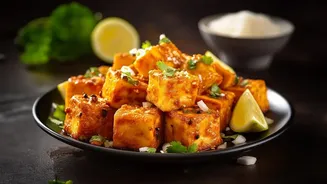
A Perfect Culinary Balance
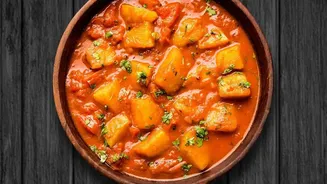
The magic of this combination lies in its delightful contrast. Achaari Paneer is defined by its bold, pungent, and tangy flavour profile, derived from a mix of pickling spices known as 'achari masala'. This powerful gravy coats soft, creamy paneer, creating
a dish that is robust and exciting. On the other hand, Basanti Pulao, a classic from Bengal, is a study in subtlety. It is gently sweet, aromatic, and rich with ghee, cashews, and raisins. The pulao's mild sweetness and fragrant aroma beautifully temper the paneer's spicy kick, ensuring each component shines without overwhelming the other. The pulao acts as a cooling, fragrant canvas for the fiery, flavour-packed paneer.
Understanding Achaari Paneer
The heart of Achaari Paneer is its unique spice blend, which mimics the taste of Indian pickles (achar). The masala typically includes fennel seeds, mustard seeds, nigella seeds, fenugreek seeds, and cumin, which are dry-roasted and ground to release their potent aromas. This blend gives the dish its signature tangy and slightly bitter notes. The gravy is often built on a base of onions, tomatoes, and yogurt, which adds a creamy texture and further layers of tartness to balance the spices. The paneer, or Indian cottage cheese, is usually pan-fried until golden before being simmered in the gravy, allowing it to absorb all the complex flavours while remaining soft and succulent.
The Elegance of Basanti Pulao
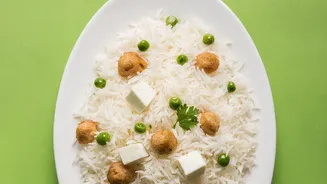
Basanti Pulao, also known as Mishti Pulao, is a celebratory dish, treasured for its simplicity and elegance. Its name, 'Basanti', refers to its lovely yellow hue, which traditionally comes from a pinch of saffron, though turmeric is also commonly used. The star of this dish is typically a short-grained, aromatic rice like Gobindobhog. The rice is cooked in ghee with whole spices like cardamom, cloves, and cinnamon, which infuse it with a subtle warmth. The addition of sugar provides a gentle sweetness, while fried cashews and raisins introduce a delightful crunch and fruity bursts, making every spoonful a rich experience. It’s a dish that feels luxurious without being heavy.
Tips for a Flawless Meal
To create this stunning centrepiece, planning is key. You can prepare the achari masala in advance; it stores well in an airtight container. When it's time to cook, start with the Achaari Paneer. As the paneer gravy simmers and its flavours deepen, you can begin making the Basanti Pulao. The pulao comes together relatively quickly, so timing its completion with the paneer is manageable. Don’t overcook the rice; the goal is for each grain to be separate and fluffy. For the paneer, ensure it remains soft by not over-frying it and by adding it to the gravy towards the end of the cooking process. You can soak the paneer in warm water for about 15 minutes before cooking to guarantee a soft texture.
Serving and Presentation
To serve, you can present the Achaari Paneer in a deep bowl (a karahi or handi) to showcase its rich, thick gravy. Garnish it with fresh coriander to add a pop of colour and freshness. The Basanti Pulao looks wonderful served on a large platter, allowing its golden colour and glistening nuts and raisins to be seen. You can even mould the pulao in a small bowl and invert it onto the platter for a traditional, neat presentation. These two dishes are so flavourful that they need minimal accompaniment. A simple bowl of plain yogurt or a cooling cucumber raita is all that’s required to complete this magnificent vegetarian feast, proving that a meat-free centrepiece can be the most memorable part of any meal.