




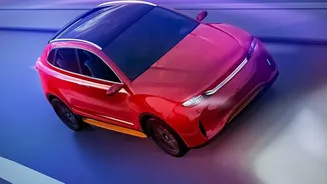
The Future of Road Safety is 'Talking' Cars
The core of this new safety plan is Vehicle-to-Everything (V2X) technology, and more specifically, its first phase: Vehicle-to-Vehicle (V2V) communication. Think of it as a social network for cars, where they constantly and automatically share vital information
with each other. In early August 2026, the Ministry of Road Transport and Highways (MoRTH) proposed a new mandate that would require all new vehicles, including two-wheelers, cars, and trucks, to be equipped with V2V systems starting from October 1, 2028. This system allows cars to wirelessly broadcast their speed, direction, and braking status to other nearby vehicles, creating a web of real-time information that can prevent accidents before they happen. It's a fundamental shift from reactive safety features like airbags to proactive, preventative technology.
How Road-Hazard Warnings Will Work
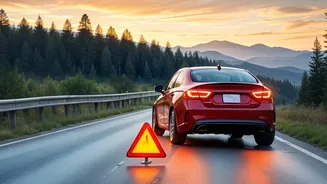
The system works by using Cellular V2X (C-V2X) technology, which operates on a dedicated radio frequency band that the government has exempted from licensing to encourage its adoption. Each equipped vehicle will broadcast a small packet of data several times a second. If a car ahead suddenly slams on its brakes, that information is instantly sent to all cars in the vicinity. Your vehicle would then display a warning on your dashboard, often seconds before you could physically see the danger, giving you crucial extra time to react. This technology is especially effective for hazards that are beyond the driver's line of sight, such as a vehicle breaking down around a blind curve or an accident hidden by heavy traffic. It can also warn of wrong-way drivers or approaching emergency vehicles.
A National Push for Smarter, Safer Roads
This move is part of a broader government initiative to implement an Intelligent Transportation System (ITS) across India to curb the high rate of road accidents. In 2023 alone, road accidents in the country claimed nearly 173,000 lives. A dedicated Task Force on ITS recommended adopting V2X technology to improve road safety. The new plan will be rolled out in phases. From October 1, 2027, any manufacturer that voluntarily installs V2V systems must comply with the new technical standard, known as AIS-230. A year later, on October 1, 2028, these systems will become mandatory for all new vehicles manufactured. This phased approach gives carmakers and infrastructure providers time to prepare for one of the most significant upgrades to vehicle safety in the nation's history.
Beyond Warnings: Other Benefits of V2X
While immediate hazard warnings are the main story, the underlying V2X technology has far-reaching benefits. The system is designed to evolve. Vehicle-to-Infrastructure (V2I) communication will allow cars to 'talk' to traffic signals to optimize green light timing and improve traffic flow. Vehicle-to-Pedestrian (V2P) systems could alert drivers to cyclists or pedestrians with compatible devices, even in low visibility. This ecosystem of communication can lead to reduced congestion, better fuel efficiency, and faster emergency response times, as connected cars can automatically notify services after a crash. It forms the foundation for a truly 'smart' city transportation network.
Challenges on the Road Ahead
Implementing such an ambitious plan is not without its hurdles. The biggest challenge is achieving critical mass. The system's effectiveness depends on a large number of vehicles being equipped with the technology; during the initial years, newly equipped cars will be sharing the road with millions of older, non-connected vehicles. The cost of installing these systems could also be a concern, potentially raising the price of new vehicles. Furthermore, ensuring the security of the data being transmitted is paramount to prevent hacking and protect driver privacy. Building a robust and reliable network, especially in rural and semi-urban areas with inconsistent connectivity, will also be a major task for a successful nationwide rollout.