




The Mission and the Crew
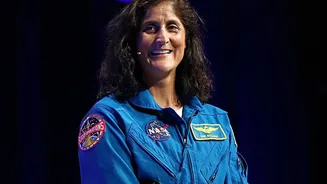
Crew-13 is the thirteenth crew rotation mission to the International Space Station (ISS) under NASA's Commercial Crew Program with SpaceX. The four-person international crew consists of NASA astronauts Jessica Watkins and Luke Delaney, who serve as commander
and pilot, alongside Canadian Space Agency astronaut Joshua Kutryk and Roscosmos cosmonaut Sergey Teteryatnikov. Their long-duration mission aboard the orbiting laboratory will involve conducting a wide array of science experiments and technology demonstrations. These efforts are aimed at advancing research for future deep space missions to the Moon and Mars, as well as developing technologies that can improve life back on Earth. The mission is not just a routine trip; it represents another step in the continuous human presence in low Earth orbit, which is crucial for scientific discovery and operational experience.
What is a 'Dry Dress Rehearsal'?
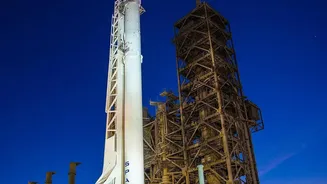
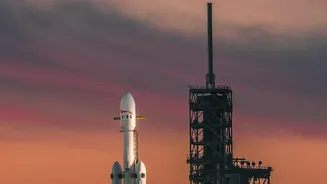
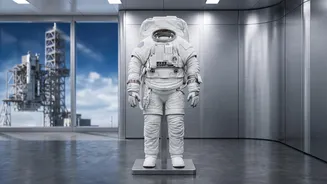
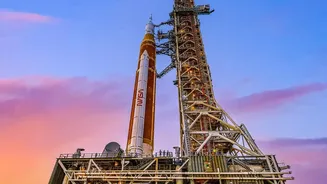
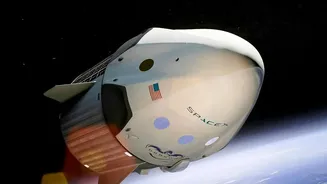
Before the roar of the Falcon 9 rocket's engines, there is a period of intense, quiet focus. The 'dry dress rehearsal' is a full-scale simulation of launch day, from start to finish. The term 'dry' signifies that the rocket is not loaded with propellant; the focus is entirely on procedures, timing, and communication. The astronauts don their sleek SpaceX suits, undergo leak checks, travel to the launch pad, and board the Crew Dragon spacecraft, just as they will on launch day. Every action, from the crew walking across the access arm to the ground teams verifying their control panel operations, is meticulously practiced. This exercise validates the entire integrated system of people, hardware, and software, ensuring every team member knows their exact role and the sequence of events.
Finding Flaws Before They Fly
The headline-making part of a rehearsal is when it uncovers a problem. These aren't typically dramatic equipment failures, but subtle yet critical 'procedural issues'. A procedural issue could be a communication lag between two teams, a step in a checklist that proves inefficient under real-world conditions, or an ambiguity in a command that could lead to confusion during the actual countdown. For example, a team might discover that a specific sequence of software activations takes 15 seconds longer than scheduled, a small delay that could have a cascading effect on the tightly scripted launch timeline. Identifying these nuances on the ground is a measure of success, not failure. It allows engineers and mission planners to refine checklists, streamline communication protocols, and patch gaps in the process, ensuring a smoother, more reliable launch countdown.
A Culture of Proactive Safety
In the high-stakes world of human spaceflight, the philosophy is simple: practice on Earth to prevent problems in space. History has shown that some of the most significant space incidents were rooted not just in technical malfunctions but in procedural oversights or communication breakdowns. The loss of the Mars Climate Orbiter in 1999, for instance, was famously traced back to a simple unit conversion error between two engineering teams. Rehearsals are designed to expose just these kinds of human and systemic vulnerabilities in a controlled environment. By simulating everything from a standard countdown to emergency abort scenarios, NASA and its partners cultivate a culture where finding a flaw is celebrated. Each issue caught during a dry run is one less potential risk for the astronauts, turning meticulous preparation into the ultimate form of risk mitigation.