





An Odyssey for the Digital Age
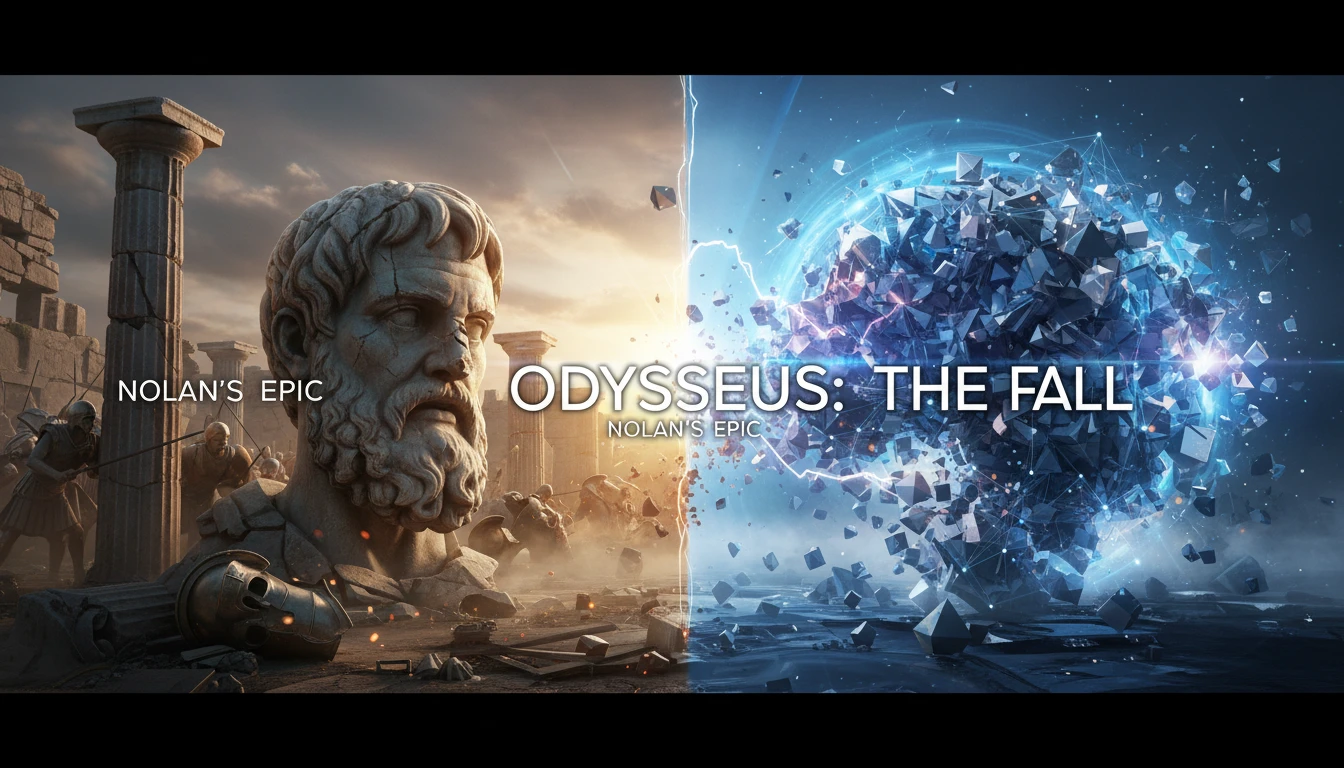
This summer, as audiences anticipate Christopher Nolan’s blockbuster adaptation of The Odyssey, a radically different version is making waves. Titled Odysseus: The Fall, this 135-minute feature film was not shot on sprawling sets with A-list actors, but
generated entirely by artificial intelligence. It comes from director Ash Koosha and the AI film studio Fountain 0, the same team behind the AI-generated docudrama Dreams of Violets which premiered at the Tribeca Film Festival. Deliberately positioned as a counterpoint to Nolan’s big-budget epic, this version was created by Koosha over three months with a comparatively tiny budget, demonstrating a new, democratized path for ambitious filmmaking.
The Ghost in the Machine
How does one direct an AI to create an epic poem? Instead of a traditional screenplay, Koosha worked from extensive notes, using an AI video generator called Kling to build the movie scene by scene. This process allowed for a fluid and interpretive workflow where the script remained open to change throughout production. The film uses the likenesses of 12 real people, including the director himself as Odysseus, to model the characters. Fountain 0 says it also used proprietary in-house software to refine the imagery produced by the core AI model, elevating it to what they describe as the level of human production. The result is a film that was created, as one executive put it, at the “speed of news,” showcasing AI's potential to rapidly respond to cultural moments.
An Odysseus of Internal Conflict
The original Odyssey is a story driven by external forces: the wrath of Poseidon, the favor of Athena, and the inescapable power of fate. Mortals are often pieces on a divine chessboard. This AI epic, however, shifts the focus inward. Koosha, who has been obsessed with the story since childhood, says his take was driven by a desire to explore the character of Odysseus himself. The film reportedly reframes the narrative as an emotional and spiritual journey, chronicling Odysseus’s struggles from a psychological perspective. Instead of a hero whose journey is predetermined, we get a man defined by his choices and their consequences—a modern, existential take on the ancient king.
Choice, Not Prophecy
By emphasizing personal choice, Odysseus: The Fall fundamentally alters the story's DNA. The classic tension in Homer's epic is between fate and free will, with fate almost always holding the upper hand. Prophecies are made and fulfilled, and even when characters make choices, they often lead to a predestined end. This AI version seems to ask: What if the monsters were internal? What if the Cyclops, the Sirens, and the long journey home were all metaphors for personal demons and the weight of past decisions? This approach aligns with a modern understanding of narrative, where character psychology is paramount. The AI, fed not just the epic but potentially a world of modern psychological texts, presents a hero who is less a victim of circumstance and more an architect of his own suffering and, perhaps, his redemption.
The Future of Storytelling?
The release of Odysseus: The Fall has, predictably, been met with both curiosity and controversy. Some critics and social media users have dismissed the trailer, pointing to jerky animation and inconsistent character models, labeling it a “slopbuster” or an “AI parasite” riding on Nolan’s coattails. Yet, the project raises fascinating questions. The creators see it as a benchmark for what AI filmmaking can achieve, providing a tool for artists without Hollywood budgets. It represents a new frontier where timeless myths can be reinterpreted through a technological lens, offering fresh perspectives. AI tools are already being used to make classic literature more accessible and to allow creators to explore stories from different points of view. This film is a bold, if divisive, step into that future.