



A Doctor in Your Pocket
In a country with a significant urban-rural gap in healthcare access, AI is emerging as a powerful ally. The doctor-to-patient ratio in rural India is nearly 11 times below the WHO recommendation, but AI is helping to bridge this divide. AI-powered diagnostic
tools are being deployed to analyse medical images like X-rays and retinal scans, enabling early detection of diseases like tuberculosis, diabetic retinopathy, and even some cancers in areas without specialist radiologists. For instance, AI algorithms can scan chest X-rays to flag potential TB cases, reducing the burden on doctors and allowing for quicker intervention. Beyond diagnostics, AI is empowering community health workers, known as ASHAs. WhatsApp-based AI chatbots like ASHABot can provide instant, multilingual guidance on everything from maternal health to symptom checking, effectively placing a medical resource in their hands. Telemedicine platforms such as eSanjeevani, which has already facilitated hundreds of millions of consultations, are integrating AI to help doctors with preliminary assessments and record-keeping, making virtual appointments more efficient.
The Smart Farmhand
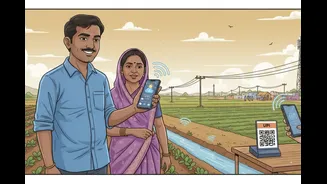
For the more than 86% of Indian farmers who cultivate small plots of land, access to modern agricultural science can be a major challenge. AI is changing this by providing data-driven, actionable advice directly to farmers through their mobile phones. Using satellite imagery, weather data, and soil sensors, AI platforms can offer highly localised recommendations. For example, Microsoft's AI Sowing App advises farmers on the optimal date to plant their crops by analysing weather forecasts and other data, a crucial decision that heavily influences yield. Similarly, AI helps in precision farming, guiding the exact amount of water and fertiliser needed, which not only improves crop output but also conserves resources and reduces costs. Pest and disease prediction is another key area. AI systems can analyse images from drones or even a farmer's phone to detect early signs of an outbreak, allowing for timely intervention before significant damage occurs. Platforms like DeHaat and FarmerChat are creating entire ecosystems, connecting farmers with everything from market price information to buyers, ensuring they get better returns for their produce.
A Personal Tutor for Every Child
India's vast and diverse education system faces challenges of resource disparity and a one-size-fits-all curriculum. AI promises to make learning more personalized, adaptive, and accessible, regardless of a student's location. AI-driven adaptive learning platforms can tailor educational content to an individual's pace and style of learning. If a student is struggling with a concept, the system can provide additional resources and exercises, while allowing others who have mastered the topic to move ahead. This moves away from rote learning toward a focus on critical thinking. These tools can also automate administrative tasks for teachers, such as grading and tracking student progress, freeing them up to provide more focused support. For a country with numerous languages, AI-powered tools can also help bridge linguistic barriers, making quality educational resources available to more students. While still in earlier stages compared to health and agriculture, government initiatives like establishing a Centre of Excellence for AI in education signal a strong push in this direction.
Challenges on the Path Forward
Despite the immense potential, the road to widespread AI adoption in rural India is not without obstacles. A primary concern is the digital divide. The effectiveness of these AI solutions depends on reliable internet connectivity and access to smartphones or other digital devices, which are still not universal in many parts of the country. Furthermore, there is a significant need for digital literacy training to ensure people can comfortably use these new tools. Another critical challenge is data. AI models are only as good as the data they are trained on. There is a need to build high-quality, localized datasets that represent India's diverse populations, languages, and conditions to avoid algorithmic bias. Issues of data privacy and building trust in AI-driven recommendations are also paramount for successful implementation. Addressing these infrastructure, skill, and ethical gaps will be crucial to ensuring that AI truly democratizes expertise and does not accidentally widen existing inequalities.