

The Magic of Hot Salt Roasting
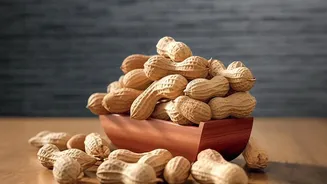
Pan-frying or oven-roasting peanuts at home often leads to a disappointing outcome: either burnt spots on the outside or a chewy, undercooked centre. Street vendors have long known the secret is not direct heat, but indirect, consistent heat. Roasting
peanuts in a thick bed of hot salt provides exactly that. The salt acts as a thermal medium, distributing heat evenly around each peanut. This method gently draws out moisture, resulting in a uniformly golden, perfectly brittle peanut that snaps with every bite. The technique, sometimes used for roasting other foods like whole fish or vegetables, creates a mini-roasting environment that steams and toasts simultaneously. Though it sounds like it would make the peanuts intensely salty, the process imparts only a subtle, savoury flavour as the salt doesn't cling excessively to the finished product. Some vendors even use sand, but salt is a much cleaner and more accessible medium for the home kitchen.
Your Simple Toolkit
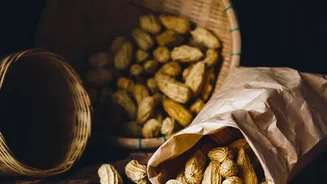
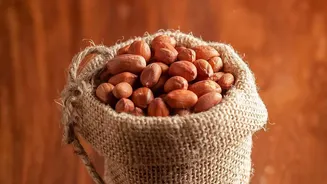
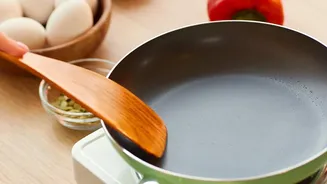
You don’t need any special equipment to master this technique. In fact, the beauty of it lies in its simplicity, which is why it's so well-suited to street-side preparation. All you'll require is a heavy-bottomed pan or kadai, which will ensure the salt heats evenly without creating hot spots. You'll also need a metal sieve or a slotted spatula to easily lift the peanuts out of the hot salt once they're done. The two crucial ingredients are raw peanuts (with their skins on) and a generous amount of common table salt—enough to create a substantial layer in your pan. It’s important to use enough salt to fully or mostly submerge the peanuts, which allows them to 'swim' in the heat and cook from all sides. The best part is that the salt is reusable; once it cools, you can store it in a container for your next batch.
The Roasting Ritual: A Step-by-Step Guide
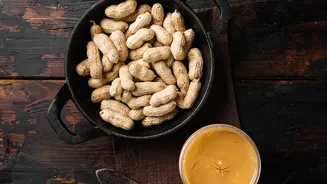
Ready to transform your peanuts? Start by giving the raw peanuts a very quick rinse under water and then draining them completely. Some recipes suggest a brief one-minute soak, which helps a fine layer of salt to adhere to the shells later. Next, pour your table salt into the kadai, creating a bed at least an inch deep, and heat it over a medium flame for several minutes until the salt is very hot. You can test it by carefully dropping a single peanut in; it should start to sizzle. Once the salt is hot, add your peanuts. Keep the flame on medium and stir the peanuts continuously through the salt. At first, they may appear wet, but as they cook, they will dry out and their skins will begin to darken and blister slightly. The process should take about 10 to 15 minutes. The key is constant movement to ensure no single peanut rests against the hot pan for too long.
Mastering the Perfect Crunch
The most important part of the process is knowing when the peanuts are done. The visual cue is a darkening of the skins and a fragrant, roasted aroma filling your kitchen. The only true way to know for sure is to perform a taste test. Carefully remove one peanut, let it cool for a moment (it will be extremely hot), and bite into it. It should be crunchy through to the centre, with no chewiness remaining. Remember, the peanuts will continue to cook slightly from residual heat and will get even crispier as they cool. Once they reach the perfect stage, use your slotted spoon or sieve to lift them out of the salt, shaking off as much excess salt as possible. Spread them on a plate or tray in a single layer to cool completely. Once cool, they can be stored in an airtight container, where they will maintain their signature crunch for weeks.