







The Challenge with Traditional Farming
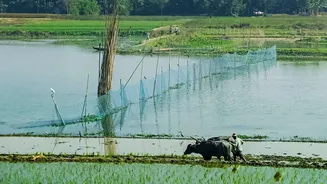
For generations, farmers in coastal Karnataka have cultivated paddy. However, in recent years, this agricultural backbone has faced immense pressure. A combination of irregular rainfall, persistent labour shortages, and rising cultivation costs has made
traditional rice farming an increasingly unsustainable venture for many. These challenges have led to a difficult reality across the region: vast stretches of ancestral farmland being left fallow, as the economics of cultivating them no longer add up. This was the situation facing Manohar Shetty, an entrepreneur and farmer from Uliyaragoli in Kapu taluk, who saw his own 15 to 20 acres of paddy fields become a source of consistent losses rather than stable income.
An Idea Blooms from Adversity
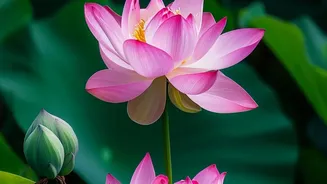
Instead of abandoning his land, Shetty began searching for an alternative. He noticed successful lotus farming projects in other parts of Karnataka, like Mandya and Mysuru, and was inspired. The lotus, or 'kamala', is not just India's national flower; it is a bloom of immense cultural and religious significance, especially in a temple town like Udupi. After spending nearly three months studying the crop's lifecycle and market potential, Shetty decided to take a calculated risk. He started with a small trial on his own land, and its initial success gave him the confidence to go all-in, transforming three acres of his paddy fields into a dedicated lotus farm.
From Fallow Fields to Flowering Ponds
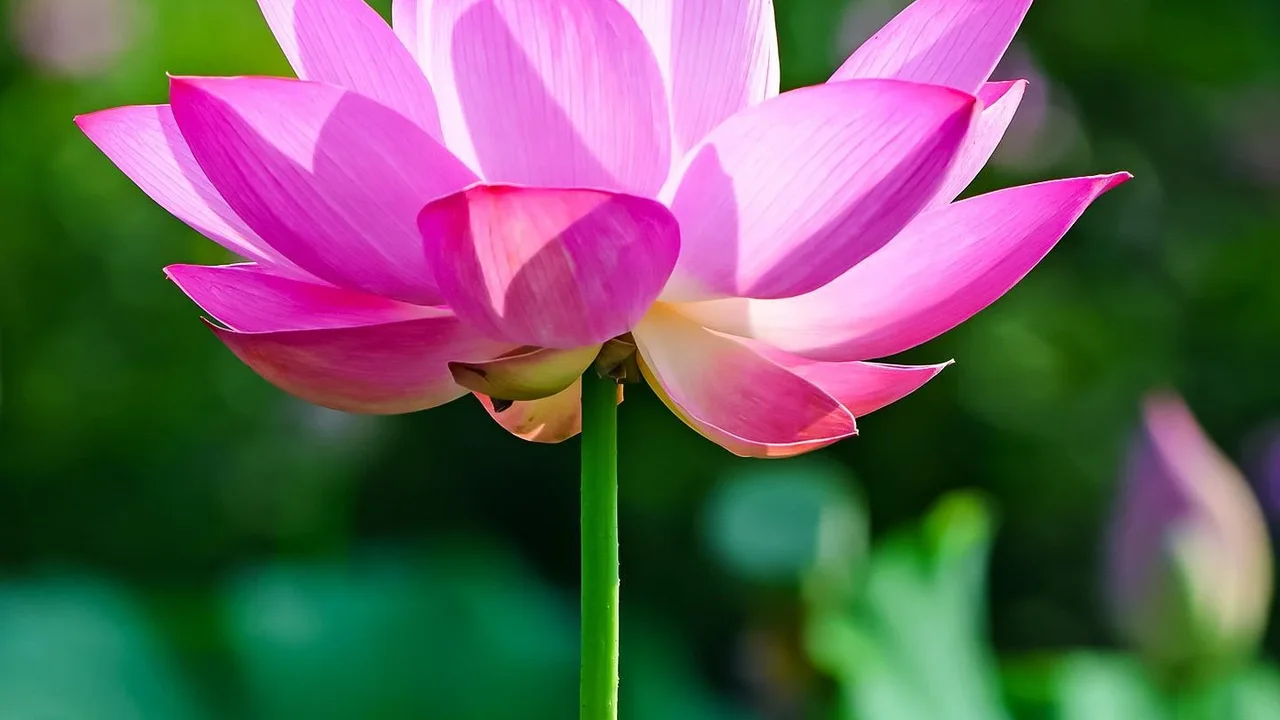
The transition from a paddy field to a lotus pond required a specific approach. Shetty adopted organic farming techniques from the outset. The land was ploughed and prepared with farmyard manure to enrich the soil. A crucial step was ensuring the fields could hold a consistent, knee-deep level of water, creating the ideal aquatic environment for lotuses to thrive. He chose varieties well-suited to the coastal climate, including Pink Cloud, White Peony, and Bucha lotuses. Instead of chemical pesticides, he uses natural, neem-based products for pest control. The results have been remarkable: within just 90 days of planting, the first flowers begin to bloom, ready for harvest.
Tapping into a Sacred Market
The true genius of Shetty's experiment lies in its direct link to a built-in local market. Udupi is home to many prominent temples, including the world-renowned Sri Krishna Math and the Kollur Mookambika Temple. Lotus flowers are an essential component of daily rituals and special offerings in these institutions. This creates a steady, year-round demand that is not subject to the same market fluctuations as many other agricultural products. By cultivating lotuses, Shetty tapped into a reliable revenue stream right at his doorstep. His farm now supplies flowers directly to temples in Kollur, Ucchila, and Kapu, as well as to local flower traders who serve the broader community.
The Economics of the Bloom
The financial turnaround has been dramatic. For the past several months, Shetty's farm has been harvesting between 400 and 500 lotus flowers every single day. Each flower fetches a price of around ₹15. This consistent daily yield translates into a significant monthly income estimated to be as high as ₹1 lakh. This figure stands in stark contrast to the losses incurred from paddy farming on the same land, proving the venture's profitability. The success story showcases a powerful model where a lower-input, culturally significant crop can generate a higher and more stable income than a traditional staple grain.
A Model for the Future
Manohar Shetty's success is not just a personal victory; it offers a blueprint for other farmers in the region facing similar struggles. He is now actively providing technical guidance to other interested farmers, helping them connect with markets. He believes that nearly 200 acres of farmland in the surrounding areas are suitable for lotus cultivation. The opportunity extends beyond just the flowers. Other parts of the lotus plant hold commercial value—the stems can be used to produce fibre for textiles, the roots can be pickled, and the seeds are used in food products. This potential for value-added products presents even more avenues for income generation, creating a truly diversified agricultural enterprise from a single crop.