









Beyond the Degree: The Upskilling Imperative
For Generation Z, education didn't stop at graduation. Witnessing rapid technological shifts and economic volatility, they view continuous learning as a core part of their career strategy. A staggering 57% of Gen Z professionals in India define career growth
as learning new skills, prioritising it over immediate salary hikes or promotions. This isn't just about formal courses; it's a constant process of acquiring practical, future-proof abilities. The rise of Generative AI has only accelerated this trend. In India, 85% of Gen Z are already using GenAI at work, and a majority show strong interest in further AI training to stay relevant. They are actively seeking certifications in AI, data analytics, and digital marketing, often through online platforms, to build a skill set that a traditional degree alone can't provide. This focus on upskilling is a pragmatic response to a fast-changing job market where adaptability is the new currency.
The Side Gig as a Safety Net and Passion Project
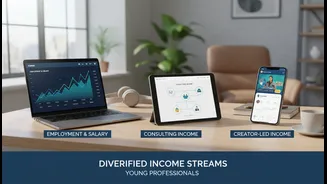
The side hustle is no longer just for extra cash; for Gen Z, it's a multi-purpose tool for financial resilience, skill development, and personal fulfilment. Faced with widespread financial insecurity, many see multiple income streams as a necessity. One report found that 43% of Indian Gen Z professionals combine a primary job with a side hustle. However, the motivation isn't purely financial. A side gig is also an opportunity to test entrepreneurial ideas, build a personal brand, and explore passions that may not be fulfilled by a 9-to-5 job. Significantly, 44% of Gen Z side hustlers report that they are actively building skills for their future careers through these ventures, compared to just 18% of workers from all generations. It's a way of taking control of their professional development in a landscape where lifetime employment with one company is a relic of the past.
Optionality: The New Career Security
Perhaps the most defining aspect of Gen Z's career plan is the pursuit of 'optionality'. This isn't about job-hopping for the sake of it; it's a deliberate strategy to create and maintain multiple possible future paths. Having watched older generations face layoffs and economic downturns, Gen Z is wary of tying their entire identity and financial security to a single employer or role. By constantly upskilling and running side gigs, they are building a 'portfolio of careers'. This approach ensures they are never completely dependent on one path. If a job becomes redundant or a company culture turns toxic, they have other skills, experiences, and income sources to fall back on. This desire for flexibility and autonomy is a core value, with freelancing and project-based work seen not as a backup plan but as a legitimate and fulfilling career choice. For this generation, true career security isn't about loyalty to a company, but loyalty to their own long-term growth and freedom.
What This Means for the Future of Work
The rise of this new career doctrine has profound implications for employers. Companies hoping to attract and retain Gen Z talent can no longer rely on traditional, linear career ladders. Instead, they must foster a culture of continuous learning, offer opportunities for internal mobility, and provide the flexibility that allows employees to pursue outside interests. This generation values mentorship and purpose, often ranking them above compensation. They expect work-life balance not as a perk, but as a non-negotiable standard. For employers, this means a shift from demanding singular focus to embracing the multifaceted professional. The companies that thrive will be those that understand that supporting an employee's side hustle or upskilling journey doesn't create a distraction; it builds a more skilled, resilient, and engaged workforce.