






An Off-Road Icon Reimagined
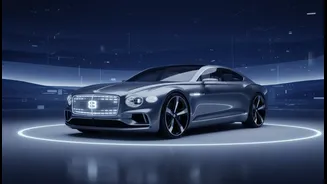
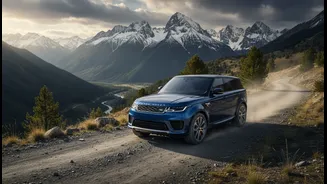
Range Rover has officially pulled the covers off its second all-electric model, the Range Rover Sport Electric, previewing a prototype at the Goodwood Festival of Speed. This marks a pivotal moment for a brand synonymous with go-anywhere luxury. While
the full-size Range Rover Electric was the brand's first EV, the Sport's arrival solidifies Jaguar Land Rover's (JLR) commitment to its 'Reimagine' strategy, which aims to have electric variants of all its core models by 2030. Built on the flexible Modular Longitudinal Architecture (MLA) platform, designed from the start to accommodate electric powertrains, the new model looks nearly identical to its combustion-engine siblings. However, underneath, it’s a different beast entirely. It shares its dual-motor powertrain and a substantial 118.5kWh battery with the full-size Range Rover Electric, promising formidable performance.
Engineered for Adventure, Not Just Acceleration
What truly sets the electric Range Rover Sport apart and supports the idea of EVs breaking free from urban constraints are its specifications. Early reports point to a dual-motor setup producing around 542 horsepower and a massive 850 Nm of torque, delivering instant power. But unlike many luxury EVs that focus solely on straight-line speed, Land Rover has emphasized retaining the brand’s legendary off-road prowess. Prototype tests have showcased its 'Rock Crawl' mode, impressive approach angles, and an advanced air suspension, allowing it to tackle steep inclines and uneven terrain with ease. The company has even touted a one-pedal driving mode specifically tuned for off-road use, allowing for precise control over challenging obstacles. With an estimated range of around 530 km (about 330 miles) and 800-volt architecture enabling rapid DC charging, the vehicle is designed for longer journeys.
A Broader Market Shift
The Range Rover Sport Electric is not an outlier but a prominent example of a wider industry trend. The first wave of luxury EVs often felt like extensions of the tech world—minimalist, screen-heavy, and built for pristine asphalt. Now, established automakers are leveraging electrification to enhance their core brand promises. The Rivian R1S has already proven there's a strong market for adventure-ready electric SUVs. Competitors like the Mercedes-Benz GLE-Class and BMW X5 are also expanding their electric and plug-in hybrid offerings with increasing capability. Even Porsche is entering the fray with an electric Cayenne. This new generation of luxury EVs is moving the conversation from simply range and charging to what you can do with that electric power. The focus is shifting to capability, durability, and the freedom to explore, values long-held by buyers in the premium SUV segment.
Redefining Electric Luxury
As battery technology matures, the definition of 'luxury' in the EV space is evolving. Initially, it was defined by huge touchscreens, silent cabins, and neck-snapping acceleration. While those elements remain, they are no longer enough. True luxury is becoming synonymous with versatility. The ability to handle a daily commute silently on electric power, and then tackle a rugged trail or a long-distance family holiday without compromise is the new benchmark. Brands like Range Rover are betting that their affluent customers want their EVs to do everything their petrol-powered predecessors could, only more quietly and efficiently. This move expands the appeal of EVs to a customer base that may have previously dismissed them as impractical for their adventurous lifestyles.
The Road Ahead Still Has Bumps
Despite the promise, significant challenges remain before EVs can completely conquer the great outdoors. The most glaring issue is charging infrastructure, which is sparse or non-existent in the remote areas these vehicles are built to explore. Range can also decrease dramatically under heavy loads, such as towing or in extreme cold, conditions frequently encountered during overland adventures. Furthermore, the sheer weight of these large-battery SUVs presents its own set of challenges for off-road dynamics and efficiency. While the Range Rover Sport Electric and its contemporaries are pushing the boundaries of what's possible, the ecosystem needed to fully support their capabilities is still catching up. Trailside repairs, for instance, become far more complex with software-driven electric vehicles.