




The Framework for Dialogue
After a period of intense conflict earlier in the year, a fragile diplomatic process was initiated. Mediated by countries including Pakistan and Qatar, a memorandum of understanding (MOU) was signed separately by both Washington and Tehran in mid-June.
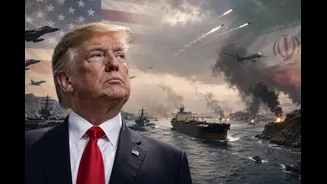
This framework established a 60-day window for de-escalation and further negotiations. The initial focus was on reopening the crucial Strait of Hormuz to commercial shipping in exchange for some immediate, temporary sanctions relief from the US, particularly on oil exports. This step, while significant, was intended as a confidence-building measure to pave the way for talks on the much harder issues.
Conflicting Signals and Public Posturing
A major challenge in tracking progress is the conflicting messaging from both sides. In early August, US President Donald Trump announced that direct talks were imminent, describing them as a “last chance” for Iran. However, Iran's Foreign Ministry publicly denied that any direct negotiations with the US were currently underway. Tehran stated its only confirmed discussions were with Oman regarding a temporary shipping route through the Strait of Hormuz, clarifying that this did not amount to a full reopening. This public disagreement highlights the deep-seated distrust and the domestic political pressures each side faces, where being seen as too eager to talk can be portrayed as a weakness.
The Core Disagreements Remain
Beyond the immediate logistics of de-escalation, the fundamental disagreements that have long defined the US-Iran relationship persist. The primary US goal is to secure long-term, verifiable limits on Iran's nuclear program. Reports suggest Washington is seeking a 15-year suspension of uranium enrichment and expanded international inspections. In return, Iran demands the complete and permanent lifting of all US sanctions, which have crippled its economy, and the release of billions in frozen assets. Tehran views sanctions relief not as a concession but as a necessary precondition for any broader agreement, a point of contention that has stalled previous diplomatic efforts.
Regional Politics Complicate the Path
The negotiations are not happening in a vacuum. Regional actors, particularly Israel and Saudi Arabia, harbor deep skepticism about any deal that doesn't permanently dismantle Iran's nuclear capabilities and curb its influence in the Middle East. Israel, which was reportedly sidelined during the drafting of the June MOU, retains the ability to act as a spoiler. Any agreement Washington makes must account for the security concerns of its key regional allies. Furthermore, the ongoing conflict in Lebanon, where Iran-backed Hezbollah is a major player, remains a significant obstacle. Iran has linked a final settlement to an end of Israeli military operations there, a condition that adds another layer of complexity to an already fraught process.