





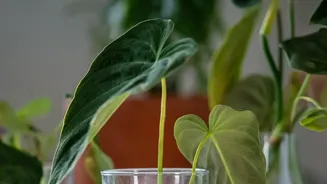

1. Money Plant (Epipremnum aureum)
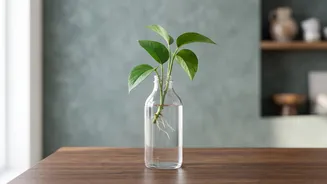
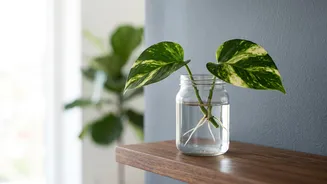
The Money Plant, or Pothos, is arguably the easiest plant to propagate, making it perfect for beginners. Its hardy nature and willingness to grow in either water or soil give you a high chance of success. This trailing vine is a common sight in Indian
households, believed to bring good fortune. To propagate, select a healthy vine and snip off a piece that is four to six inches long, ensuring it has at least two or three nodes (the small bumps where leaves grow). You can place this cutting directly in a jar of water, making sure the nodes are submerged. Within a couple of weeks, you'll see white roots begin to sprout. Once the roots are about an inch long, you can transfer the cutting to a pot with well-draining soil.
2. Rose (Rosa)
Imagine filling your garden with beautiful roses without spending a rupee. Propagating roses from cuttings is a classic gardening skill that allows you to clone your favourite bushes. The best time to take cuttings is after the first wave of blooms has faded. Choose a healthy, straight stem that is about 6 to 8 inches long. Make a 45-degree cut at the bottom, just below a node. Remove all the leaves except for the top one or two sets to reduce water loss. You can dip the cut end in a rooting hormone to improve your odds, though it's not strictly necessary. Plant the cutting in a pot filled with a moist mixture of soil and sand, ensuring at least two nodes are buried. Cover the pot with a plastic bag to create a humid environment, and in a few weeks, your new rose plant should begin to grow.
3. Hibiscus (Hibiscus rosa-sinensis)
The vibrant, tropical blooms of the Hibiscus are a staple in many Indian gardens. Propagating this plant is best done using softwood cuttings taken during the spring or early summer. These are the fresh, green shoots from the current season's growth. Take a cutting that is about 4 to 6 inches long and has several leaves at the top. Remove the lower leaves, leaving just a few at the tip. Plant the cutting in a small pot with a well-draining potting mix, burying it deep enough so that at least one node is under the soil. Keep the soil consistently moist but not waterlogged. For best results, you can create a mini-greenhouse by covering the pot with a clear plastic bag to maintain high humidity, which encourages root development. Roots should form in about eight weeks.
4. Snake Plant (Dracaena trifasciata)
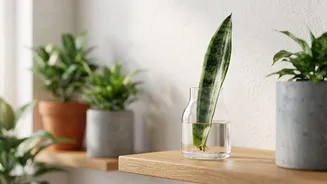
The Snake Plant is a champion of resilience, known for its air-purifying qualities and tolerance for neglect. It can be propagated from leaf cuttings, a fascinating process where a whole new plant grows from just a piece of a leaf. Start by cutting a healthy, mature leaf from the mother plant using a clean knife. You can then cut this leaf into several sections, each about three to four inches long. It is crucial to remember which end is the bottom of each cutting, as planting it upside down will prevent it from rooting. Allow the cuttings to dry for a day or two to form a callus over the cut surface. Then, you can either place them in a shallow jar of water or plant them directly into moist, sandy soil. Be patient, as snake plants are slow growers; it can take a couple of months for roots and new shoots to appear.
5. Spider Plant (Chlorophytum comosum)
Spider plants make propagation incredibly easy by doing most of the work for you. They produce long stems with tiny plantlets, or “spiderettes,” at the ends. These are essentially baby plants just waiting to be potted. Once a spiderette has developed its own small root nubs, it’s ready for a new home. You can simply snip it off the mother plant. From there, you have two simple options: place the spiderette in a glass of water until its roots are a couple of inches long, or plant it directly into a small pot of moist soil. Both methods are highly effective. Water propagation is particularly fun as you get to watch the roots develop day by day. Before you know it, you'll have a new spider plant to keep or share.