







Why Walk in Reverse?
While it might seem like a social media trend, physical therapists have used backward walking, or “retro walking,” in rehabilitation for decades. The reason is simple: it changes your body’s mechanics. When you walk forward, you typically land on your heel.
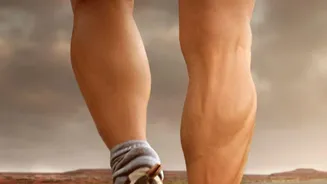
Walking backward forces you to land on your toes and roll to your heel, a motion that engages different muscles and reduces the load on your joints. This small change can have a big impact, strengthening muscles that are often underused in our daily forward-moving lives, including parts of your quads, glutes, and hamstrings. The result is a more well-rounded workout that can complement your regular fitness activities.
The Science-Backed Benefits
The advantages of retro walking are supported by a growing body of research. One of its most celebrated benefits is its effect on knee pain. By strengthening the quadriceps and reducing the compressive force on the kneecap, backward walking can provide significant relief for those with knee osteoarthritis and other joint issues. Studies have shown that backward walking programs can lead to greater reductions in pain and disability compared to forward walking alone. It also enhances balance and stability. Because you can't see where you're going, your body has to work harder, improving your coordination and the systems that prevent falls. Research indicates it can improve walking speed and balance in people recovering from strokes. Furthermore, it’s a more intense workout, burning up to 40% more calories than forward walking at the same speed.
How to Start Safely
The most important rule of backward walking is to prioritize safety. The risk of tripping or falling is real, especially when you are just starting out. Begin in a clear, open space free of obstacles, like an empty hallway, a clear patch of lawn, or an athletic track. A treadmill with handrails is an excellent and safe option for beginners. Start by holding the rails and setting the speed very low, around 1 mph. Stand upright, keep your back straight, and look ahead rather than constantly trying to look over your shoulder, which can throw off your balance. Focus on a smooth toe-to-heel motion with each step. Begin with short sessions of just five to ten minutes, a few times a week. Your primary goal is to get comfortable with the movement before you consider increasing the speed or duration.
Making Backward Walking a Habit
Once you feel confident and stable, you can start integrating backward walking more formally into your fitness routine. A good approach is to use it as a warm-up or cool-down for your regular walk or run. For example, you could walk forward for 10 minutes, then switch to backward walking for 5 minutes before finishing your workout. As your coordination and strength improve, you can gradually increase the duration to 15 or 20 minutes per session. For an added challenge, you can try walking backward on a slight incline on a treadmill, which further increases the cardiovascular demand and muscle engagement. The key is to listen to your body. If you feel dizzy, off-balance, or experience any pain, stop immediately. Consistency is more important than intensity, especially at the beginning.