

A Formal Agreement for a Nuclear Future
In a significant step for the future of space exploration, NASA and the U.S. Department of Energy (DOE) recently signed a new Memorandum of Understanding to accelerate the development of space-based nuclear systems. Titled ‘Accelerating American Leadership
in Space Nuclear Power and Propulsion,’ the 10-year agreement formalizes an end-to-end collaboration that spans research, fuel production, testing, and mission operations. While the two agencies have a long history of working together, this expanded framework is designed to supercharge efforts to create the next generation of technologies essential for long-term missions on the Moon and the eventual human exploration of Mars. The agreement fortifies existing projects and sets a clear path forward, with safety remaining a central pillar of the joint effort.
Why Nuclear is Key for Deep Space
For decades, chemical rockets and solar panels have been the default technologies for space travel. However, they have significant limitations for ambitious, long-duration missions. Solar power is impractical for operating in permanently shadowed craters on the Moon or during Mars' planet-encircling dust storms. Likewise, conventional chemical rockets make for long and arduous journeys; a trip to Mars can take seven to nine months, exposing astronauts to prolonged periods of radiation and increasing the need for supplies. Nuclear technology offers a solution to both problems. It provides a dense, reliable power source that is independent of sunlight and can operate continuously for years. It also enables propulsion systems that are far more efficient, promising to dramatically shorten transit times.
Two Core Focus Areas: Power and Propulsion
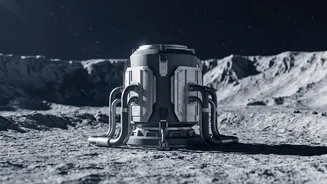
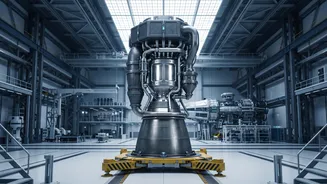
The joint effort is focused on two primary technologies. The first is Nuclear Thermal Propulsion (NTP), which uses a fission reactor to heat a propellant like liquid hydrogen to extreme temperatures and expel it through a nozzle to create thrust. An NTP system is projected to be two to five times more efficient than traditional chemical rockets, which could cut the travel time to Mars in half. The second technology is Fission Surface Power (FSP). This involves developing small, scalable nuclear reactors that can be placed on the lunar or Martian surface to provide a steady, reliable power grid for habitats, science experiments, and resource utilization equipment. NASA's goal is to demonstrate a system capable of providing about 10 kilowatts of electrical power—enough for several households—continuously for at least a decade.
The Road Ahead: Demonstrations and Timelines
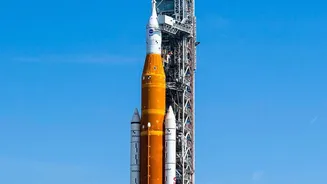
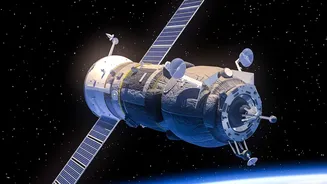
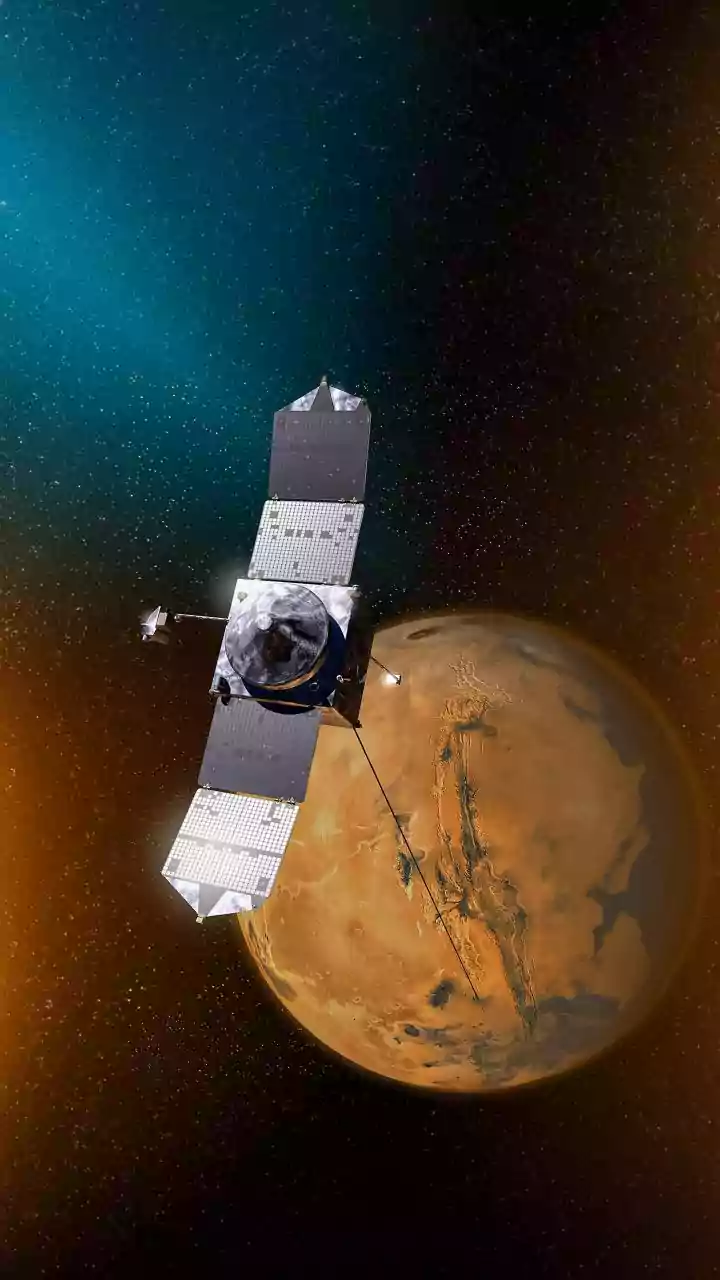
This partnership is not just theoretical; it supports several active projects with concrete goals. One of the most prominent is the development of a nuclear-powered spacecraft to Mars, with a mission dubbed Space Reactor-1 Freedom (SR-1) targeted for a 2028 launch. Another key initiative supported by a previous partnership with DARPA is the DRACO program, which aims to test a nuclear thermal rocket engine in space. For the lunar surface, the agencies are working toward developing a launch-ready fission reactor by 2030, a goal set by a 2025 executive order. These demonstrations are seen as crucial steps to prove the viability and safety of the technologies before they are integrated into crewed missions under the Artemis program and beyond.