







A Historic Leap into Orbit
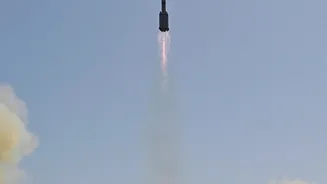
The foundation for this ambitious goal was laid on July 18, 2026, when Skyroot Aerospace successfully launched its Vikram-1 rocket, becoming the first private Indian company to send a vehicle into Earth's orbit. The mission, named 'Aagaman' (Sanskrit
for 'arrival'), lifted off from the Satish Dhawan Space Centre and successfully deployed its payloads into a 450-kilometre orbit. This achievement made India only the third country, after the United States and China, to have a private company with orbital launch capability. This wasn't Skyroot's first taste of space; in November 2022, its Vikram-S rocket completed a successful sub-orbital flight, a crucial stepping stone. But the orbital success of Vikram-1, achieved on its maiden attempt, has firmly placed the company on the global space map.
The Blueprint for a Monthly Cadence
Achieving a monthly launch cadence is a monumental challenge that requires more than just a successful rocket. It's a test of manufacturing prowess, supply chain efficiency, and relentless operational excellence. Skyroot's co-founder and CEO, Pawan Kumar Chandana, has stated that the company's state-of-the-art Hyderabad facility already has the production capacity to build one rocket per month. The strategy is to move from the recent successful test flight towards regular commercial operations. The company plans at least one more test flight in 2026 to validate the rocket's reliability before commencing commercial services next year. This rapid scaling is aimed at tapping into the burgeoning global market for small satellite launches, where demand currently outstrips supply.
The 'Space Cab' Business Model
Skyroot's business model is built around providing dedicated launches for small satellite operators, a service likened to booking a private cab instead of waiting for a bus. Large rockets often carry dozens of satellites in 'rideshare' missions, forcing smaller customers to adapt to a predetermined schedule and orbit. Vikram-1, which can carry up to 350 kg to low Earth orbit, offers a more tailored and flexible alternative. The company aims to attract a global clientele, with estimates that 70-80% of future demand could come from international customers seeking quicker and more precise access to space. This focus on the small satellite market is a strategic bet on a fast-growing segment of the space economy.
Fueling India's 'NewSpace' Ecosystem
Skyroot's rise is a powerful symbol of India's broader ambitions in the space sector. The Indian government's 2020 reforms and the Indian Space Policy of 2023 have been instrumental in opening the doors for private enterprise, creating a vibrant ecosystem of over 400 space startups. This policy shift allows private firms to undertake end-to-end space activities, with crucial support from government bodies like ISRO and IN-SPACe. The success of companies like Skyroot, founded by former ISRO scientists Pawan Kumar Chandana and Naga Bharath Daka, is helping to grow India's space economy, projected to expand from $8.4 billion to $44 billion by 2033. This creates a virtuous cycle, where experienced talent from the public sector helps build a globally competitive private industry.