




The Problem of 'Phantom Braking'
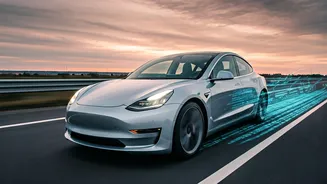
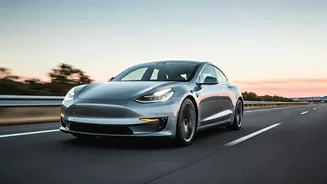
The U.S. National Highway Traffic Safety Administration (NHTSA) recently closed a significant investigation into 695,000 Tesla Model 3 and Model Y vehicles. The probe, which began in 2022, was initiated after hundreds of owners reported instances of their
cars decelerating unexpectedly at highway speeds, a phenomenon often called "phantom braking." Drivers described sudden speed reductions of 10-20 mph over a few seconds, which, while alarming, did not result in crashes or alter the vehicles' position in their lanes, according to the agency's final report. Still, with over 300 initial complaints, the issue represented a serious concern for both drivers and regulators, prompting a formal evaluation of Tesla's autonomous driving systems.
A Fix from the Cloud
Instead of requiring owners to bring their vehicles to a dealership for a physical repair, Tesla addressed the issue through a series of over-the-air (OTA) software updates. These updates, pushed directly to the affected cars via wireless networks, were designed to refine the logic of the automatic braking system and reduce false activations. The effectiveness of this approach is evident in the data: incident reports dropped from hundreds in 2022 to just three in the first half of 2026. This dramatic decline was a key factor in NHTSA's decision to close the investigation, with the agency citing the software updates as the remedy. This follows a pattern for Tesla, which recently saw NHTSA close another probe into power steering loss after a similar OTA fix was deployed.
The New Face of Automotive Recalls
This case highlights a fundamental transformation in the automotive industry. Traditionally, a safety recall meant logistical chaos: notifying owners, shipping parts to dealerships, and scheduling service appointments for hundreds of thousands of vehicles. This process is expensive, time-consuming, and often results in low completion rates. In contrast, an OTA update can resolve a widespread software issue in a matter of days or even hours, with nearly 100% of the affected fleet receiving the fix. For Tesla, the vast majority of its recalls are now handled this way, demonstrating the power of software-defined vehicles. While regulators like NHTSA still use the term "recall" for these software patches, the owner's experience is vastly different—often, the car is fixed overnight while parked in their driveway.
A Model for the Industry
While Tesla has been a pioneer, the entire auto industry is moving in this direction. As vehicles become more connected and reliant on complex software for everything from engine management to driver assistance, the ability to deploy OTA updates is becoming a competitive necessity. It allows manufacturers to not only fix safety issues rapidly but also to continuously improve vehicle performance and add new features long after a car has been sold. However, this shift also introduces new challenges, including cybersecurity risks and ensuring the updates themselves do not introduce new problems. Regulators, in turn, are adapting their frameworks to oversee these digital remedies, ensuring they are effective and reliably deployed. The resolution of NHTSA's braking probe is another clear sign that for many automotive issues, the future of the fix is in the code, not in the workshop.