






The Unseen Backbone of Digital India
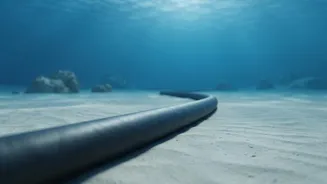
Beneath the waves of the Arabian Sea lies the true engine of Digital India. Not satellites, but a vast network of submarine fibre-optic cables carries over 97% of the nation's international internet traffic. These bundles of glass fibres, often no thicker
than a garden hose, are the physical conduits for nearly every digital interaction that connects India to the world. They handle everything from global financial transactions and cloud computing to the content streaming on your phone. As India’s data consumption accounts for about 20% of the global total, the health of these cables is not just a technical issue—it's a matter of national economic security and stability.
Mumbai's Digital Choke Point
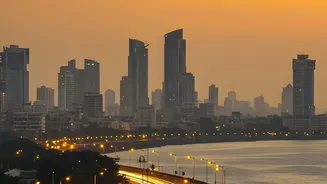
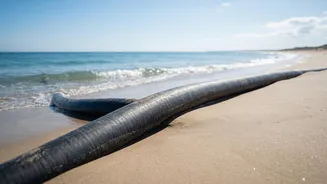
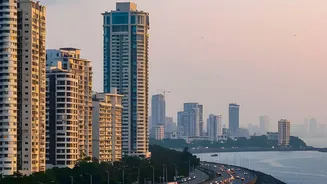
The heart of this incredible network has a startlingly small physical footprint. A staggering 13 of India's 18 main intercontinental cables make landfall along a tiny six-kilometre stretch of coastline near Versova in Mumbai. This single area serves as the gateway for as much as 95% of India's data traffic heading towards Europe, Africa, and West Asia. Historically, Mumbai's strategic port location and commercial importance made it a natural hub. However, this legacy has created a critical point of failure. The concentration means that a single localised event—a powerful cyclone, a subsea landslide, or even a carelessly dropped ship anchor—could have an outsized and devastating impact on the entire country's connectivity.
The High Cost of Standing By
This geographical vulnerability is dangerously compounded by a bureaucratic one. Cable faults are common, with up to 200 incidents happening globally each year from fishing, anchor drags, and natural causes. When a cable serving India is damaged, the clock starts ticking. The problem is, India has no dedicated, home-flagged vessels capable of performing the complex repairs required in deep water. The nation is entirely reliant on foreign repair ships, which must be summoned from distant hubs like Singapore or Dubai. Before any work can begin, these vessels and their crews must navigate a labyrinthine clearance process involving as many as 16 different government agencies, from the Ministry of Home Affairs to shipping authorities and the Coast Guard. This process can add weeks, and in some cases months, to the repair timeline.
An Economy on Hold
In a digital-first economy where milliseconds matter, a delay of several weeks is catastrophic. A prolonged outage or even a significant slowdown could cripple key sectors. The stock markets, banking systems, IT services, and the entire startup ecosystem depend on stable, high-speed connectivity. A major disruption would halt UPI transactions, freeze cloud-based services, and disconnect India's formidable business process outsourcing industry from its global clients. The risk is not merely theoretical; a 2025 incident involving cable damage near Saudi Arabia slowed internet services across India, demonstrating the real-world impact of disruptions even outside the country's territorial waters. This reliance on foreign repair capacity is now widely seen as a strategic vulnerability, not just an operational hassle.
Building a More Resilient Future
Fortunately, awareness of this critical issue is growing. The Department of Telecommunications is reportedly developing a single-window portal to streamline the complex clearance process for repair vessels, with a tentative target for implementation by March 2027. There is also a push to encourage investment in a domestic repair capability, which would drastically cut down response times. Beyond repairs, diversification is key. Several new submarine cable systems are in development, with landing stations planned for other coastal cities like Chennai, Kochi, Tuticorin, and Machilipatnam. Projects like the IAX, IEX, and 2Africa cables aim to not only increase India's total bandwidth but also spread the physical infrastructure across different geographical locations, reducing the over-reliance on Mumbai.