






The New Productivity Frontier
A new generation of tools, supercharged by artificial intelligence, is reshaping how work gets done. From generative AI that can draft reports and code to sophisticated data analytics platforms, these technologies promise to automate repetitive tasks
and unlock unprecedented efficiency. Companies that effectively integrate these tools report significant gains. In India, for instance, the push for AI adoption is seen as a strategic imperative to remain competitive. Many companies are rolling out AI training, hoping to transform their workforce from 'AI-curious' to 'AI-proficient'. The goal, as some experts note, is to make AI a capability multiplier across every department, not just a theoretical concept. This isn't just about IT teams anymore; functions from HR and finance to sales and operations are all expected to leverage AI for better outcomes.
An Emerging Digital Divide at Work
Despite the push, access to this crucial training is far from equal. The current reality is that a digital skills gap is widening within organizations. Often, formal training is prioritized for specific departments like IT, or for senior-level employees, leaving a large portion of the workforce behind. Research shows that while many employees are eager to gain AI skills, there's a disconnect between this desire and the opportunities provided. A significant number of workers report a lack of time for upskilling as a major concern. This creates a two-tier system where one group of employees becomes fluent in the technologies driving future growth, while another is left with outdated skills. This disparity isn't just a local issue; globally, there are concerns that unequal access could deepen existing inequalities, with some reports highlighting a significant gender gap in AI skills.
The High Cost of Unequal Access
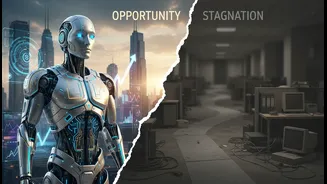
The consequences of this internal skills divide are severe. For individuals, it can mean career stagnation and becoming obsolete in a rapidly changing job market. For companies, the cost is equally high. A bifurcated workforce, where only a fraction of employees can leverage new tools, limits overall productivity and hampers innovation. Organizations that fail to bridge this internal gap risk creating bottlenecks, delaying projects, and ultimately falling behind competitors who foster a more universally skilled workforce. The promise of technology is not in just having the tool, but in the ability of the entire organization to wield it productively. Without widespread proficiency, the massive investment in new technology fails to deliver its full return.
Moving Beyond Traditional Training
Closing this gap requires a fundamental shift in how companies approach learning and development. The rapid evolution of technology, where skills can become outdated in just a few years, makes traditional, top-down training models insufficient. The solution lies in creating a culture of continuous learning, where upskilling is not a one-time event but an ongoing process integrated into daily workflows. This involves a commitment from leadership to champion learning, providing personalized learning paths for different roles, and ensuring easy access to a variety of resources. Many progressive employers in India are already moving in this direction, investing in role-specific AI enablement and blended learning models that combine digital tools with peer coaching to build a habit of AI use among all employees.