






An Accidental Cannonball
On August 5, 2026, a spent Falcon 9 upper stage is projected to slam into the lunar surface at over 5,400 miles per hour. This particular piece of hardware, cataloged as 2025-010D, completed its primary mission back in January 2025, when it successfully
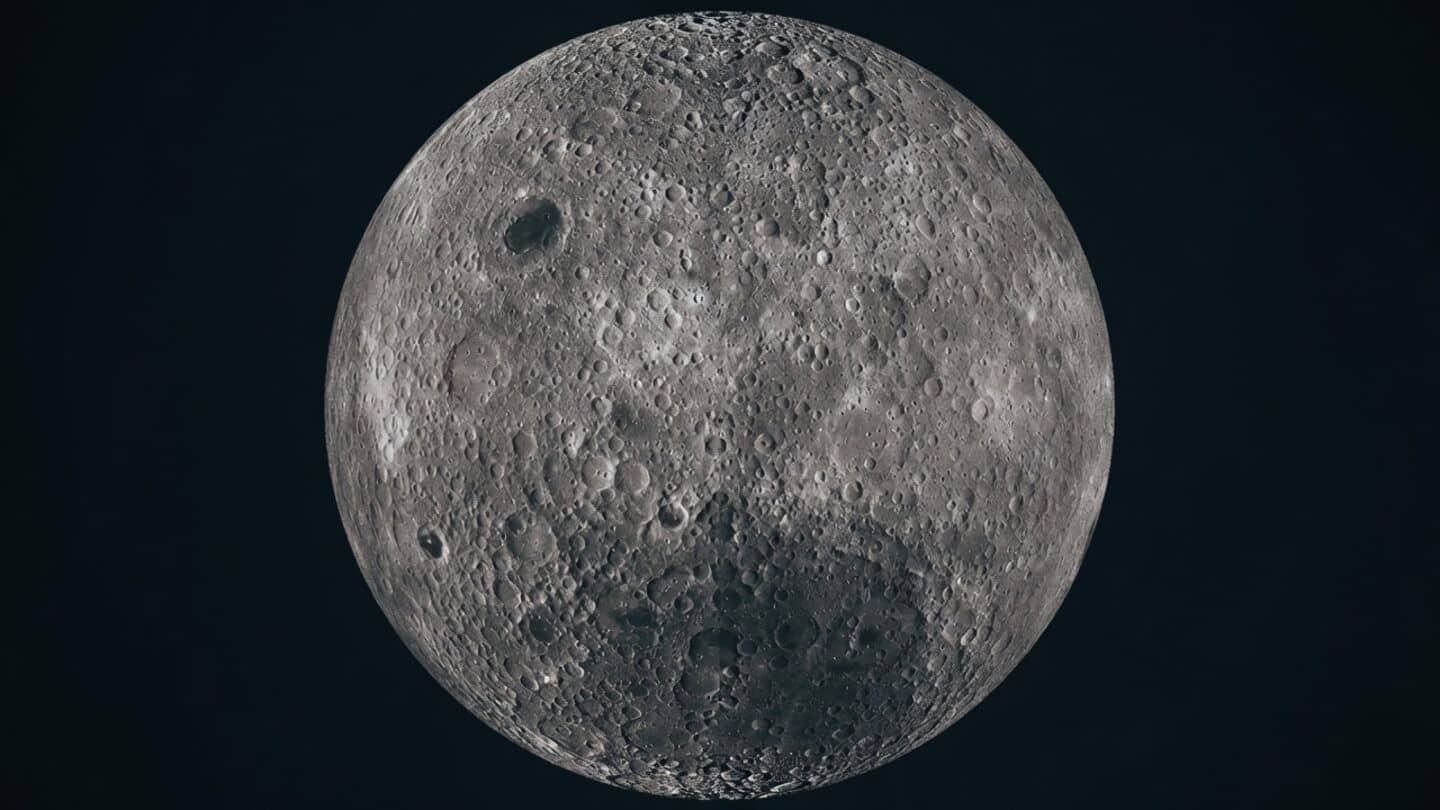
pushed two robotic lunar landers—Firefly's Blue Ghost-1 and ispace's Resilience—onto their trajectory toward the Moon. Having exhausted its propellant, the stage had no way to guide itself into a safe, controlled reentry into Earth's atmosphere or make a planned landing. Instead, it was left in a chaotic, high orbit, slowly pulled and prodded by the gravitational forces of the Earth, Sun, and Moon. Now, its uncontrolled journey is set to end by carving a new, permanent crater into the Moon near a feature known as Einstein Crater.
An Unavoidable Scientific Opportunity
While the impact is accidental, it has created a rare and valuable opportunity for scientists. Deliberately crashing probes into the Moon has been a tactic since the Apollo era to study lunar geology through the resulting seismic waves. This unplanned event serves a similar purpose. Researchers are eager to observe the impact and the resulting plume of dust and rock, called ejecta. Models predict the debris cloud could rise tens of kilometers above the surface. By analyzing the light from this plume, scientists hope to learn about the composition of the lunar soil, or regolith, in that specific location without having to land a probe there. NASA's Lunar Reconnaissance Orbiter (LRO) will be tasked with locating the new crater, which is expected to be about 20 to 30 meters wide, offering a before-and-after look at the surface.
Not the First Time
This isn't the first time a piece of space hardware has made an unceremonious arrival on the Moon. In March 2022, another rocket body struck the lunar far side. Initially, that object was also thought to be a SpaceX upper stage from the 2015 DSCOVR mission launch. However, further analysis by astronomer Bill Gray, who also predicted the current 2026 impact, revealed it was more likely a remnant of China's 2014 Chang'e 5-T1 mission. Though China disputed the claim, the incident highlighted a growing problem: the lack of comprehensive tracking and identification for objects in deep space. Unlike the 2022 impactor, the origin of this 2026 object is not in doubt; it is definitively a SpaceX stage.
The Growing Problem of Cislunar Junk
For decades, the conversation around space debris has focused on Low Earth Orbit (LEO), where thousands of satellites operate. But as more missions from nations and private companies venture to the Moon, the cislunar environment—the space between Earth and the Moon—is becoming increasingly cluttered. Currently, there are no binding international laws or robust regulations governing the disposal of rocket stages or other hardware left in these high orbits. Guidelines like the 25-year deorbit rule apply primarily to LEO and are often voluntary. The FAA in the US has moved toward a stricter five-year rule, but this doesn't address hardware sent far beyond Earth's immediate vicinity. Each abandoned stage becomes a potential hazard, an uncontrolled projectile in a region we are actively trying to explore.