





Meet the Mind Behind the Vision
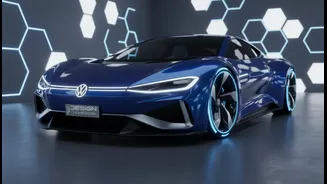
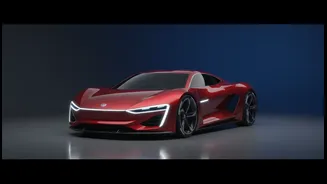
The concept, unofficially dubbed the Volkswagen Vision 100K GT, is the brainchild of Haochen Zhang, a design student from China's Xihua University and a graduate of the prestigious ArtCenter College of Design in California. His work emerged from an internship
project, a common practice where automotive giants task young designers with envisioning the future. These projects serve as a creative sandbox, allowing fresh talent to explore bold ideas without the constraints of mass production. While many such designs remain academic exercises, Zhang's creation was so compelling that it broke free from the classroom, spreading rapidly across automotive news sites and social media, sparking conversations among fans and critics alike.
Deconstructing the Design
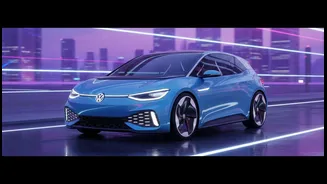
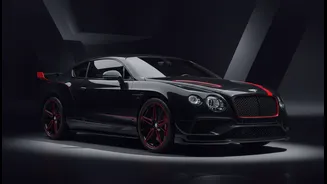
The Vision 100K GT is a breathtaking piece of digital sculpture. It’s a low-slung, aggressive machine that blends classic supercar proportions with a futuristic, electric-first identity. The design features a sleek, aerodynamic body, massive air intakes, and a dramatic rear end dominated by a full-width light bar. Zhang imagined it as an all-electric powerhouse, a nod to the direction the entire industry is heading. The '100K' in the name is a hypothetical nod to a 100 kWh battery pack. While no official performance figures exist for this digital dream, its aggressive stance and racing-inspired details suggest it would be built to compete with the best in the electric performance category. It's a statement piece that shows how the iconic VW brand could be stretched into new, exhilarating territory.
The Role of the Concept Car
In the automotive world, concept cars are more than just flights of fancy. They are crucial tools for innovation and marketing. For companies like Volkswagen, sponsoring student competitions and fostering interns is a direct pipeline to the next generation of creative minds. These projects allow the company to explore radical design languages, test public reaction to new ideas, and signal future intentions without committing billions to a production line. A concept like Zhang's serves as a 'what if' scenario. It probes the limits of a brand's identity. Can the same company that makes the practical Golf and the family-friendly Atlas also produce a machine that looks like it belongs on the starting grid at Le Mans? Designs like the Vision 100K GT help answer that question.
Not a First for Volkswagen
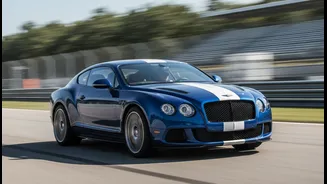
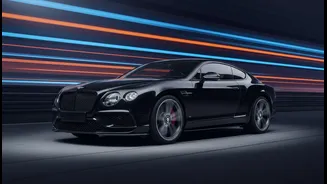
While a supercar might seem out of character, Volkswagen has flirted with high-performance concepts before. In the late 1990s and early 2000s, the company stunned the world with its W12 Nardo concept, a genuine supercar that packed a 600-horsepower engine and set speed records. Although the Nardo was never put into production, the engine technology it pioneered eventually found its way into high-end models from Audi and Bentley, both part of the Volkswagen Group. More recently, concepts like the GTI Roadster Vision Gran Turismo, a radical open-top sports car created for the Gran Turismo video game series, showed VW's wild side. These projects demonstrate that the ambition for performance has long simmered within the Wolfsburg-based automaker.
Will We Ever See It on the Road?
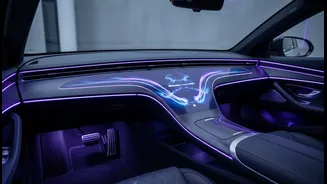
The unfortunate reality for admirers of the Vision 100K GT is that it will almost certainly never be built. It remains a personal project from a talented intern, not an official VW prototype. The business case for a Volkswagen-branded supercar is difficult, as it would compete internally with sister brands like Lamborghini and Porsche, which already dominate that space. However, that doesn't diminish its importance. The true value of Zhang’s design isn't the car itself, but the ideas it represents. It’s a powerful demonstration of how VW's design language can evolve for an electric future. Elements from this stunning concept—its lighting, its aerodynamic principles, its minimalist interior—could very well influence the look and feel of the next generation of electric Volkswagens that do make it to the showroom.