

The Unpredictable Threat of Volcanic Tsunamis
Most tsunamis are caused by massive undersea earthquakes, and warning systems are primarily designed to detect these seismic events. But tsunamis generated by volcanoes are a different beast. They account for about 5% of all tsunamis but are responsible
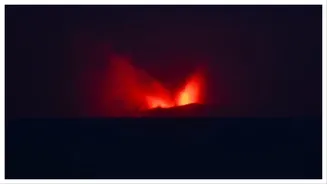
for a disproportionate number of deaths, partly because they are so difficult to predict. The cataclysmic 2022 eruption of the Hunga Tonga-Hunga Ha'apai volcano was a dramatic reminder of this danger. That event triggered destructive waves across the Pacific, but researchers have since discovered that the eruption produced multiple tsunamis from different causes, including a massive caldera collapse that was not well-detected by conventional seismic monitors. This unpredictability highlights a critical gap in global tsunami warning capabilities.
Listening to the Deep Ocean's Warning Bells
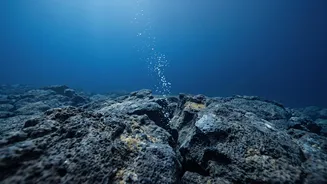
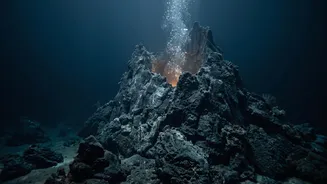
Sound travels incredibly efficiently through water. An isolated underwater volcano can act like a giant bell, radiating distinct acoustic signals—known as T-waves—from violent processes happening deep below the surface. Scientists can listen to these sounds using hydrophones, which are essentially underwater microphones that detect pressure changes and convert them into electrical signals. By placing arrays of these hydrophones across the ocean, researchers can pick up the sounds of submarine landslides, explosions of lava hitting cold seawater, and even the immense noise generated by a volcano collapsing in on itself. The events at Hunga Tonga showed that a powerful acoustic signal from the caldera collapse was detected thousands of kilometres away, providing a clear signature of the event that created the most destructive local tsunami.
A Crucial Head Start in a Race Against Time
The single greatest advantage of acoustic monitoring is speed. Sound waves travel through seawater at approximately 1.5 kilometres per second, which is more than seven times faster than a tsunami wave can travel. This difference creates a precious window of time for a potential warning. Analysis of the 2022 Tonga event revealed that the acoustic signal from the caldera collapse began at around 6:28 PM local time. A telecommunications tower on the island of Tongatapu, roughly 60 kilometres away, was destroyed by the resulting tsunami about 17 minutes later. If a system had been in place to automatically detect and locate that acoustic signature, it could have provided a warning before the wave made landfall, potentially saving lives and property.
From Sound to Actionable Warning
Capturing the sound is only the first step; interpreting it is the real challenge. Scientists are working to build a library of acoustic signatures to differentiate between routine volcanic activity and a truly catastrophic, tsunami-generating event like a caldera collapse or a massive flank failure. This involves re-analysing data from past eruptions and using machine learning models to identify patterns that might be missed by human observers. The goal is to integrate this acoustic data into existing tsunami warning centres, complementing the current earthquake-focused systems. This would create a more robust network capable of identifying a wider range of tsunami triggers and issuing more accurate, timely alerts to vulnerable coastal communities.
The Future of Underwater Monitoring
While promising, acoustic monitoring is not a silver bullet. There are hundreds of submarine volcanoes around the world, and many are not monitored at all. Building and maintaining extensive hydrophone arrays is a significant undertaking. Furthermore, not every eruption will produce a clear, identifiable acoustic warning. Despite these hurdles, the research spurred by the Hunga Tonga eruption marks a significant leap forward. It has demonstrated a clear proof of concept: that listening to the rumbles and booms of underwater volcanoes offers a vital new tool in our global effort to forecast these unpredictable and powerful natural disasters, giving coastal populations a better chance to prepare for the worst.