




The Quest for the Tiger
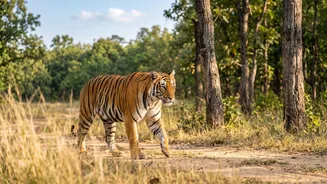
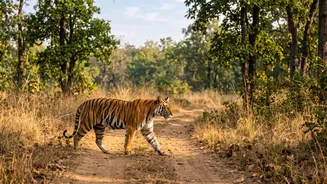
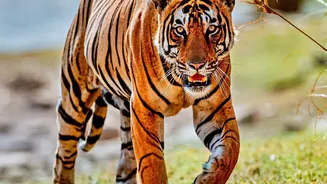
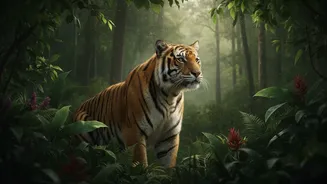
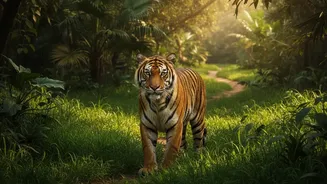
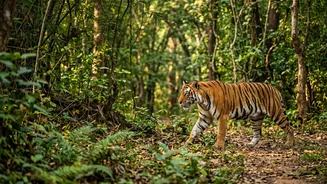
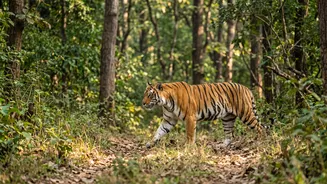
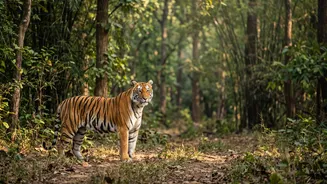
The Royal Bengal Tiger is the undisputed star of India's wildlife narrative. Parks like Ranthambore in Rajasthan and Bandhavgarh in Madhya Pradesh are globally renowned for their tiger populations. Bandhavgarh, a smaller park, boasts one of the highest
tiger densities, increasing the probability of a sighting. Ranthambore combines its wild residents with the romance of ancient ruins, creating a stunning backdrop for photography. However, the tiger is an elusive creature, and patience is key. A safari is a game of chance; while guides are experts at tracking, a sighting is never a certainty. Instead of focusing solely on the tiger, visitors are encouraged to appreciate the entire ecosystem, from the alarm calls of deer to the diverse birdlife that signals a predator's presence.
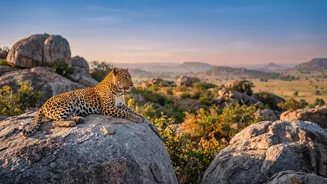
In the Land of the Leopard
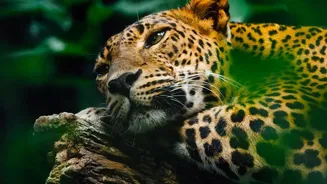
More adaptable and widespread than tigers, leopards offer a different kind of thrill. These masters of camouflage are notoriously difficult to spot in dense forests. However, specific locations in India have become hotspots for leopard sightings. Jawai in Rajasthan is perhaps the most famous, where leopards roam the unique granite hills and have a fascinating, co-dependent relationship with local communities. The open terrain here makes sightings more frequent, with some operators claiming a success rate of over 90%. Other notable spots include Satpura National Park in Madhya Pradesh and Nagarhole National Park in Karnataka. Unlike in tiger-dominated parks, leopards in places like Jawai are the apex predators, often making them more visible during the day.
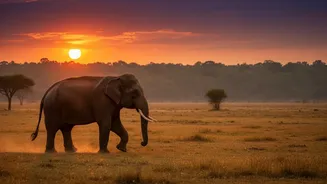
Kingdom of the Gentle Giants
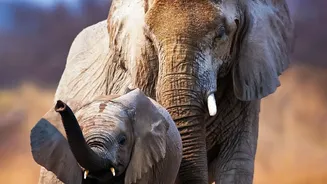
An encounter with a herd of wild elephants is one of the most awe-inspiring experiences in the Indian jungle. For this, South India is a prime destination. Periyar National Park in Kerala, with its serene lake, offers boat safaris where visitors can watch herds of elephants come to drink. In Karnataka, Nagarhole and Bandipur National Parks are also excellent for spotting these intelligent giants. In the northeast, Kaziranga National Park in Assam is another stronghold for elephants, alongside its famous one-horned rhinoceros population. Watching a family of elephants, from the massive matriarch to playful calves, move through the grasslands is a powerful reminder of the rich biodiversity thriving in these protected lands.
Beyond the 'Big Three'
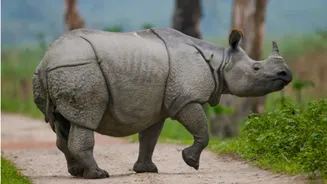
While tigers, leopards, and elephants are major draws, India's national parks are treasure troves of other fascinating species. Kaziranga National Park is a UNESCO World Heritage site, home to two-thirds of the world's great one-horned rhinoceros population. A safari here offers an almost guaranteed sighting of this prehistoric-looking marvel. Similarly, parks like Satpura are known for sloth bear sightings, while the wetlands and grasslands across the country are a paradise for birdwatchers, with hundreds of resident and migratory species. Embracing the full spectrum of wildlife, from the jackal and wild boar to the myriad of bird species, transforms a safari from a single-minded hunt into a rich, immersive experience.
The Philosophy of the Safari
The most important part of any wildlife journey is managing expectations. Sightings are a privilege, not a guarantee. The modern approach to wildlife tourism in India is shifting towards appreciating the entire experience—the crisp jungle air, the tracking skills of your guide, the thrill of the search, and the beauty of the habitat. Responsible tourism encourages visitors to become active participants in conservation rather than just passive observers. This means respecting park rules, maintaining a safe distance from animals, and choosing ethical tour operators who support local communities and conservation efforts. The true magic of a safari lies in the understanding that you are a guest in nature's home, where every rustle in the leaves holds a story.