




A Crucial First Step
Inclusion on the UNESCO Tentative List is the essential first step for any site aspiring to gain the coveted World Heritage status. This list is an inventory of properties that a country intends to nominate in the coming years. While it is not the final
inscription, it is a declaration of a site's potential 'Outstanding Universal Value'. For India, this move, announced by the Permanent Delegation of India to UNESCO, marks the beginning of a rigorous journey to secure global recognition for these unique locations. The Archaeological Survey of India (ASI) is lauded for its diligent research and documentation that made this preliminary recognition possible.
Andaman's Geological Wonders
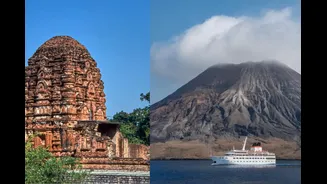
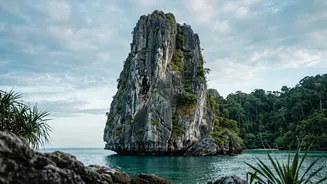
The Andaman and Nicobar Islands contributed two distinct geological sites to the list. The first is the 'Karst-Mud-Volcano Complex of Baratang', a unique landscape featuring dissolutional limestone caves and active mud volcanoes that recently erupted in 2025 after a period of dormancy. This area provides a fascinating look into the region's tectonic and sedimentary history. The second site is the 'Andaman Subduction Volcanoes', which includes Narcondam and Barren Island. Barren Island is particularly notable as it is home to India's only confirmed active volcano, rising dramatically from the sea. Together, these sites showcase powerful and ongoing geological processes.
Chhattisgarh's Ancient Capital
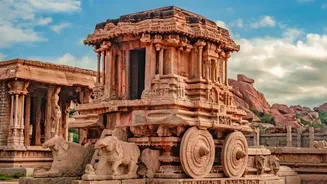
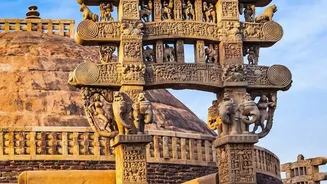
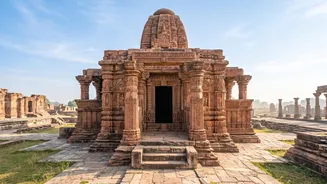
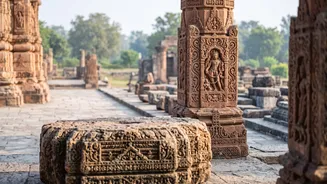
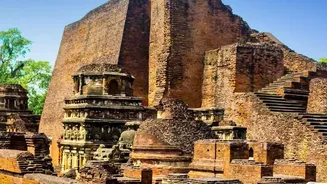
The third entry is the 'Sirpur Cultural and Archaeological Landscape' in Chhattisgarh, a site of immense historical importance. Located on the banks of the Mahanadi River, Sirpur was once the capital of the Kosala Kingdom, flourishing between the 5th and 12th centuries CE. The archaeological remains bear witness to a layered history of architectural complexity and multi-faith patronage, with Hindu and Buddhist structures reflecting its role as a cultural and economic hub. Uniquely, the landscape is built on stromatolites—fossilised structures formed by cyanobacteria over a billion years ago—which were also used as a distinctive local building material for the temples and monuments.
The Path to World Heritage Status
Getting on the Tentative List is like being shortlisted for a prestigious award; the main event is yet to come. Now, the Indian government, through the ASI, must prepare a comprehensive nomination dossier for each site. This detailed file must prove the site's 'Outstanding Universal Value' by meeting at least one of ten selection criteria defined by UNESCO. The dossier is then submitted to the World Heritage Centre for a formal evaluation process that can take at least 18 months. International advisory bodies like the International Council on Monuments and Sites (ICOMOS) and the International Union for Conservation of Nature (IUCN) will independently assess the nomination before the World Heritage Committee makes a final decision at its annual meeting.
India's Growing Heritage Footprint
These three additions bring the total number of sites on India's Tentative List to 81, a testament to the country's vast and diverse heritage. This growing inventory reflects a sustained national effort to identify, protect, and promote India's cultural and natural treasures. As these sites in the Andamans and Chhattisgarh begin their journey toward formal nomination, they join a pipeline of other nationally important locations hoping to achieve the same global recognition as India's 45 existing World Heritage Sites. The process is long and demanding, but the potential rewards—enhanced protection, global visibility, and a boost to conservation efforts—are immeasurable.