





The Changing of the Guard
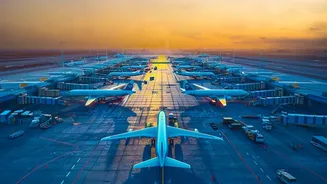
The long-established order of global aviation has been officially reshuffled. According to preliminary figures for the first half of 2026 from Airports Council International (ACI), Seoul's Incheon Airport handled 38.39 million international passengers.
This figure narrowly pushes it ahead of London's Heathrow, which managed 37.79 million international passengers in the same period. Singapore's Changi Airport came in third, underscoring the rising dominance of Asian hubs. The milestone marks the first time Incheon has claimed the top spot since its opening in 2001, completing a steady climb from 10th place in 2002 to the global pinnacle. The shift is not just a story of numbers, but a clear indicator of broader changes in travel patterns, economic influence, and geopolitical landscapes.
Incheon's Strategic Ascent
Incheon's rise to the top was no accident; it was the result of a multi-decade strategy focused on expansion and service. The airport recently completed a massive four-phase expansion project in 2024, boosting its annual capacity to 106 million passengers and making it one of the largest in the world. This foresight meant Incheon had the infrastructure ready to absorb a surge in demand. That surge came from two primary sources. Firstly, a significant increase in tourism to South Korea, driven by visitors from China and Japan, pushed the proportion of foreign travellers to a record high. Secondly, and more dramatically, Incheon has become a crucial transit hub for passengers rerouted from other parts of the world.
Geopolitics and Global Headwinds
A key factor accelerating Incheon's ascent has been the geopolitical turmoil in the Middle East. The conflict involving the US and Iran has significantly disrupted operations at major Middle Eastern hubs like Dubai International Airport, which has long vied with Heathrow for the top spot. With transfer traffic through the region weakened, many airlines and passengers have sought alternative routes for travel between Europe and Asia. Incheon has been a primary beneficiary of this diversion. In the first half of 2026, its overall transfer passenger numbers jumped by 18%, while transfer traffic on European routes soared by an astounding 63.2%. This redirected flow of travellers has been instrumental in tipping the scales in Incheon’s favour.
Heathrow's Battle with Capacity
While Incheon has been expanding, Heathrow has been grappling with its own set of challenges. The London hub has been operating at or near its maximum capacity for years, making significant growth difficult without the controversial and long-debated third runway. Although Heathrow also reported a record number of total passengers for the first half of the year, its growth in the crucial international sector was not enough to hold off Incheon's charge. The airport had already forecast a slight decline in its full-year 2026 passenger numbers, citing the same Middle Eastern conflict that has dampened demand on some of its key routes. This combination of capacity constraints and external pressures has made it vulnerable to fast-growing competitors.