




India's electric vehicle market just had a blockbuster October. Propelled by the festive season, sales soared, signalling a major shift in consumer appetite. While Tata Motors held its top spot, a new challenger emerged right behind it.
The Scale of the October Surge
The numbers for
October 2026 paint a clear picture of an EV market hitting its stride. According to data from the Federation of Automobile Dealers Associations (FADA), retail sales of electric passenger vehicles jumped to 37,049 units. This represents a massive 76.5% year-on-year growth compared to the 20,995 units sold in October 2025. This impressive performance pushed the market share of EVs in overall car sales to 7.3% for the month, more than double the 3.5% share seen a year prior. While sales saw a slight dip from the record highs of September 2026, the year-on-year expansion underscores a fundamental shift in the Indian automotive landscape. The festive demand provided a significant boost, but the underlying trend is one of sustained and rapid growth.
Tata Motors: Still the Undisputed Leader
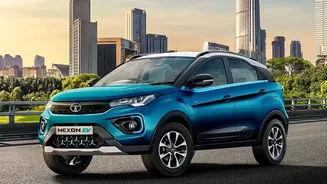
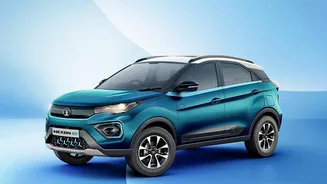
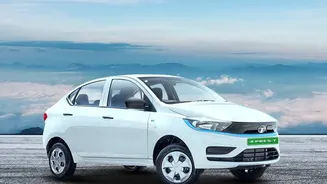
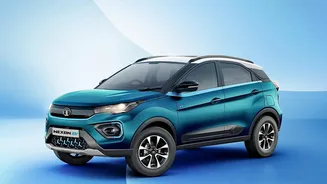
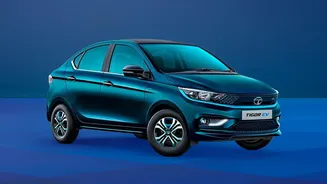
Despite growing competition, Tata Motors continues to dominate the EV space. The company maintained its leadership position, retailing 14,669 electric vehicles in October. This performance marks a strong 77.6% year-on-year increase. Tata's extensive portfolio, including the top-selling Punch EV and the popular Nexon EV, gives it a commanding 40.7% market share. Models like the Punch EV have made history, with wholesale dispatches crossing the 5,000-unit mark in a single month, a first for any standalone EV model in India. This success is built on a strategy of offering a variety of models across different price points, from the accessible Tiago EV to more premium offerings, which continues to resonate with a broad base of Indian buyers.
Mahindra's Remarkable Climb to Second Place
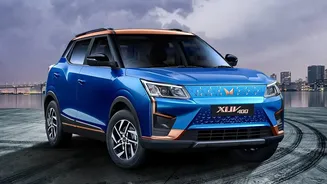
The biggest story of October, however, is the ascent of Mahindra & Mahindra. The homegrown auto giant solidified its position as the second-largest EV player in the country. Mahindra sold 8,538 electric SUVs, an impressive 85.7% year-on-year growth from the 4,599 units it sold in October 2025. This performance outpaced the industry's overall growth rate and increased Mahindra's EV market share to 23.7%. The company's focused SUV strategy, led by models like the XEV 9S, is clearly paying off. By aggressively expanding its electric lineup, which also includes the BE 6 and XUV 3XO EV, Mahindra has successfully challenged and overtaken competitors like MG Motor to claim the number two spot.
What's Fuelling the EV Boom?
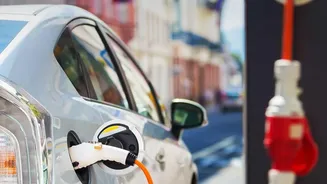
Several factors are converging to create this perfect storm of EV adoption. A wider choice of compelling models across various price points and body styles, particularly in the popular SUV segment, is a primary driver. Consumers are increasingly drawn to the lower running costs of EVs, especially as petrol and diesel prices remain high. Government support, through schemes like PM E_DRIVE, continues to make EVs more financially attractive by offering subsidies and tax benefits. Simultaneously, the charging infrastructure, while still having gaps, is steadily expanding, helping to alleviate range anxiety for potential buyers. This combination of product availability, economic sense, policy support, and growing infrastructure is turning EV consideration into concrete sales.
The Competitive Road Ahead
While Tata and Mahindra now command a combined market share of over 64%, the competition is far from over. MG Motor, despite being pushed to third place, still recorded a 10.8% annual growth, selling 5,939 units. Meanwhile, newer entrants are making their mark. Vietnamese automaker VinFast has rapidly captured the fourth position, and Maruti Suzuki is also beginning to build its presence in the EV market. The luxury EV segment is also seeing healthy growth, with brands like BMW, Kia, and Hyundai contributing to the expanding market. This increasingly crowded field means more choices for consumers and intense competition for automakers, which will likely spur further innovation and price adjustments in the coming months.