








The frustration of airport queues and complex entry forms is a familiar story for international travelers. A recent report from the International Air Transport Association (IATA) reveals this paperwork problem runs far deeper than personal inconvenience.
The Hidden Costs of Inadmissible Passengers
At the heart of the issue is the growing challenge of 'inadmissible passengers' (INAD) — individuals who are denied entry to a country upon arrival. While airlines are responsible for checking travel documents, a recent IATA study found that many refusals are due to factors beyond their control, such as sophisticated document fraud, sudden changes in a country's entry rules, or security assessments that airlines are not privy to. According to IATA, airlines often face significant costs when a passenger is denied entry, including fines and the expenses of custody and care. In more than 90% of cases, airlines reported paying for costs that, according to International Civil Aviation Organization (ICAO) rules, should be handled by governments. These costs are substantial, with the average cost per inadmissible passenger ranging from around $4,000 in North Asia to as high as $14,000 in Europe.
A Burden of Unexplained Decisions
A major point of friction highlighted by IATA is a lack of transparency from border authorities. In a survey of 49 airlines, 40 reported experiencing cases where immigration officials failed to provide a reason for refusing a passenger entry. This leaves airlines responsible for managing the passenger's removal without understanding the cause, making it difficult to prevent future occurrences. While airlines acknowledge that their own documentation or processing errors account for roughly 20-30% of cases, a significant majority of inadmissibility incidents stem from other issues. This operational ambiguity creates not just financial strain but also significant disruptions, leading to flight delays, crew and aircraft scheduling problems, and lengthy coordination efforts between the airline and authorities.
The Data Dilemma and a Digital Solution
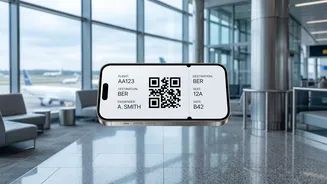
Beyond individual passenger issues, the aviation industry is grappling with inconsistent requirements for sharing passenger data. Advance Passenger Information (API) and Passenger Name Record (PNR) systems are designed to enhance security by allowing governments to vet travelers before arrival. However, IATA warns that when these systems are poorly designed or implemented without global standardization, they increase complexity and costs for airlines. The association is advocating for smarter, digital-first solutions. The vision is a 'contactless travel' experience built on Digital Travel Credentials (DTCs), a secure, digital version of a passport. Under this system, passengers could have their admissibility checked by governments before even leaving for the airport, streamlining the entire process. Passengers have shown strong interest in this shift, with a 2026 IATA survey revealing 78% would share biometric information to avoid presenting physical documents.
Toward Smarter, Seamless Borders
IATA's goal is to drive the adoption of 'One ID,' a framework where a passenger's identity is verified once digitally and then biometrically confirmed at various airport touchpoints, from bag drop to boarding. This would not only enhance passenger convenience but also improve security by providing governments with higher-quality advance data for risk assessment. Achieving this requires significant collaboration. Governments must work to align their national systems with global standards set by ICAO. For example, the European Union is developing a digital identity wallet that could serve as a blueprint for other regions. IATA has also launched initiatives like the Contactless Travel Directory to help airlines and airports find and implement compatible biometric technologies. The technology is largely ready; what remains is the political and regulatory will to create a truly interoperable global system.