



An Age-Old Cautionary Tale
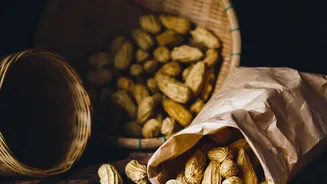
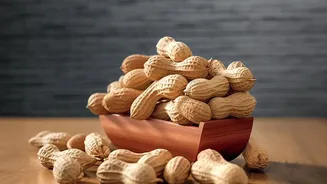
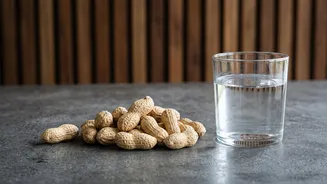
The belief that water and peanuts are a bad combination is rooted in several traditional ideas. One common theory is that peanuts, being rich in natural oils, can react with water to create a fatty layer in the throat, leading to irritation and coughing.
Another popular notion, sometimes linked to Ayurvedic principles, is the concept of 'sard-garam' or a hot-cold imbalance. Peanuts are considered a 'heating' food, and consuming 'cooling' water immediately after is thought to disrupt the body's internal temperature, potentially causing respiratory issues like a cold or cough. For many, this advice isn't just a random tip; it’s a piece of received wisdom, followed to avoid uncomfortable symptoms like indigestion, throat irritation, or a nagging cough.
Examining the Scientific Evidence
Despite how widespread this belief is, there is no strong scientific evidence to prove that drinking water after eating peanuts is harmful to digestion or causes illness in most healthy individuals. The idea that oils from peanuts solidify or deposit in the food pipe due to water is not supported by modern physiology. In fact, water is essential for healthy digestion. It helps break down food, transport nutrients, and prevent constipation. While some nutritionists point to the oil content as a potential irritant, others explicitly disagree with the theory. Dr. Rupali Datta, a consultant nutritionist, has previously stated that she does not support the theory of fat deposition, noting that since peanuts contain saturated fats, water should not negatively affect a person. Your stomach is a robust and acidic environment designed to handle a mix of solids and liquids simultaneously.
So Why Might You Feel Discomfort?
If the combination isn't inherently harmful, why do some people experience a tickle or cough? There are a few logical explanations. Peanuts, especially roasted and salted ones, are quite dry. Their texture can leave tiny, abrasive particles in your mouth and throat, causing a temporary sensation of irritation. When you drink water, it can trigger a cough as your body's natural response to clear this minor irritation. Furthermore, peanuts are very dense in calories and protein. If you eat a large portion and then drink a lot of water, you might simply feel bloated or uncomfortably full. This isn't a harmful chemical reaction but a simple matter of volume in your stomach. For people with sensitive throats, waiting a few minutes or sipping lukewarm water instead of cold water might feel more comfortable, but this is a matter of preference, not medical necessity.
The Real Concern: Peanut Allergy
The most critical aspect of peanut safety has nothing to do with drinking water. The real danger, which can be life-threatening, is a peanut allergy. Symptoms people might mistakenly attribute to the peanut-water combination—like tingling in the throat, coughing, or wheezing—are actually classic signs of an allergic reaction. An allergy is an immune system response, not a digestive issue. Other symptoms include skin reactions like hives or redness, stomach cramps, nausea, swelling of the lips or throat, and shortness of breath. In severe cases, it can lead to anaphylaxis, a medical emergency that requires immediate attention. If you consistently experience these symptoms after eating peanuts, it is crucial to consult a doctor to be tested for an allergy, rather than simply blaming it on drinking water.
A Nod to Mindful Eating
The traditional advice to wait before drinking water is not entirely without merit in a broader context. Ayurvedic practices often recommend leaving a gap of about 20 to 30 minutes after any meal before drinking a large amount of water. The reasoning is to avoid diluting the 'Agni' or digestive fire, allowing your stomach's enzymes to work at full strength. This principle applies to all foods, not just peanuts, and is more about promoting optimal digestion in general. While modern science confirms the digestive system is well-equipped to handle food and water together, the practice of waiting can be a form of mindful eating, preventing the discomfort of feeling overly full and allowing your body to process the meal efficiently.