






A Floral Spectacle in a Cold Desert
In a region better known for its dramatic mountains and monasteries, a splash of vibrant colour is rewriting the landscape. In September 2026, Ladakh unveiled the world's highest-altitude twin flower fields at Choglamsar and Stakna, near Leh. Spread across
40 acres of formerly arid land, these fields now house over 2.5 million high-value flowers, primarily Lilium and Gladiolus. Inaugurated by Lieutenant Governor Vinai Kumar Saxena, the project is a striking experiment in high-altitude commercial floriculture, designed to turn a challenging environment into an agricultural asset. The Choglamsar field, developed in a record two months, saw its first blooms in early September, while the flowers at Stakna are expected to follow, creating a sustained floral spectacle.
The Challenge of Cultivation
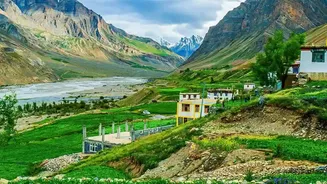
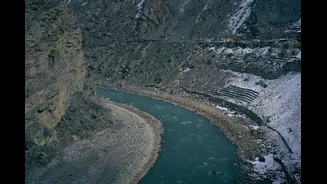
Farming in Ladakh is an act of defiance against nature. The region is a high-altitude cold desert, with annual rainfall of less than 70 mm and a very short growing season, typically lasting from May to September. For centuries, Ladakhi farmers have depended on ingenious irrigation channels called 'khuls' to divert glacial meltwater to their terraced fields, cultivating hardy crops like barley. However, this traditional subsistence farming faces modern pressures. With road access cut off for nearly six months a year, food security is a constant concern, and the region has historically relied on supplies brought in from the plains. Furthermore, a shift towards tourism-related jobs has led to a decline in agricultural labour, making large-scale farming even more difficult.
More Than Just Pretty Flowers
The Twin Fields project is a strategic response to these challenges. Its primary goal is not just beautification but economic transformation. By proving that high-value commercial floriculture is viable at this altitude, the initiative aims to diversify Ladakh's agricultural economy. Floriculture can complement traditional farming, offering a far more lucrative source of income. The vision is to tap into the national and international markets for cut flowers, creating sustainable livelihoods for farmers, employment for youth, and new opportunities for entrepreneurship. The Choglamsar park is designed to function as a demonstration and model floriculture centre, equipping locals with the skills needed for this new industry.
A Community-Centred Economic Model
Crucially, this is not a top-down corporate venture. The project has a built-in community empowerment model. For the first year, Ladakh's Agriculture Department will manage the fields. Afterwards, they will be transferred to local Self-Help Groups (SHGs) and cooperative societies, many of which are driven by women. These groups will receive handholding support in cultivation, post-harvest management, and marketing their produce. This approach ensures that the economic benefits flow directly back into the community, fostering local ownership and building a resilient, grassroots industry from the ground up.
Part of a Broader Green Revolution
The flower fields are the most visible part of a wider agricultural awakening in Ladakh. For years, institutions like the Defence Institute of High Altitude Research (DIHAR) have been pioneering solutions to make the region more self-sufficient. DIHAR's innovations include advanced solar greenhouses that enable the year-round cultivation of fresh vegetables, even when outside temperatures drop to -30°C. These technologies have not only improved nutritional security for the local population and the armed forces but have also allowed farmers to grow cash crops like watermelons, once thought impossible. Alongside the flower fields, experiments are also underway to introduce high-value saffron cultivation to the region, further broadening the agricultural portfolio. These efforts are turning Ladakh into a hub for cold-arid agricultural research and innovation.