
More Than Just A Fast
Celebrated on the fourth day after the full moon in the Hindu month of Kartik, Karwa Chauth is a festival where married women observe a strict fast from sunrise to moonrise. This day-long 'nirjala vrat', without food or water, is undertaken with prayers
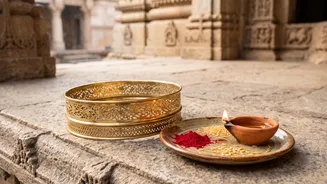
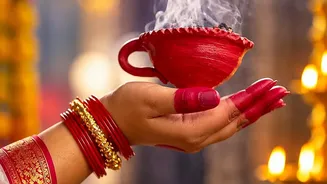
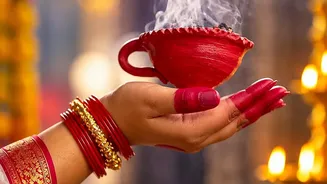
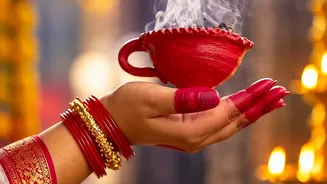
for the long life, well-being, and prosperity of their husbands. The name itself is symbolic: 'Karwa' refers to a spouted earthen pot used in the rituals, and 'Chauth' means 'fourth day'. While primarily observed in Northern India, its depiction in popular culture has made it a widely recognized symbol of marital love and commitment across the country and beyond.
The Legend of Queen Veeravati
The most recited story during Karwa Chauth is that of Queen Veeravati, the beloved only sister of seven brothers. On her first Karwa Chauth, observing the strict fast at her parents' home, she grew faint with hunger and thirst. Seeing her distress, her brothers couldn't bear her suffering. They created an illusion of a full moon by holding a mirror behind a pipal tree. Tricked into believing the moon had risen, Veeravati broke her fast. Immediately, word arrived that her husband, the king, was dead. Heartbroken, she was met by Goddess Parvati, who explained the deception. Parvati instructed her to re-observe the fast with complete devotion, which ultimately led to her husband's life being restored by Yama, the god of death. This tale underscores the importance of unwavering faith and observing rituals with sincerity.
Savitri's Unyielding Devotion
While not the official 'vrat katha', the story of Savitri and Satyavan is frequently associated with Karwa Chauth due to its powerful theme of wifely devotion. When Yama arrived to claim her husband Satyavan's soul, Savitri refused to let him go. She followed Yama, engaging him in a battle of wits. Impressed by her wisdom and dedication, Yama granted her any boon except the life of her husband. The clever Savitri asked to be blessed with children. As a loyal and devoted wife, she could not have children with anyone but Satyavan, leaving Yama with no choice but to restore his life. This narrative celebrates not just devotion, but also intelligence and courage in the face of destiny.
From Myth to Modern Ritual
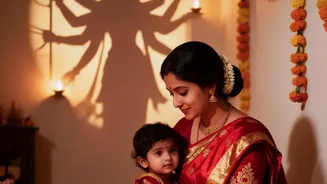
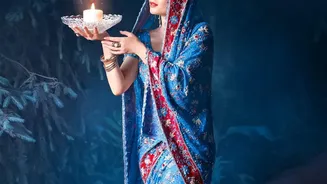
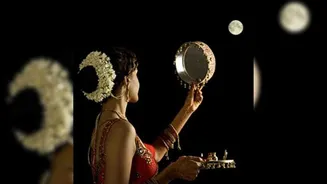
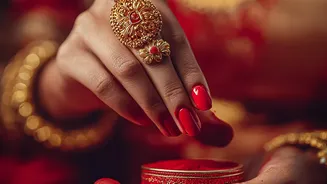
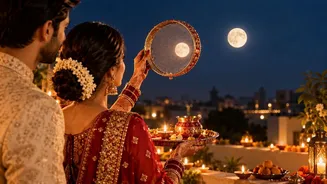
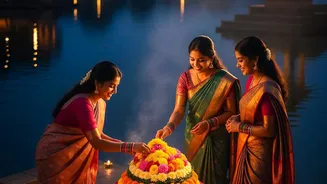
The narratives of Karwa Chauth are woven directly into its rituals. The day begins before sunrise with 'sargi', a meal and collection of gifts given by a mother-in-law to her daughter-in-law, signifying blessings and nourishment for the day ahead. In the evening, women gather, often dressed in traditional red attire, to perform the puja. They sit in a circle, narrate the 'vrat katha', and worship Goddess Parvati. The fast is finally broken only after sighting the moon, often through a sieve, and then looking at their husbands, who offer them the first sip of water.
A Narrative for Today's World
In modern times, the narrative of Karwa Chauth continues to evolve. While it has faced criticism for reinforcing patriarchal ideas where a woman's sacrifice is tied to her husband's well-being, many see it differently. For many, observing the fast is a personal choice, a day to celebrate their bond and express love. The festival is increasingly seen as a celebration of the couple's relationship rather than a one-sided ritual. In a significant shift, many men now choose to fast alongside their wives as a gesture of equality, partnership, and mutual respect, reshaping the tradition to reflect contemporary values. This modern interpretation ensures that the core narrative of love and devotion at the heart of Karwa Chauth continues to resonate with a new generation.