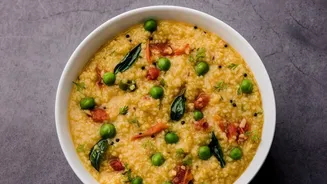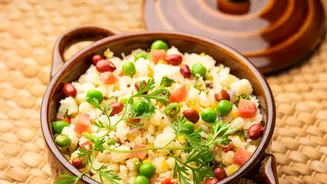



The Science of the Lump
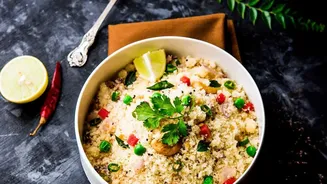
The culprit behind lumpy upma is a process called starch gelatinisation. Semolina, or rava, is primarily made of starch granules. When these granules are exposed to hot water, they rapidly absorb it and swell. If you add the rava to the water too quickly
or without stirring, the granules on the outside of a cluster swell instantly, forming a waterproof gel-like barrier. This traps the dry, raw rava inside, creating a stubborn lump that refuses to cook through. The key to avoiding this is ensuring every single grain of rava gets hydrated evenly and individually, which is where technique comes in.
The First and Most Crucial Step: Roasting
The single most effective defense against lumps is to roast your rava before it ever touches water. Dry roasting the semolina on a medium-low flame for a few minutes does two vital things. First, it toasts the grains, giving the final upma a wonderful, nutty aroma and flavour that you won't get from raw rava. Second, and more importantly, it coats each grain, making it less prone to sticking together and helping it absorb water more evenly when the time comes. Whether you buy pre-roasted rava or do it yourself, this step is non-negotiable for a fluffy, non-sticky texture.
Water Temperature and Ratio
The temperature of your water matters immensely. Always use hot, boiling water. Adding rava to lukewarm or cold water will make it sticky and prone to clumping. Bringing your water—already seasoned with salt, tempering, and vegetables—to a rolling boil is essential. The ratio of water to rava determines the final texture. A common starting point is 2.5 to 3 cups of water for every 1 cup of rava. For a softer, almost porridge-like consistency, aim for a 3:1 ratio. For a firmer, more separate-grained texture, you can reduce the water to a 2:1 or 2.5:1 ratio.
The Art of the Pour and Stir
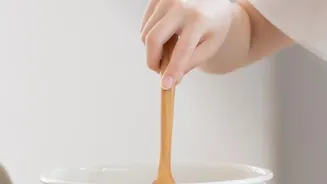
This is the moment of truth that the headline alludes to. Once your water is at a rolling boil, reduce the flame to low. Then, with one hand, pour the roasted rava into the pot in a very slow, steady stream. Do not dump it in all at once. As you pour, use your other hand to stir the water continuously and briskly. This constant motion keeps the rava grains separated as they hit the water, allowing each one to swell properly without clumping together. Continue stirring until all the rava is incorporated and the mixture begins to thicken, which will happen very quickly.
Let It Steam, Then Fluff
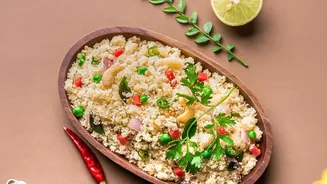
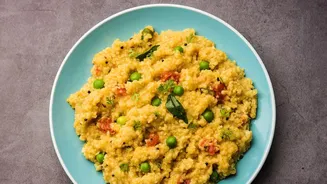
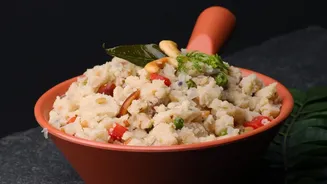
Once the rava has absorbed most of the water and thickened considerably, the vigorous stirring is over. Over-stirring at this stage can make the upma gluey. Instead, cover the pan with a tight-fitting lid, keep the heat on the lowest possible setting, and let it steam for 2 to 5 minutes. This crucial resting period allows the grains to cook through completely using the trapped steam, making them tender and fluffy. After steaming, turn off the heat. Let it sit for another minute, then open the lid and gently fluff the upma with a fork, not a spoon, to separate the grains without mashing them.