


For years, the primary fear associated with melting glaciers has been the catastrophic bursting of glacial lakes. But new research suggests the danger is far more complex, revealing hidden flood sources that could reshape our understanding of the threat.
The Danger We Already Knew
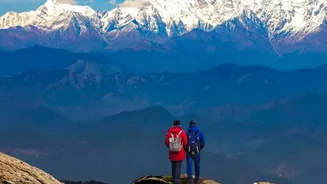
In the high mountains of the Himalayas, climate change is causing glaciers to retreat at an alarming rate. As they melt, vast amounts of water collect, forming lakes dammed by unstable walls of ice and rock debris called moraines. The most well-known and feared hazard has been the Glacial Lake Outburst Flood, or GLOF. These occur when the natural dam fails, releasing a devastating torrent of water, mud, and boulders downstream with little warning. Events like the 2013 disaster in Uttarakhand and the 2023 Sikkim flood are grim reminders of their destructive power, causing immense loss of life and infrastructure. For decades, monitoring these ever-expanding lakes has been the central focus of disaster management efforts in mountain regions.
A Broader Hazard Landscape
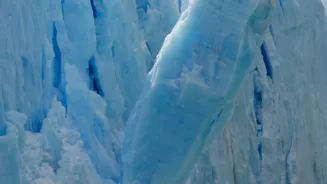
However, a groundbreaking new hazards study indicates that focusing solely on these lakes provides an incomplete picture of the overall risk. The research, which re-evaluates the nature of glacial floods, argues that significant flood events can originate from sources other than large, moraine-dammed lakes. This means that communities living downstream may face threats from multiple, and sometimes less obvious, types of glacial floods. These can include floods originating from water stored within or even underneath the glacier itself. The study highlights that our traditional risk assessments, which prioritise identifying and monitoring potentially dangerous glacial lakes, might be missing a crucial part of the puzzle and underestimating the true scale of the danger.
Beyond the Bursting Lake
The study draws attention to several lesser-known flood triggers. One is the failure of ice-dams, where a glacier itself blocks a drainage route, which can impound far larger volumes of water than many moraine-dammed lakes. Another significant risk comes from the sudden drainage of englacial or subglacial water systems. These are networks of conduits and cavities within or at the base of the glacier that can store and suddenly release massive amounts of meltwater. Unlike surface lakes, these water bodies are hidden from view, making them almost impossible to monitor with conventional satellite-based methods. An outburst from such a system can be triggered without the obvious warning signs associated with a GLOF, such as a rockfall or dam overtopping.
Why This Changes Everything for India
These findings have profound implications for India, where millions of people live in the Himalayan states of Uttarakhand, Himachal Pradesh, Ladakh, and Arunachal Pradesh. According to recent assessments, over a million people in the High Mountains Asia region live within 10 km of a glacial lake, with India being one of the four most exposed countries globally. The number and size of these lakes are growing rapidly; one recent satellite study in India's Alaknanda Basin found that the total lake area grew by 67% in three decades. The new research means that the number of people at risk could be even higher than the 15 million estimated globally to be threatened by GLOFs. It suggests that existing earlywarning systems, which are largely designed to monitor lake levels and dam stability, may be insufficient to guard against these other types of glacial floods.
Rethinking Our Defences
The study serves as an urgent call to action for scientists and policymakers. It stresses the need to broaden the scope of hazard assessments beyond just mapping and monitoring visible glacial lakes. This includes developing new techniques to understand and potentially detect the accumulation of water within and under glaciers. It also means reevaluating which downstream communities are considered 'at risk'. A settlement might be located far from a large, threatening lake but could still be vulnerable to a sudden flood from a different glacial source. The key message is that as glaciers continue to change, our strategies for predicting and mitigating these hazards must evolve as well. It’s no longer enough to just watch the lakes; we must understand the entire glacial system.