



An Order of Historic Proportions
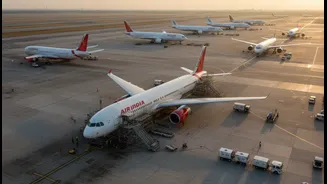
The scale of Air India's ambition is captured in one staggering number: a firm order for 470 new aircraft from manufacturers Airbus and Boeing, with options that could push the total closer to 600. This deal, valued in the tens of billions of dollars,
represents one of the largest single aircraft purchases in commercial aviation history. The order is strategically split to overhaul the airline's entire operation. For long-haul international routes, Air India has ordered 40 Airbus A350s and 30 Boeing 787-9 and 777-9 wide-body jets. These aircraft are crucial for its goal of competing with global carriers on non-stop routes from India to North America, Europe, and Australasia. For the bustling domestic and short-haul international market, the order includes 210 Airbus A320/A321neo family aircraft and 190 Boeing 737 MAX jets. This massive investment signals a clear intent to modernize what was an aging fleet and reclaim a dominant position in the skies.
The 'Vihaan.AI' Strategic Vision
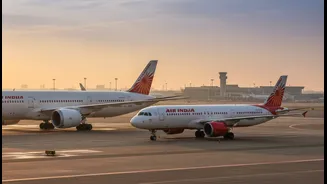
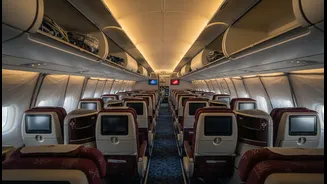
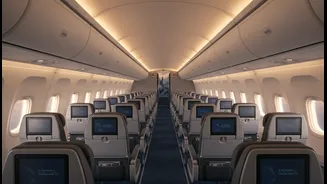
This fleet renewal is the cornerstone of a comprehensive five-year transformation plan titled 'Vihaan.AI', Sanskrit for the dawn of a new era. Launched after the Tata Group's acquisition, the plan aims to restore Air India to world-class status. Key pillars include achieving a 30% domestic market share, vastly improving on-time performance and reliability, and delivering a revamped customer experience. The initial phase focused on fixing foundational issues, such as returning grounded aircraft to service and improving basic amenities. The airline is now in its 'Take Off' and 'Climb' phases, which involve deploying these new investments to build for sustained growth and profitability. This includes not just new planes, but also a $400 million commitment to refurbish the interiors of existing legacy aircraft and a $200 million investment in new IT systems.
When Will the New Planes Arrive?
The fleet renewal is already underway. The first of the new Airbus A350s began arriving in late 2023, giving passengers a first glimpse of the new Air India. The delivery schedule is aggressive; according to airline executives, from the end of 2026, the Air India Group will induct a new aircraft roughly every six to seven days, with a wide-body plane arriving every six weeks through 2027. The first Boeing 787-9 is expected in late 2025. However, the global aviation industry is facing significant headwinds. Supply chain disruptions and geopolitical issues have caused some delays in aircraft delivery and retrofit schedules. Despite these challenges, Air India projects receiving 50 to 60 new aircraft over the next 18 months, keeping the transformation broadly on track.
More Than Just New Aircraft
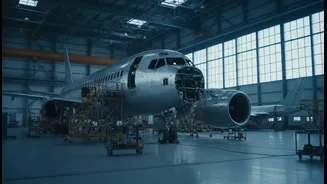
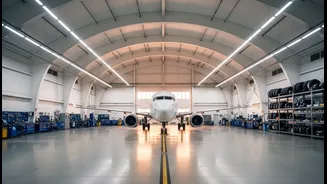
A transformation of this magnitude requires a parallel investment in people and infrastructure. To fly and maintain its future fleet, Air India has embarked on a massive hiring drive, adding thousands of new employees, including pilots and cabin crew. The airline has active recruitment programs for trainee cabin crew and type-rated pilots for its Airbus and Boeing fleets. This influx of talent is essential for supporting the expanded network and ensuring the new product is matched by world-class service. Behind the scenes, the airline is also investing heavily in its Maintenance, Repair, and Overhaul (MRO) capabilities to ensure the new fleet remains reliable and operational. The airline's merger with Vistara and the consolidation of its low-cost arms, AirAsia India and Air India Express, are also key parts of the strategy, aimed at creating a more streamlined and powerful aviation group.