



A Living History in Every Thread
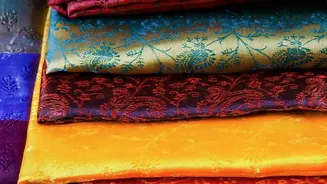
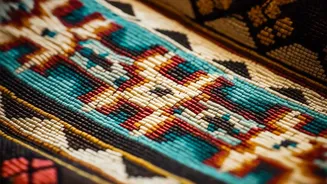
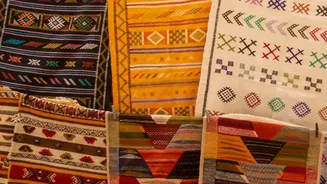
Indian handloom textiles are chronicles woven in thread. For centuries, they have served as a canvas for storytelling, with motifs and designs that preserve mythology, folklore, and local history. The patterns are a language, communicating beliefs and values
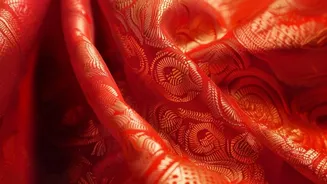
passed down through generations. From Kalamkari panels depicting scenes from the Ramayana and Mahabharata to the symbolic peacocks on a Banarasi silk representing immortality and wisdom, these fabrics are more than decorative. They are tangible connections to a shared past, where the act of weaving itself is a meditative practice that embeds stories into the very fibre of the cloth. Owning a handloom piece is like holding a fragment of history, a narrative of gods, nature, and community life.
The Fabric of Community
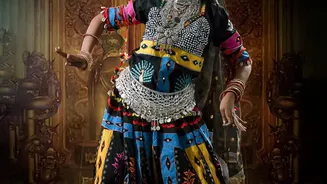
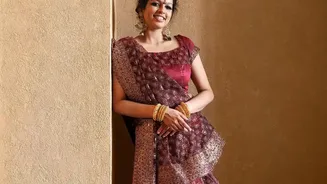
Handloom weaving is rarely a solitary act; it is the heartbeat of many rural communities. The craft shapes social structures and reinforces a sense of collective identity. The knowledge of weaving is not learned from books but passed from elders to younger generations, a continuous transfer of skill that keeps cultural knowledge intact. This shared craft provides a source of community pride and belonging, with specific textiles often playing a central role in festivals, weddings, and rituals. A Kanchipuram saree at a wedding or a specific shawl during a festival connects an individual to their family traditions and regional roots. In this way, the loom becomes a gathering point, strengthening social bonds and ensuring that cultural heritage is a lived, shared experience.
Weaving a Sustainable Future
In an era of fast fashion, handloom stands as a model of sustainability. The process is inherently eco-friendly, relying on human-powered looms that have a low carbon footprint and consume minimal energy. Artisans often use natural, locally sourced fibres like cotton, silk, and wool, which are biodegradable. Furthermore, many weaving traditions utilize natural dyes derived from plants, minerals, and flowers, avoiding the toxic chemicals that pollute waterways in industrial textile production. The emphasis on small-batch production reduces waste, as every piece is crafted with intention and care. Choosing handloom is not just an aesthetic decision; it's a conscious choice to support an environmentally responsible practice that respects the planet.
An Engine of Rural Economy
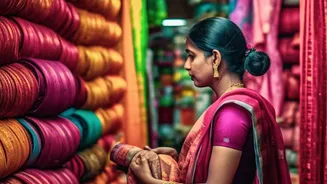
Beyond its cultural and environmental benefits, the handloom sector is a crucial pillar of India's rural economy. It is the country's second-largest source of employment after agriculture, providing a livelihood for millions of artisans and allied workers, many of whom are women. For many rural families, weaving provides vital income, financial independence, and empowerment, especially for women who make up a significant portion of the workforce. By sustaining this craft, we ensure the economic resilience of entire communities and prevent the erosion of traditional skills that might otherwise be lost to urban migration or mechanization. Supporting handloom is a direct investment in the livelihoods of artisans and the vitality of India's villages.