






Our Solar System's Invisible Shield
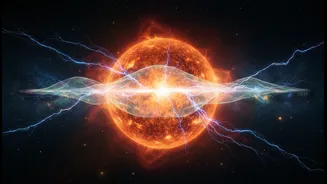
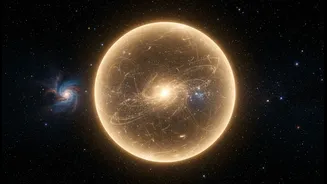
Our entire solar system exists inside a colossal bubble called the heliosphere. This isn't a physical bubble, but a vast region of space inflated by a constant stream of charged particles flowing from the Sun, known as the solar wind. This bubble extends
far beyond Pluto, pushing back against the matter and radiation from the wider galaxy, creating a protected pocket of space for Earth and the other planets. Without the heliosphere, our planet would be directly exposed to a constant barrage of high-energy particles that could disrupt life as we know it.
The Danger of Galactic Cosmic Rays
The primary threat the heliosphere guards against is galactic cosmic rays (GCRs). These are not rays of light, but highly energetic particles—remnants of distant events like supernovae—that zip through space at nearly the speed of light. This radiation poses a significant risk to life and technology. For astronauts on long-duration missions, such as a trip to Mars, exposure to GCRs can increase the risk of cancer and damage the central nervous system. On Earth, while we have additional protection from our atmosphere and magnetic field, our increasingly sophisticated satellite networks for communication and navigation remain vulnerable to this radiation.
Meet IMAP: The Celestial Cartographer
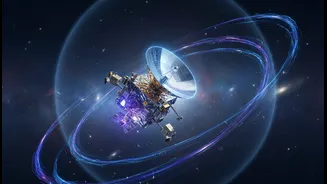
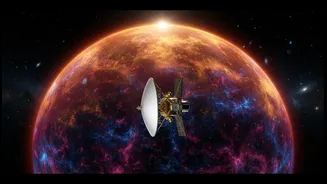
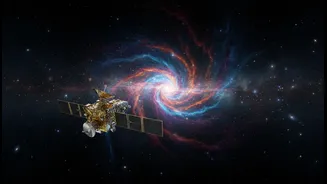
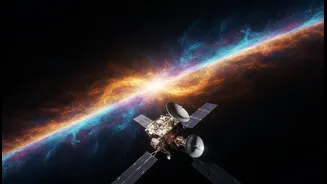
To better understand this cosmic shield, NASA launched the Interstellar Mapping and Acceleration Probe, or IMAP. The mission, which began its primary science operations in early 2026, acts as a celestial cartographer, tasked with creating the most detailed map ever of the heliosphere's boundaries. Positioned at a gravitationally stable point about 1.5 million kilometers from Earth towards the Sun, IMAP is perfectly placed to intercept particles from the Sun, the edge of the solar system, and the interstellar space beyond. The probe carries a suite of ten advanced instruments to analyze these particles and decode the complex interactions happening billions of miles away.
How the Probe Will Map the Boundary
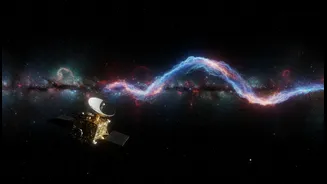
IMAP can't travel to the edge of the heliosphere itself—that's a journey that took the Voyager probes decades. Instead, it measures particles that travel from the boundary to its location near Earth. Its instruments detect 'energetic neutral atoms' (ENAs), which are created when the fast-moving particles of the solar wind collide with neutral particles from interstellar space at the solar system's frontier. These ENAs are like messengers; because they are neutral, they travel in straight lines, unaffected by magnetic fields. By capturing these particles and tracing their origins, scientists can build a comprehensive picture of the heliosphere's structure and the processes that shape it.
Protecting Our Future in Space
The insights from IMAP's mission are not just academic. A clearer understanding of the heliosphere is critical for the future of space exploration and our technological infrastructure. The probe's data will improve our ability to predict space weather. From its vantage point, IMAP can provide about a half-hour's warning for harmful solar radiation heading towards Earth, giving operators time to protect satellites and power grids. For future crewed missions to the Moon and Mars, knowing how the heliosphere's protection waxes and wanes with the Sun's 11-year cycle will be essential for keeping astronauts safe on their long journeys beyond Earth's magnetic field.