




A New Powerhouse in the Sky
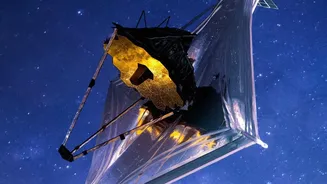
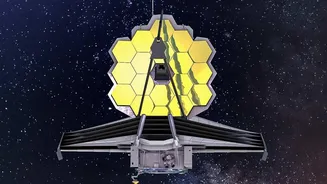
Set to launch by May 2027, the Nancy Grace Roman Space Telescope is the next great NASA astrophysics observatory. Named after NASA's first Chief of Astronomy, Nancy Grace Roman, who is often called the 'mother of Hubble', this telescope is designed not
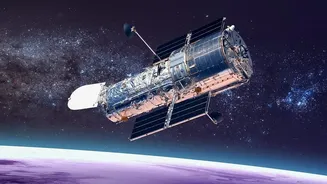
just to peer deep into space, but to peer wide. While its predecessors like the Hubble and James Webb Space Telescopes (JWST) focus on detailed views of small patches of the sky, Roman is built for cosmic panoramas. It has a primary mirror the same size as Hubble's (2.4 meters) but features a groundbreaking Wide Field Instrument (WFI) that gives it a field of view 100 to 200 times larger. This means that in a single snapshot, Roman can capture an area of the sky that would take Hubble hundreds of images to cover, revolutionizing how quickly we can map the universe.
Hunting for Worlds with a Cosmic Trick
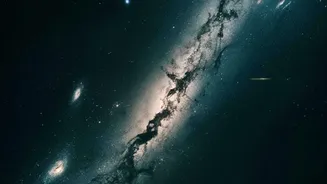
One of Roman's primary goals is to complete a census of exoplanets, and it will do so using a clever method called gravitational microlensing. This technique relies on a phenomenon predicted by Einstein's theory of general relativity. When a star and its planets pass in front of a more distant background star, their combined gravity acts like a lens, bending and magnifying the light from the background star. This creates a temporary, predictable spike in brightness. If the foreground star has a planet, the planet’s own gravity creates a smaller, secondary spike in the light signal. Roman will stare at the dense star fields toward the center of our Milky Way galaxy, monitoring hundreds of millions of stars continuously to catch these fleeting events. This method is particularly effective at finding planets that are far from their host star, or even 'rogue' planets that wander through space without a star to orbit at all. Scientists anticipate Roman will find more than a thousand planets this way.
Finding Planets the Traditional Way Too
In addition to microlensing, Roman will be a prolific planet-hunter using the well-established transit method. This is the same technique used so successfully by the Kepler and TESS missions. It involves watching for tiny, periodic dips in a star's brightness, which indicate a planet is passing in front of it from our point of view. Thanks to its incredibly wide and deep surveys, Roman is expected to find a staggering 100,000 new worlds using the transit method. This vast new dataset will help astronomers understand the demographics of planets across the galaxy, from gas giants to smaller, rocky worlds, some of which may even lie in their star's habitable zone—the region where liquid water could exist.
Seeing Planets Directly
Perhaps the most technologically ambitious part of Roman’s mission is its Coronagraph Instrument. Finding and photographing an exoplanet is incredibly difficult because the light from its parent star is millions or even billions of times brighter. A coronagraph works by blocking out that overwhelming starlight, creating an artificial eclipse that allows the faint glimmer of an orbiting planet to be seen. Roman's coronagraph is a technology demonstration, the first of its kind in space with 'active' optics that can correct for tiny imperfections and jitters in real-time. It is designed to be 100 to 1,000 times more powerful than previous space-based coronagraphs, paving the way for future missions like the Habitable Worlds Observatory, which aims to one day directly image Earth-like planets. On September 22, 2026, this instrument captured its first cosmic light, confirming it can produce focused images.
More Than Just Planets
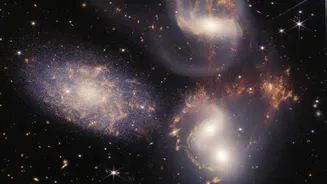
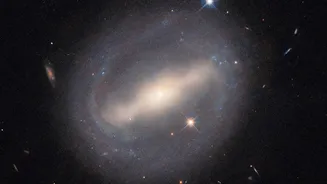
While exoplanet hunting is a major focus, Roman’s wide-field surveys will serve many areas of astrophysics. Its primary mission also includes tackling two of the biggest mysteries in cosmology: dark energy and dark matter. By mapping the distribution of over a billion galaxies and tracking distant stellar explosions, Roman will help scientists measure the expansion history of the universe. These measurements will provide crucial new data on the nature of the mysterious dark energy that is causing the universe's expansion to accelerate. This revolutionary survey data, expected to amount to 20 petabytes, will be a treasure trove for astronomers for decades to come.