



Before You Start Your Engine
A successful Tuscan road trip begins with a little planning. For maximum flexibility, renting a car is a must. Choose the smallest vehicle that will comfortably fit your party and luggage, as you’ll be navigating narrow village streets. The best times
to visit are during the spring (April-June) and autumn (September-October) when the weather is pleasant and the landscape is at its most vibrant. A crucial tip for driving in Italy is to be aware of the ZTL, or ‘Zona a Traffico Limitato’. These are restricted traffic zones in the historic centres of most cities and towns, including Florence and Siena. Entering a ZTL without a permit will result in a significant fine. The rule of thumb is simple: park outside the ancient city walls and walk in. Most towns have well-marked paid parking lots just a short stroll from the centre.
The Legendary Chianti Road (SR222)
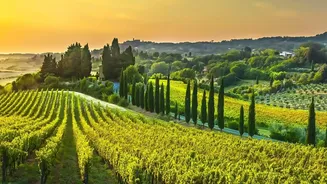
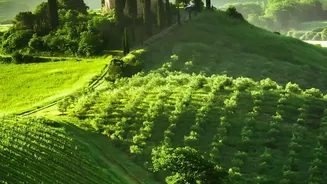
Leaving the urban splendour of Florence behind, the real adventure begins as you head south toward the Chianti region. Instead of the faster highway, take the Strada Regionale 222 (SR222), famously known as the Via Chiantigiana. This legendary road snakes its way from Florence to Siena, offering the quintessential Tuscan experience. The drive itself is the destination, a leisurely journey of about 70 kilometres through a panorama of rolling hills, perfectly combed vineyards, and silvery olive groves. Your first major stop could be Greve in Chianti, often called the gateway to the region. Its charming, asymmetrical main square, Piazza Matteotti, is lined with arcades and is a perfect spot to browse local shops or enjoy a coffee. Further south, the road continues to wind through towns like Panzano and Castellina in Chianti, each offering its own unique charm and history.
A Detour to the Medieval Manhattan
While not directly on the SR222, a detour to San Gimignano is an essential part of any Tuscan itinerary. Famous for its stunning skyline of medieval towers, the town was once a hub of powerful families competing to build the tallest structure as a display of wealth. Today, 14 of its original 72 towers remain, creating a profile often nicknamed a 'Medieval Manhattan'. The entire town centre is a pedestrian-only zone, so you will need to park in one of the designated lots outside the walls and walk in. Stroll through the main squares of Piazza della Cisterna and Piazza del Duomo, and if you're feeling energetic, climb the Torre Grossa for breathtaking views of the town and the surrounding countryside. San Gimignano offers a powerful glimpse into the region’s medieval past and is well worth the extra time.
Arriving in Historic Siena
As you complete the final leg of the Chiantigiana, you’ll arrive at the magnificent city of Siena. A historic rival to Florence, Siena has a distinct character and a remarkably preserved medieval core. The city is built across several hills, and its heart is the unique, shell-shaped Piazza del Campo, one of Europe's greatest medieval squares. Like Florence, Siena's centre is a ZTL, so find a car park on the city's edge and immerse yourself on foot. Siena is not just an endpoint; it's a perfect base for further exploration. The city itself deserves at least a full day, but its strategic location also makes it the ideal launchpad for discovering the even more dramatic landscapes that lie to the south.
Beyond Siena: The Val d'Orcia
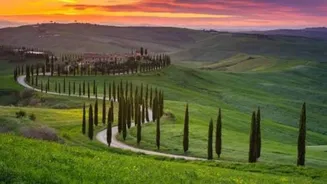
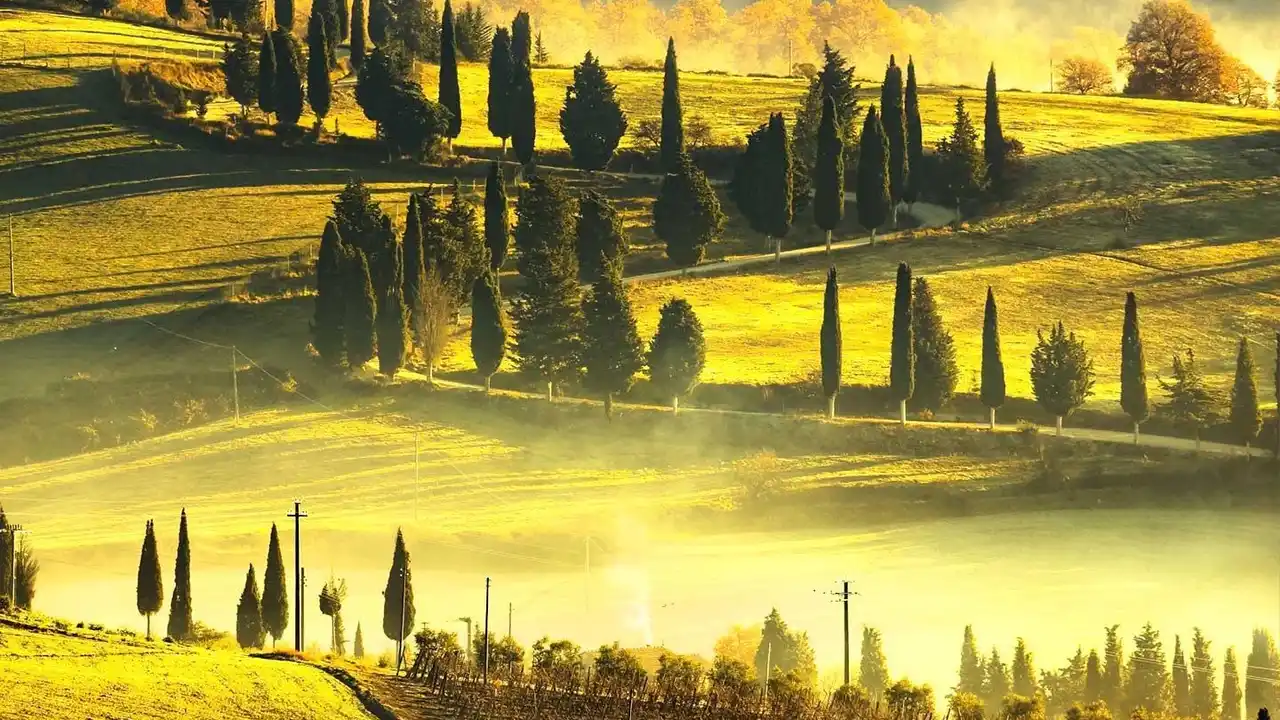
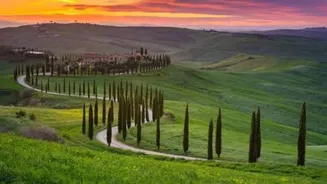
To truly fulfil the promise of a comprehensive Tuscan journey, use your base in Siena to explore the Val d'Orcia. This valley, a UNESCO World Heritage site, is where you'll find Tuscany's most iconic and photographed landscapes. The scenery here becomes more dramatic and open, with soft, rolling clay hills (the Crete Senesi), solitary stone farmhouses, and those famous, almost impossibly perfect avenues of cypress trees. A drive through this region takes you to postcard-perfect towns. Pienza, known as the 'ideal city of the Renaissance', was redesigned by Pope Pius II and is famous for its Pecorino cheese. Not far away is Montepulciano, a classic hilltop town renowned for its Vino Nobile red wine. This southern loop completes the road trip, beautifully contrasting the rustic charm of Chianti with the epic, painterly vistas of the Val d'Orcia.