
A Blazing Red Dot at the Dawn of Time
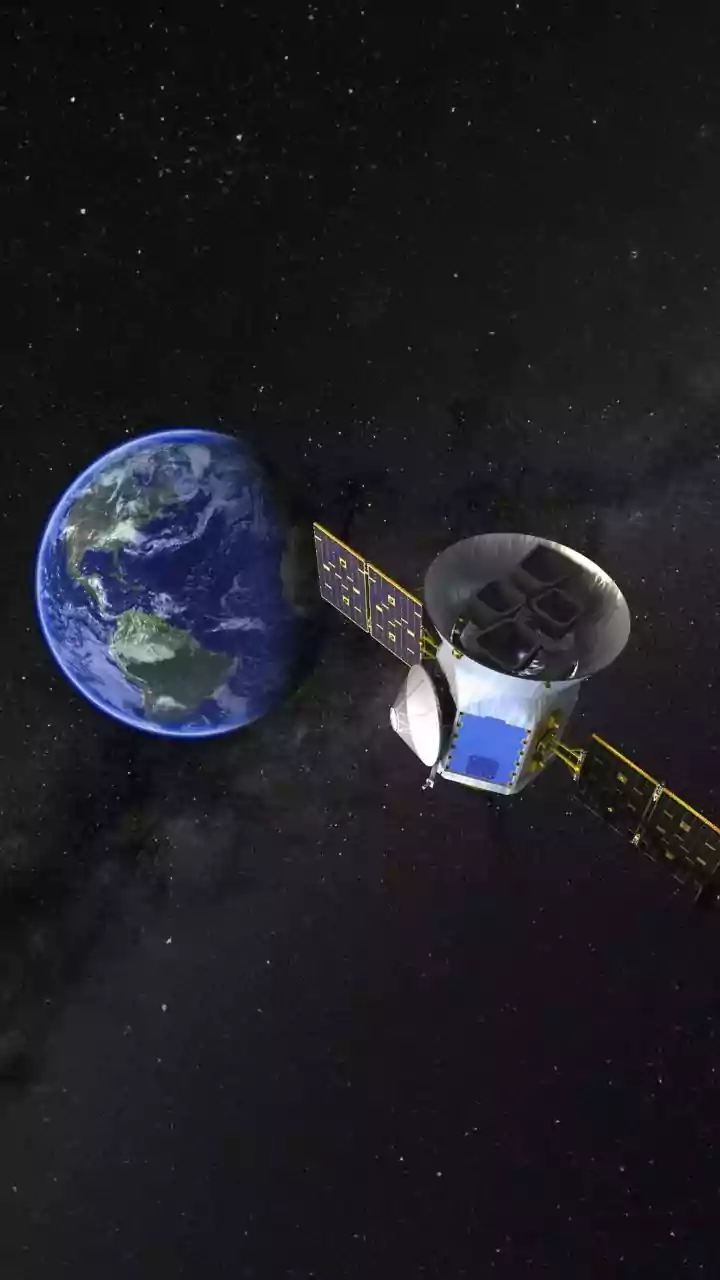
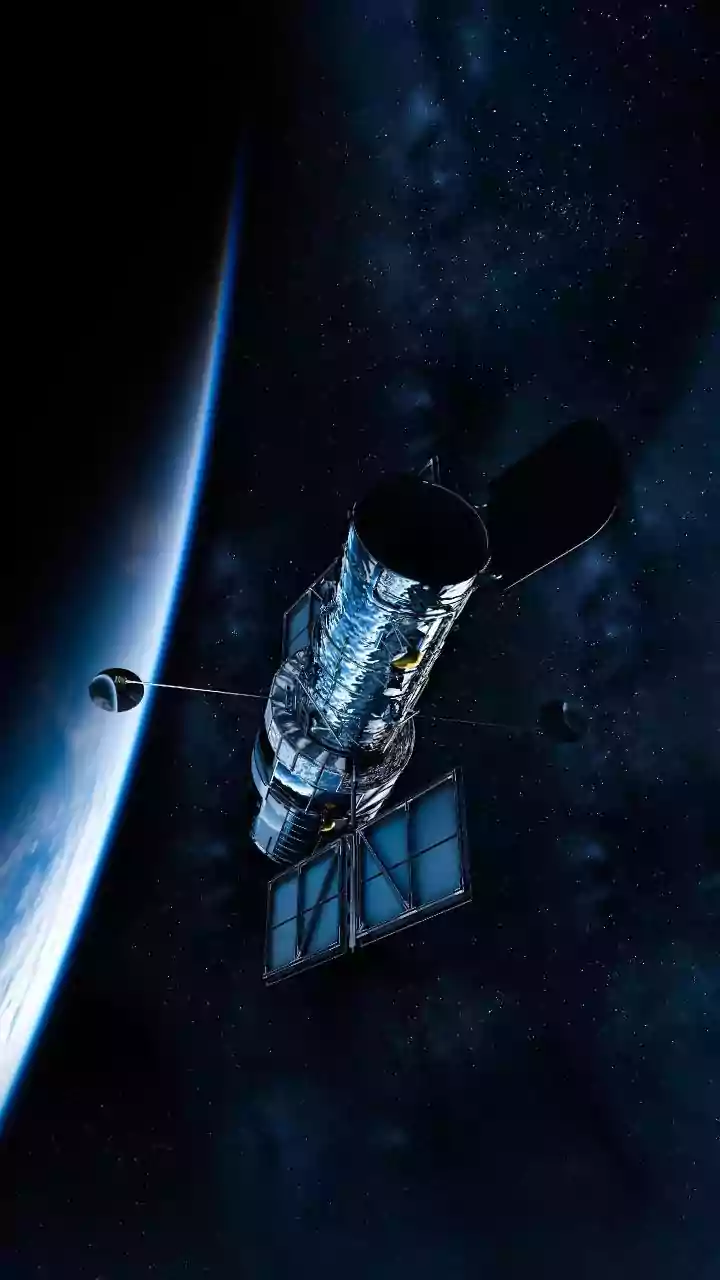
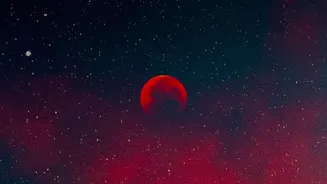
Using the powerful lens of the James Webb Space Telescope (JWST), astronomers have identified an object from the universe's infancy that defies easy explanation. Nicknamed MoM-BH-1, this object appears as a tiny, intensely bright red dot. At first glance,
it looks like a single, colossal star roughly the size of our solar system. However, it shines with the power of 100 billion suns, an energy output far beyond what any known star could physically produce through nuclear fusion. This extreme luminosity is more characteristic of the chaotic environment around a feeding black hole. Yet, its other features look frustratingly star-like, creating a puzzle that has sent scientists back to the drawing board. The object is also notable for its distinct red colour, which isn't caused by the cosmic dust that usually creates such hues. Instead, its light signature suggests it is shrouded in an incredibly dense envelope of pure hydrogen and helium, the simple elements that dominated the early cosmos.
The 'Black Hole Star' Hypothesis
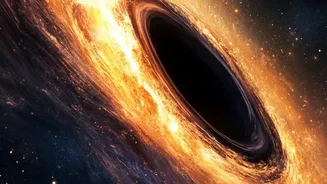
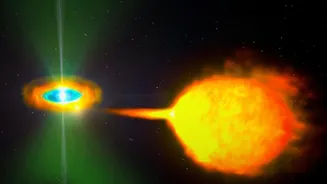
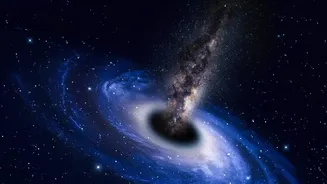
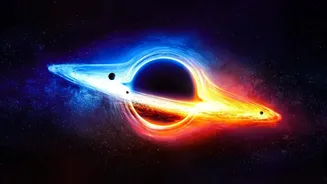
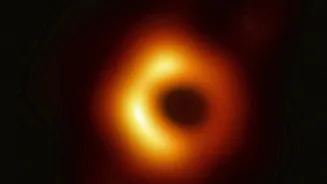
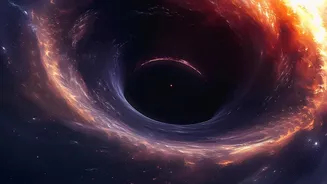
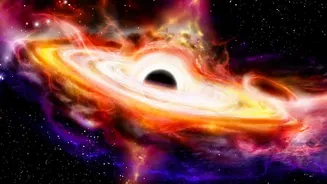
To solve this riddle, researchers have proposed a new class of object: a 'black hole star'. The theory suggests that MoM-BH-1 is not a star in the traditional sense, but rather a nascent black hole, with a mass of about 100,000 times that of our sun, hidden inside a vast, dense cocoon of hydrogen gas. In this model, the intense energy isn't coming from fusion but from the black hole itself as it violently pulls in and consumes the surrounding gas. This process, known as accretion, creates an incredibly hot, bright disk around the black hole. The light from this disk then radiates outwards, heating the massive gas envelope until it glows like the surface of a giant star. This unique structure would explain both the object’s impossible brightness and its star-like appearance, bridging the gap between two very different types of cosmic phenomena. This object may be the first of its kind ever found, potentially solving the mystery of other 'little red dots' JWST has been spotting across the early universe.
A Clue to a Cosmic Growth Spurt
The potential discovery of a black hole star is exciting because it could help solve one of the biggest mysteries in cosmology: how did supermassive black holes get so big, so fast? Astronomers have found black holes billions of times the mass of the sun in the first billion years of the universe, a timeline that is too short for them to have grown from the collapse of a single star. Standard models struggle to explain their rapid growth. The 'black hole star' could represent a missing link. It may be an example of a 'direct collapse' black hole, a theoretical object formed not from a star but from the collapse of a gigantic primordial gas cloud. This would create a much larger 'seed' black hole from the very beginning. An object like MoM-BH*-1, with a mass of 100,000 suns, would have a significant head start, making it much easier to grow into the giants we see later in cosmic history. This finding comes as JWST continues to find other surprisingly massive black holes in the early universe, such as the two-million-solar-mass black hole found in the galaxy GN-z11, which is also challenging our understanding of cosmic evolution.
What Comes Next in the Investigation
While the 'black hole star' model is a compelling fit for the data, it remains a hypothesis. The term 'may' in the headline is crucial; science is a process of testing ideas. Researchers arrived at this conclusion after running simulations of various cosmic scenarios to see which one best matched the strange light profile of MoM-BH-1. The black hole star was the most plausible explanation. Now, the task is to confirm it. Astronomers will continue to use the James Webb Space Telescope to search for more of these 'little red dots' and analyze their light in greater detail. If they find other objects with similar characteristics, it would strengthen the case that these are indeed a new population of celestial objects. Future observations will aim to gather more precise data on the object's mass and the dynamics of its surrounding gas, providing a clearer picture of the engine powering this cosmic lighthouse. For now, MoM-BH-1 remains a tantalizing glimpse into a violent and formative period of our universe that we are only just beginning to understand.