





A Critical Mission for NavIC
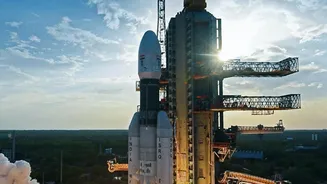
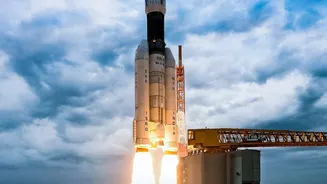
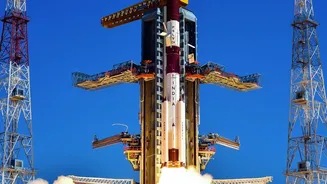
The upcoming launch, slated to take place from the Satish Dhawan Space Centre in Sriharikota, is more than just another mission; it's a vital step to restore the full operational capacity of India's indigenous navigation system. Known as NavIC (Navigation
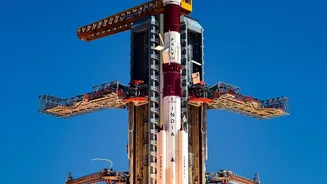
with Indian Constellation), the system requires a minimum of four operational satellites to provide accurate, real-time positioning services. Currently, with only three fully functional satellites in orbit, NavIC's standalone positioning service is inactive. The successful deployment of NVS-03 would bring that number back to the required four, reactivating a critical piece of national infrastructure. The launch campaign for the GSLV-Mk2 rocket, the vehicle tasked with carrying NVS-03, reportedly began on September 14, with teams working towards the October window.
Understanding NavIC: India’s Answer to GPS
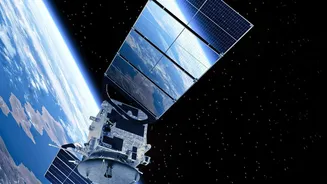
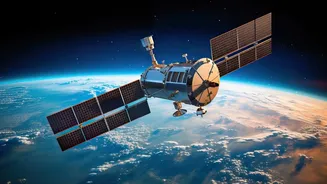
Think of NavIC as India's own, homegrown version of the American Global Positioning System (GPS). Developed by ISRO, it is an independent regional navigation satellite system designed to provide accurate positioning, navigation, and timing services for India and a region extending roughly 1,500 kilometers beyond its borders. This capability is strategically crucial, as it ensures India does not have to depend on foreign systems like GPS, Russia's GLONASS, or Europe's Galileo, especially during times of geopolitical tension when access to those services could be restricted. NavIC offers two primary services: a Standard Positioning Service (SPS) for all civilian users and a Restricted Service (RS), which is encrypted and reserved for authorised users like the military for secure navigation and guidance.
The Next-Generation Upgrade
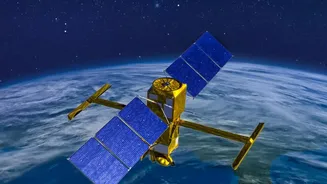
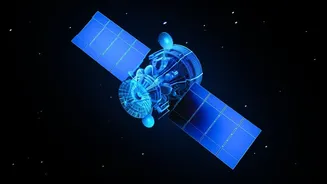
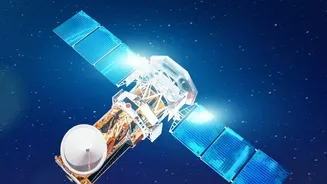
NVS-03 is the third satellite in the new and improved second generation of NavIC satellites. This new series is designed to augment and eventually replace the original first-generation constellation, some of which were hampered by the failure of their imported atomic clocks. A key feature of the NVS series is the inclusion of an indigenously developed Rubidium atomic clock, a remarkable technological achievement possessed by only a handful of nations. These new satellites also broadcast on an additional frequency, the L1 band, which is widely used by commercial and wearable devices. This enhancement is expected to increase the interoperability and widespread adoption of NavIC among the general public. Furthermore, the second-generation satellites have a planned mission life of over 12 years, an improvement on the 10-year lifespan of their predecessors.
The Workhorse: GSLV-Mk2
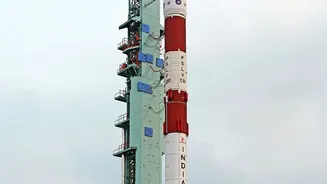
Lifting the 2,232 kg NVS-03 satellite into a precise Geosynchronous Transfer Orbit is the job of ISRO's Geosynchronous Satellite Launch Vehicle Mark II (GSLV-Mk2). This powerful rocket is ISRO's go-to launch vehicle for placing heavy communication and navigation satellites into high orbits. The mission is particularly significant following the setback with the NVS-02 mission in January 2025, which, despite a successful launch, failed to reach its final orbit due to a propulsion system anomaly. A successful flight for NVS-03 will therefore not only bolster the NavIC constellation but also serve as a crucial validation of the corrective measures implemented on the reliable GSLV.
What It Means for India
The reactivation and strengthening of the NavIC system has far-reaching benefits. For the armed forces, it ensures absolute navigational control for missile guidance, troop movements, and coordinating naval and air assets, free from reliance on foreign powers. For civilians, it promises more reliable and precise navigation, especially in dense urban areas, remote regions, and mountains, where NavIC signals are designed to be more robust than GPS. The system is vital for disaster management, enabling early warnings and coordinating rescue operations. It also underpins countless commercial applications, from fleet management in logistics and precision farming to timing services for financial transactions and power grids. This launch is a significant move toward ensuring that this foundational technology is robust and ready for the future.