


The Paradox of a Broader Education
In a world increasingly shaped by algorithms and automation, Elon Musk has offered seemingly counterintuitive advice for the next generation: don't specialise too early. Instead of suggesting a narrow focus on coding or data science, Musk recommends that
young people build the broadest possible knowledge base. In recent remarks, he specifically highlighted a combination of arts, science, and engineering as crucial for thriving in a future where humans work alongside highly capable AI. This perspective challenges the conventional wisdom that technical depth is the only path to career security, particularly in a country like India where educational streams are often chosen early, locking students into specific paths. Musk’s argument is that as AI handles more routine execution, uniquely human skills will become more valuable.
Why Arts and Humanities Matter in the AI Age
The inclusion of 'arts' alongside science and engineering is perhaps the most surprising part of Musk's counsel. His reasoning is that as artificial intelligence becomes a powerful tool for execution, the premium will shift to those who know what to ask of it. Formulating insightful questions and defining meaningful problems requires context, creativity, and an understanding of human culture and behaviour—skills often honed through the humanities and arts. Someone with a grasp of history, psychology, and ethics may be better equipped to direct an AI than a purely technical expert. Musk frames this as a new form of 'prompt engineering', where the ability to clearly communicate your wishes and ideas to a machine becomes a critical skill. A broad education provides the necessary context to ask better questions and judge whether the AI's output is truly useful.
The Danger of Hyper-Specialisation
Musk’s advice to avoid narrowing one's education too early stems from the rapid pace of technological change. A skill that is highly valuable today could be automated tomorrow. He has often spoken about an impending 'age of abundance' where AI and robotics can produce goods and services at an unprecedented scale, transforming the nature of work itself. In such a world, a career built on a single, automatable skill is fragile. In contrast, a person with a wide range of knowledge is more adaptable. They can connect ideas from different fields, identify new opportunities, and pivot more easily as industries evolve. Musk isn't arguing that expertise is useless, but that it should be built on a wide intellectual foundation. This allows for greater flexibility and resilience in a job market that will see a constant 'evolution of roles'.
AI as a Collaborator, Not Just a Replacement
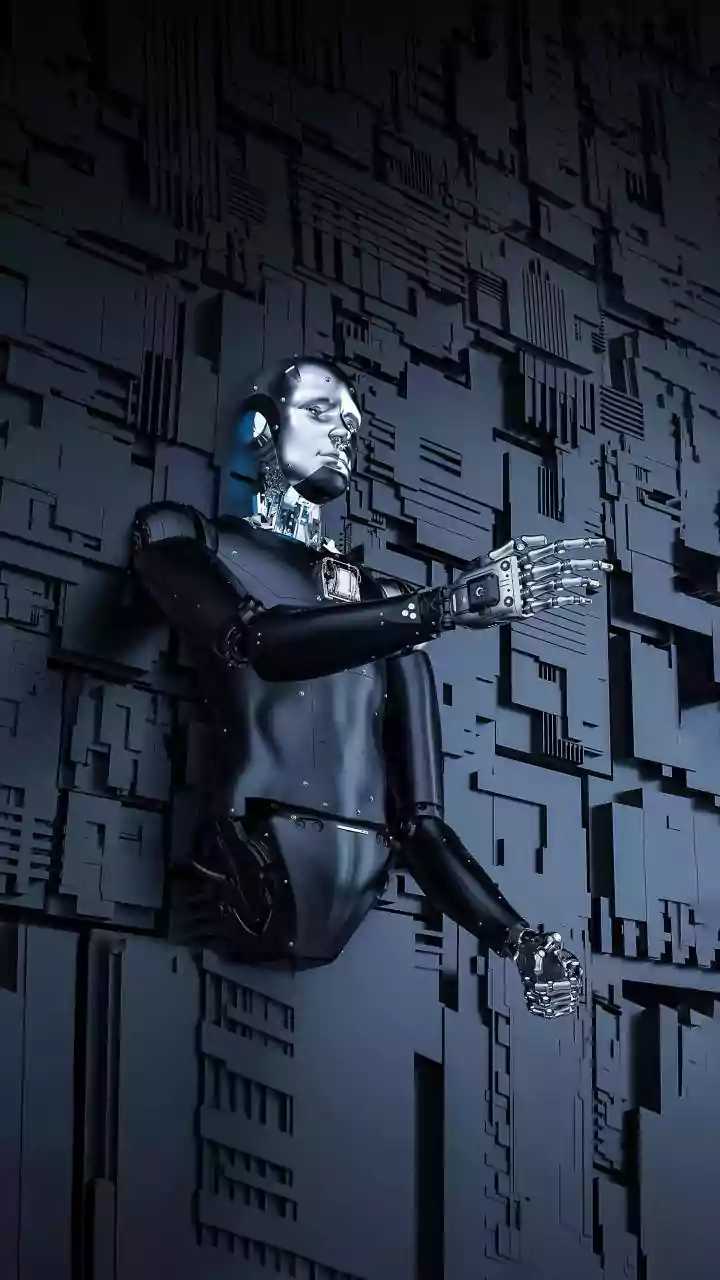
Underlying Musk’s educational advice is a vision of AI as a partner. He foresees a future where humanoid robots and intelligent systems are ubiquitous, ready to fulfil almost any request immediately. In this scenario, the most important human contribution is not performing the task itself, but providing the direction, judgment, and purpose behind it. The value lies in being the architect of the solution, not just the builder. This is why a broad education is so important; it equips individuals to think critically, exercise judgment, and guide powerful AI tools toward productive and meaningful goals. The future of work, in this view, is a collaboration where human creativity and strategic thinking are amplified by the immense processing power of machines.