


The Fine-Boondi Texture Myth
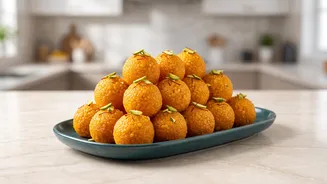
Traditionally, motichoor laddus are defined by their tiny boondi, which translates to “crushed pearls.” Unlike the larger pearls in a regular boondi laddu, these fine droplets are meant to be so small and soft that they meld together into a single, delicate
mass. This texture was once a reliable sign of a skilled halwai who took the time to create the fine batter and fry it perfectly. However, while authentic motichoor will always have this fine texture, the texture alone is not a guarantee of quality. Techniques and ingredients have changed, and focusing only on the boondi size means you might miss more important clues about what you are actually eating.
Why the Seller Matters Most
In an age of diverse quality, the most reliable check is the reputation of the sweet shop itself. A trusted seller with a long-standing reputation for quality is your best bet. Look for shops that are clean, have high foot traffic, and are transparent about their operations. Since 2020, the Food Safety and Standards Authority of India (FSSAI) has made it mandatory for sweet shops to display 'Date of Manufacturing' and 'Best Before Date' for non-packaged sweets. Choosing a seller who visibly complies with these FSSAI regulations, including displaying their license, offers a layer of assurance. During peak festival seasons, when demand skyrockets, sticking with an established, hygienic seller is the safest way to avoid stale or subpar products.
Decoding the Package and Label
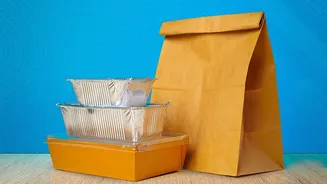
If you are buying pre-packaged laddus, the label is your best friend. FSSAI has clear labelling requirements for a reason. Every package must list all ingredients, the 'Best Before' date, storage instructions, and the manufacturer’s name and FSSAI license number. This information is crucial. The 'Best Before' date is especially important for sweets like motichoor laddu, which are best consumed within a few days to a week for optimal freshness and softness. A sealed, well-labelled package from a reputable brand provides verifiable information that a loose sweet from an unknown vendor simply cannot. Check that the packaging is intact and has not been tampered with.
The All-Important Ingredient List
The ingredient list tells the true story of the laddu’s quality. The star ingredient should be pure ghee, which provides a rich, nutty aroma and authentic taste. Cheaper substitutes like vegetable oils or vanaspati will not deliver the same flavour or texture. Similarly, look for natural flavourings like cardamom and saffron. Be wary of laddus with an unnaturally bright or fluorescent orange colour, as this can indicate the use of non-permitted or excessive artificial food colouring, such as metanil yellow, which can be harmful. Authentic ingredients cost more, so if the price seems too good to be true, it likely involves cutting corners on quality. Shocking investigations have even found dangerous adulterants like palm oil and chemicals used to mimic the texture and appearance of real ghee in some sweets.
Using Your Senses: Beyond Texture
Beyond the fine boondi, your other senses can offer vital clues. A fresh, high-quality motichoor laddu should have a pleasant and appetising aroma of ghee and cardamom, not a stale, oily, or chemical-like smell. Visually, the colour should be a natural-looking golden-orange, not an aggressive, synthetic shade. While a certain amount of moisture is good—it should be soft enough to break easily—it shouldn't feel excessively greasy or, conversely, dry and crumbly. The laddu should hold its shape but yield softly when eaten, creating that signature melt-in-the-mouth feel.